
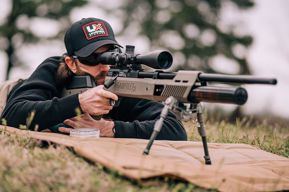


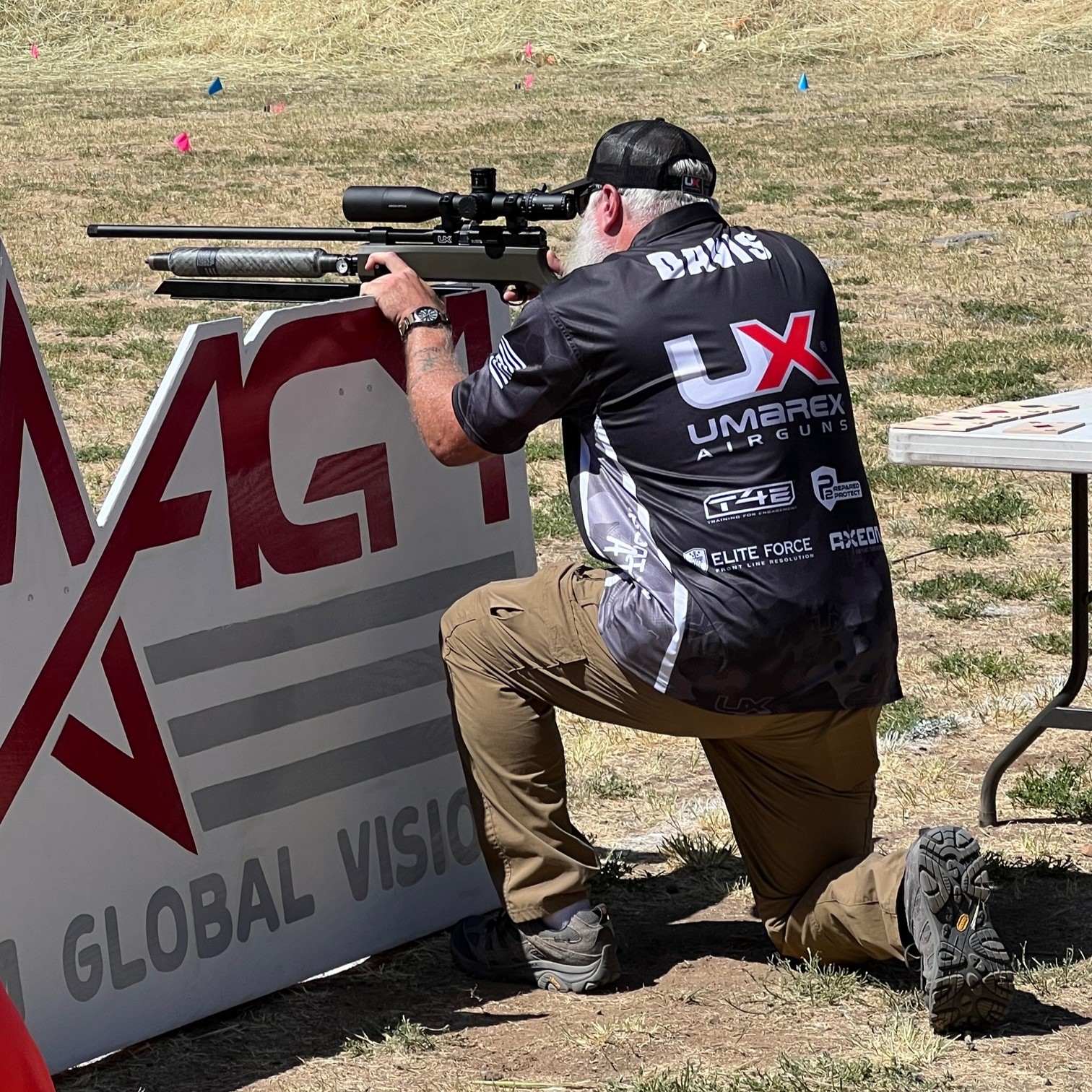
The author shooting from a baracade position. While most PCP airguns are taller than standard rifles or break barrel air rifles, a careless shooter can make a mistake by not seeing an obstruction in front of the barrel and out of the line of sight of the optic.
Using a magnifying optic on a rifle is extremely common these days. Years ago it was rare to see any kind of rifle offered without “iron” or open sights on it. These days, many firearms and airguns are designed to be used only with an optic. This is just fine as it really does allow the shooter to be deliberate, focused and precise in taking a shot. However, there is one primary concern that never crosses the mind of most shooters. Granted, this issue is only a problem in one shooting scenario, but the problem is a serious one that you really, really don’t want to deal with.
I’m an Example…of what NOT to do!
.jpg)
I remember watching a video on Youtube years ago where a target shooter was using the roof of his truck for a shooting rest. Sounds good, right? Well no, especially when the barrel of the rifle is low enough that the projectile will travel through the truck’s sheet metal. You see, the shooter couldn’t see that the barrel was pointing into his truck because all that he could see was what the optic allowed him to see.
It’s Not Rocket Surgery
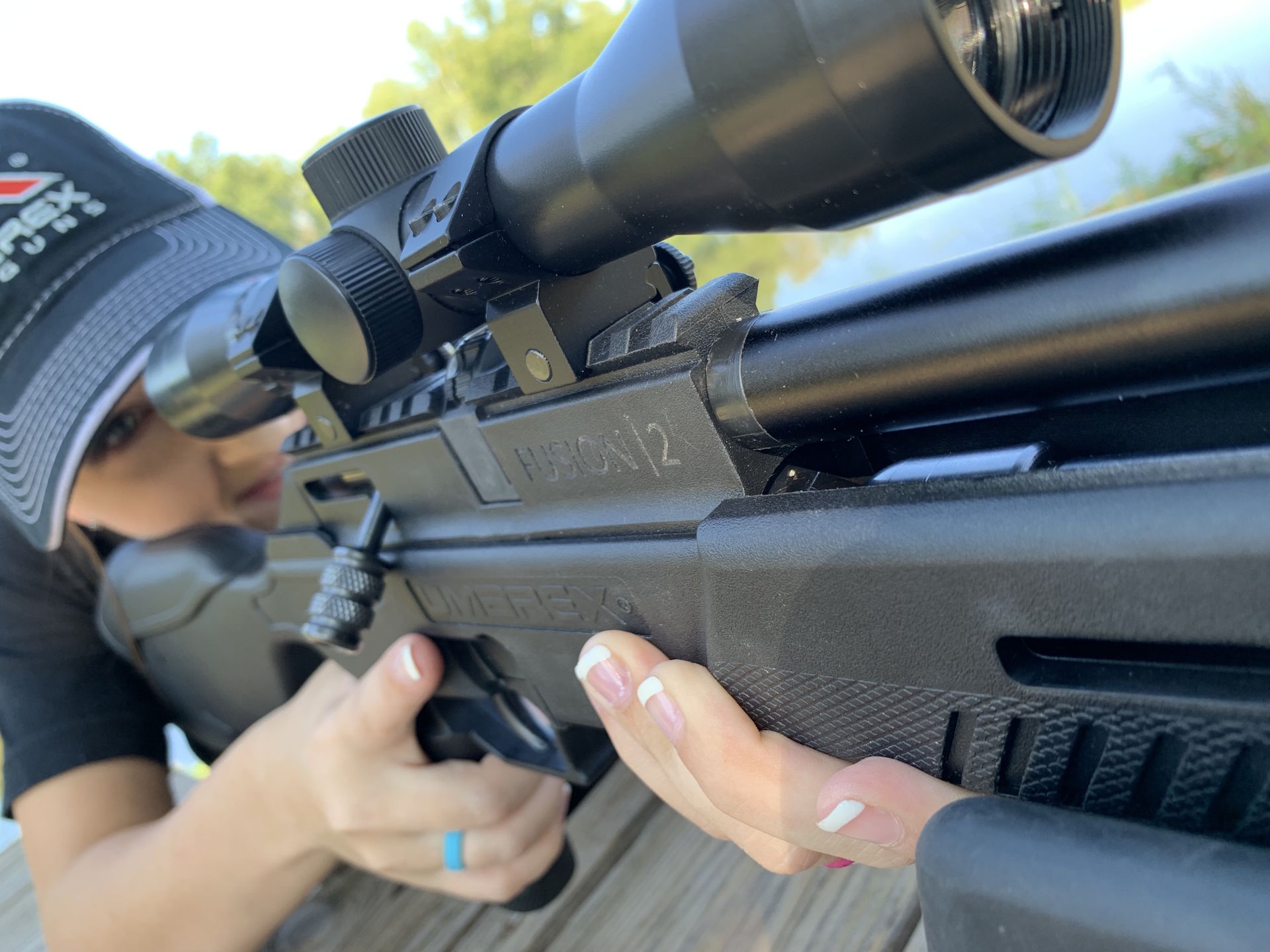
Confused? It’s really pretty simple. A scope is usually at least 1.5 inches higher than the centerline of the barrel. An inch and a half is a significant distance when you are shooting a powerful rifle. It is only in a general sense that your barrel and optic are pointed in the same direction. The truth is, if the scope really is zeroed in, the line of sight from the scope will intersect the bullet or pellet’s trajectory at some point down range.
Any projectile fired from a rifle starts its journey below the line of sight, whether you are using iron sights or an optic. The zero you set with the scope or your sights will be the point where the projectile crosses the line of sight. Depending on the distance set for the zero, the projectile might not have finished its upward trajectory until gravity pulls it down below the line of sight. In effect, sometimes you really have two zero’s– one closer and the other farther away.
A great real world example of this can be found on Modern Sporting Rifles when the shooter selects an initial 50 yard zero. The projectile then continues traveling above the line of sight until it reaches about 130 yards. At this point, the projectile begins to fall closer to the earth. Around 200 yards from the muzzle is a second zero or a place where the projectile crosses the line of sight again. This is commonly referred to as a 50/200 yard zero. The most the projectile is above the line of sight is about 1.5 inches and the two points where the bullet is 2.5 inches below the line of sight is when it leaves the barrel and at about 250 yards.
Engage Your Brain Anytime You Shoot!
Now let’s get back to the main point of this blog. Since a projectile starts its journey below your line of sight, no matter if you are using iron sights or a magnified optic, you must account for this when shooting from supports or at targets that are closer to you than your initial zero. That rat posed on the top of your wife’s terra cotta flower pot just five yards away might be a tempting target, but you will have to accommodate for the difference between your zero and the rat– otherwise, the flower pot is history!
And as mentioned in the opening, when using a long flat surface as a rest, make sure the muzzle of the rifle is not pointing into the surface. If nothing else, avoid shooting like this at all. Use a shooting bag or even a rolled up jacket to give yourself some insurance from making a costly and likely dangerous mistake. Likewise, a branch, hand rail, or other obstuction can be infront of the muzzle and out of the line of sight of your optic. The preventative measure it to double check your immediate shooting environment for such obstructions and adjust accordingly to prevent shooting something you do not intend to shoot.
Mark Davis, avid outdoorsman, family man, and outdoors writer is the eCommerce Marketing Manager for Umarex USA.