
Quick Answer: CO2 vs Spring vs PCP Air Pistols
CO2 air pistols use disposable carbon dioxide cartridges to power each shot and are widely used for recreational shooting, training replicas, and backyard plinking.
Spring piston air pistols generate compressed air using a mechanical spring and piston system that is cocked before firing. These pistols are self-contained and do not require gas cartridges or external air tanks.
PCP (pre-charged pneumatic) air pistols store high-pressure compressed air in a reservoir and release a controlled burst of air for each shot. PCP systems provide extremely consistent velocity and are widely used for precision target shooting.
Each power system offers different advantages depending on whether the shooter prioritizes convenience, simplicity, or maximum accuracy.
Choosing an air pistol involves more than deciding between BBs and pellets. One of the most important differences between air pistols is how they generate the compressed air or gas that propels the projectile.
Air pistols generally fall into three primary power system categories: CO2-powered pistols, spring piston pistols, and pre-charged pneumatic (PCP) pistols. Each design uses a different mechanical method to create the pressure needed to fire a pellet or BB.
Understanding these systems helps shooters choose the right air pistol for recreational shooting, firearm training, or precision target practice.
If you are new to airguns and want a broader introduction, see our complete guide:
Air Pistols 101: BB vs Pellet Pistols, Power, Accuracy, and How to Choose the Right One
How Air Pistols Generate Power
All airguns operate using the same basic principle. Compressed air or gas is released behind a projectile, forcing the BB or pellet down the barrel.
The difference between air pistol designs lies in how that compressed air is generated and stored. Some systems rely on disposable gas cartridges, while others compress air mechanically or store pressurized air in a reservoir.
These design differences affect several important aspects of performance, including:
• ease of operation
• recoil and vibration
• shot consistency
• maintenance requirements
• overall accuracy potential
Because each system behaves differently, shooters often choose a power system based on their intended use.
CO2 Air Pistols
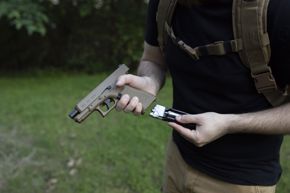
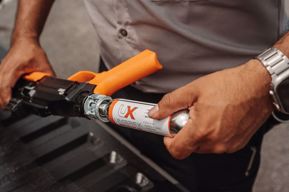
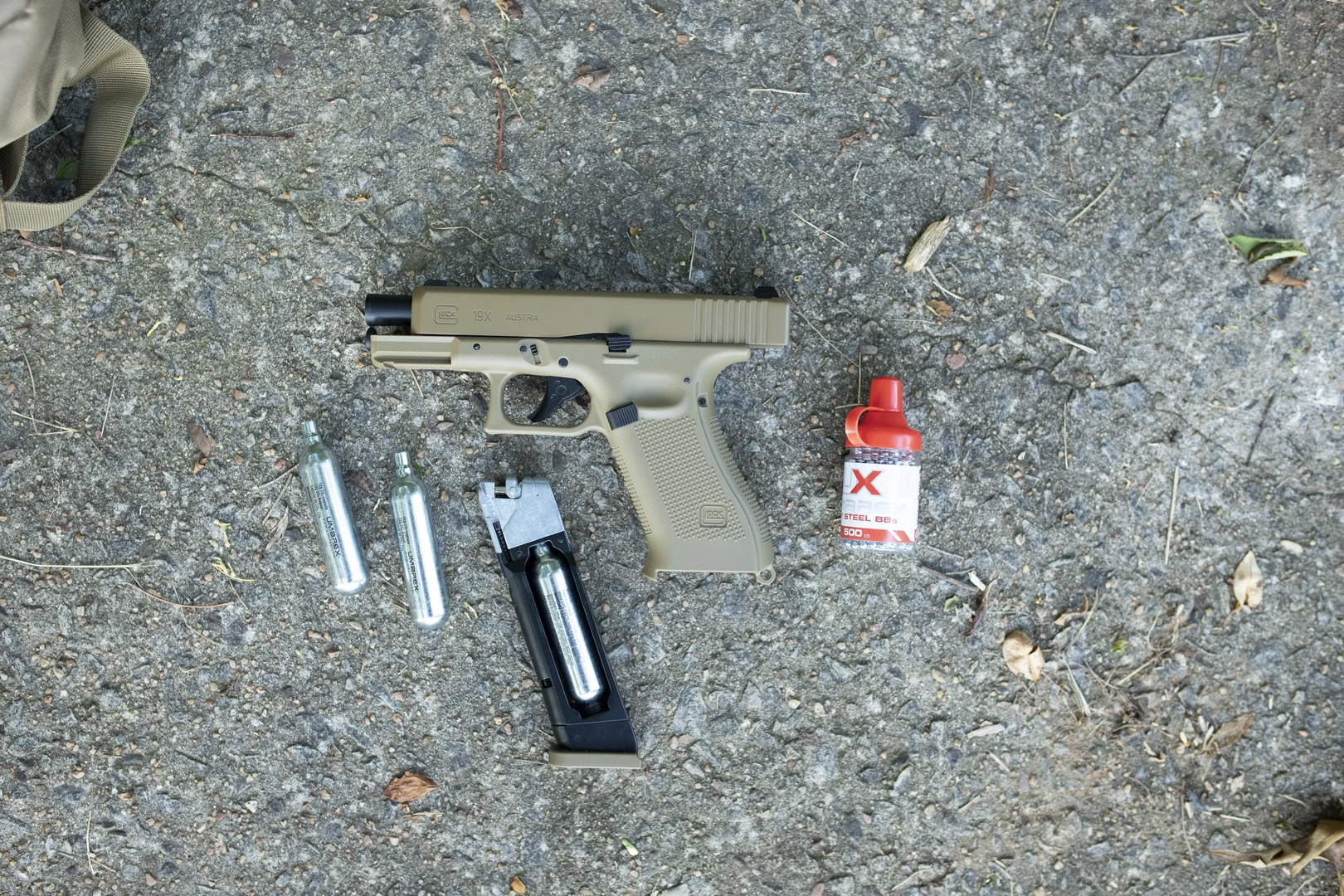
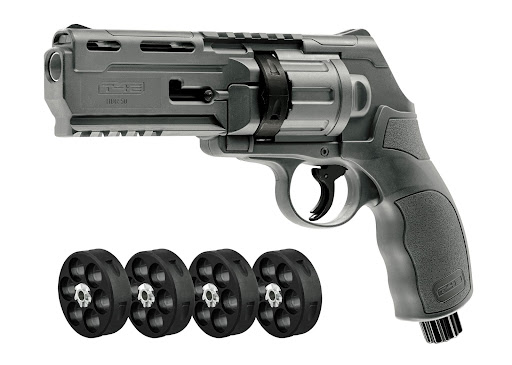
CO2 air pistols use small disposable cartridges filled with compressed carbon dioxide gas. Most air pistols use 12-gram CO2 cartridges, which are inserted into the pistol grip or magazine.
When the trigger is pulled, a valve briefly opens and releases a burst of CO2 gas that propels the projectile down the barrel.
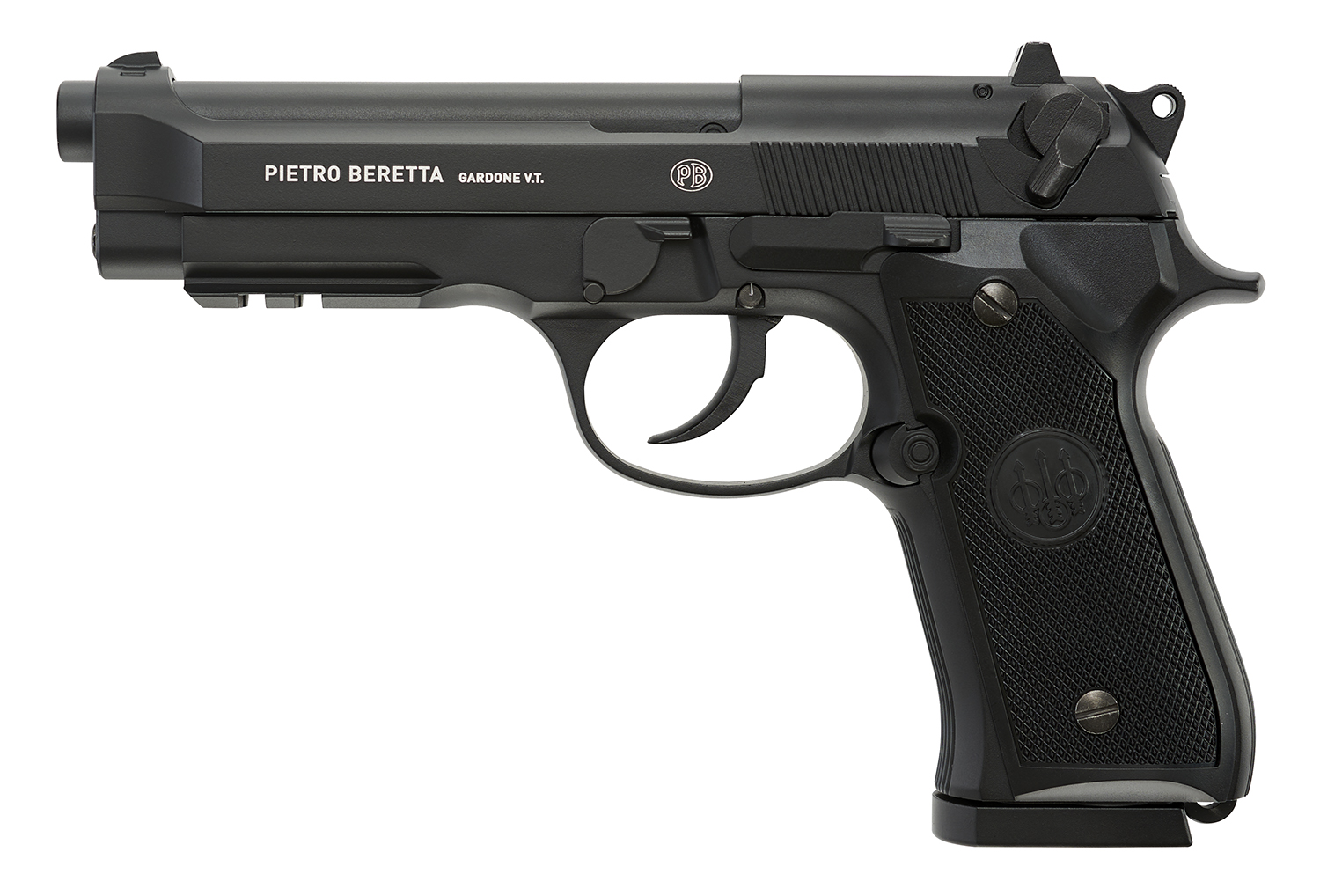
CO2 air pistols are among the most common air pistol designs because they are easy to operate and allow quick follow-up shots.
Advantages of CO2 Air Pistols
CO2 pistols offer several practical benefits for recreational shooters:
• simple operation with minimal setup
• semi-automatic shooting capability
• realistic handgun replicas and training pistols
• smooth shooting with very little recoil
Because they do not require cocking or pumping before each shot, CO2 pistols allow shooters to fire multiple shots quickly.
These characteristics make CO2 air pistols especially popular for:
• backyard plinking
• firearm training drills
• recreational target shooting
Many air pistol replicas used for handgun training rely on CO2 systems because they allow magazine-fed operation similar to real firearms.
Limitations of CO2 Air Pistols
CO2 systems can be influenced by temperature. When temperatures drop, the gas pressure inside the cartridge decreases, which can reduce velocity and power.
As a cartridge empties during extended shooting sessions, pressure can also gradually decline, which may lead to small variations in velocity.
For casual shooting this variation is usually minimal, but shooters seeking maximum consistency often prefer PCP systems.
Spring Piston Air Pistols
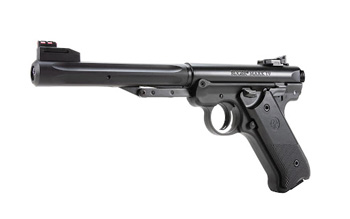
Spring piston air pistols use a mechanical spring and piston system to compress air inside the chamber before firing.
When the pistol is cocked, the spring is compressed and held under tension. Pulling the trigger releases the spring, which drives the piston forward and compresses air behind the projectile. This compressed air propels the pellet down the barrel.
Because the system is entirely mechanical, spring piston pistols do not require CO2 cartridges or compressed air tanks.
Advantages of Spring Piston Pistols
Spring piston pistols provide several advantages:
• completely self-contained power system
• no gas cartridges required
• durable and mechanically reliable design
• relatively simple operation
Many shooters appreciate spring piston pistols because they can operate indefinitely without purchasing cartridges or refilling compressed air.
Limitations of Spring Piston Pistols
Spring piston pistols also have a few trade-offs.
The movement of the internal spring and piston creates a small recoil impulse and vibration when the pistol is fired. This recoil can make spring pistols slightly more challenging to shoot accurately compared with CO2 or PCP designs.
In addition, most spring piston pistols must be manually cocked before each shot, which slows down the rate of fire.
PCP Air Pistols
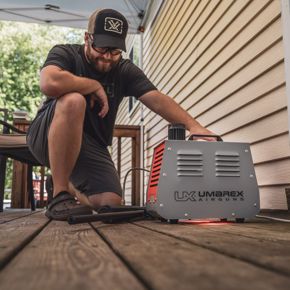
Pre-charged pneumatic air pistols, commonly called PCP pistols, store compressed air in a high-pressure reservoir. Before shooting, the reservoir must be filled using a hand pump, scuba tank, or air compressor designed for PCP airguns.
When the trigger is pulled, a precisely controlled valve releases a small burst of compressed air that propels the pellet down the barrel.
Because PCP pistols release carefully measured bursts of air, they are known for excellent shot-to-shot consistency.
Advantages of PCP Air Pistols
PCP pistols offer several performance advantages:
• extremely consistent velocity
• minimal recoil or vibration
• exceptional accuracy potential
• multiple shots per air fill
Because of this consistency, PCP air pistols are widely used in competitive air pistol shooting.
The International Shooting Sport Federation specifies precision air pistols for 10-meter air pistol competition, where consistency and accuracy are critical.
Limitations of PCP Air Pistols
PCP air pistols require additional equipment to refill the compressed air reservoir.
Shooters may need:
• a high-pressure hand pump
• a specialized air compressor
• a scuba or carbon fiber air tank
For beginners, this additional equipment can make PCP systems more complex than CO2 or spring piston pistols.
CO2 vs Spring vs PCP Air Pistols: Key Differences
Feature |
CO2 Pistols |
Spring Piston Pistols |
PCP Pistols |
|
Power source |
CO2 gas cartridge |
Mechanical spring and piston |
High-pressure compressed air |
|
Shot operation |
Semi-automatic possible |
Manual cocking each shot |
Multiple shots per fill |
|
Recoil |
Very low |
Noticeable mechanical recoil |
Nearly recoil-free |
|
Consistency |
Good but affected by temperature |
Consistent mechanical power |
Extremely consistent |
|
Setup |
Insert CO2 cartridge |
Cock before each shot |
Fill compressed air reservoir |
|
Best for |
Plinking and training replicas |
Simple self-contained shooting |
Precision target shooting |
Which Power System Is Best for Beginners?
Many new shooters start with CO2 air pistols because they are easy to operate and allow quick follow-up shots without manual cocking.
Spring piston pistols can also be a good choice for beginners who prefer a self-contained airgun that does not require cartridges or compressed air tanks.
PCP pistols are typically chosen by shooters who prioritize maximum accuracy and consistency, particularly for target shooting disciplines.
When to Choose a CO2 Air Pistol
A CO2 air pistol may be the right choice if you want:
• easy setup and simple operation
• realistic handgun replicas for training
• semi-automatic shooting capability
• a pistol designed for recreational plinking
Many air pistol training replicas rely on CO2 systems because they allow realistic magazine-fed operation.
When to Choose a Spring Piston Air Pistol
Spring piston pistols are often chosen by shooters who prefer:
• a self-contained mechanical system
• no need for CO2 cartridges or air tanks
• durable and reliable operation
• a relatively simple airgun design
These pistols are appealing for shooters who want an air pistol that can operate without additional equipment.
When to Choose a PCP Air Pistol
PCP air pistols are ideal for shooters who want:
• extremely consistent shot velocity
• minimal recoil and vibration
• high levels of accuracy
• equipment suitable for precision shooting
Because of these characteristics, PCP pistols are commonly used in competitive air pistol shooting and advanced marksmanship training.
Frequently Asked Questions
What does PCP stand for in air pistols?
PCP stands for pre-charged pneumatic, which refers to an airgun system that stores compressed air in a high-pressure reservoir.
Are CO2 air pistols accurate?
Yes. CO2 air pistols can be very accurate for recreational shooting and training. However, precision target shooters often prefer PCP systems because they provide more consistent air pressure.
Do spring piston air pistols require cartridges?
No. Spring piston air pistols are completely mechanical and generate compressed air using a spring-powered piston.
Which air pistol power system is the most accurate?
PCP air pistols generally offer the highest accuracy potential because they provide extremely consistent air pressure and minimal recoil.
Works Cited
International Shooting Sport Federation. ISSF Official Rules and Regulations.
https://www.issf-sports.org
National Shooting Sports Foundation. Airguns and Youth Shooting Programs.
https://www.nssf.org
Pyramyd Air. How Spring-Piston Airguns Work.
https://www.pyramydair.com
Umarex USA. A Complete Guide to PCP Airguns.
https://www.umarexusa.com