






Spring Piston vs Gas Ram Air Rifles: Differences, Pros, and Real-World Performance
Quick Answer
Spring piston and gas ram air rifles are both self-contained mechanical systems. Neither one needs CO2 cartridges, NitroAir cartridges, a compressor, or a hand pump to keep shooting. The main difference is how each rifle stores and releases energy. A spring piston rifle uses a coiled spring, while a gas ram rifle uses a sealed gas strut. That difference changes the shot cycle, recoil feel, and how the rifle behaves in real use.
For many shooters, spring piston remains the classic answer because it is simple, proven, and mechanically straightforward. Gas ram often appeals to shooters who want that same self-contained ownership model but prefer a smoother, less springy firing character. Neither system is universally better. The better system depends on whether you care most about traditional simplicity, shot feel, cocking effort, and how much technique you are willing to manage.
If your top priority is owning a rifle that is always ready as long as you can cock it, both systems make sense. If you want the broader system comparison first, see Spring vs Gas Ram vs CO2 vs NitroAir Air Rifles: Which System Is Best? (https://www.umarexusa.com/spring-vs-gas-ram-vs-co2-vs-nitroair-air-rifles). If you want the full foundation page for the whole cluster, see Air Rifles 101: Power Systems, Accuracy, and How to Choose the Right One (https://www.umarexusa.com/air-rifles-101-guide).
This comparison matters because spring and gas ram are often treated as almost interchangeable. They are not. They live in the same part of the decision tree, but they create a different ownership feel. The shooter who likes one may not automatically prefer the other, even if both rifles look nearly identical on the rack.
Why This Comparison Matters
For a lot of buyers, spring piston and gas ram are the two most important self-contained options in the air rifle category. That alone makes this comparison valuable. A buyer who knows they do not want cartridges or fill equipment will almost always end up deciding between these two systems, or at least considering them seriously.
The problem is that product descriptions can make the difference sound smaller than it feels in actual use. Both rifles may be break barrels. Both may have similar calibers, similar stocks, and similar advertised velocities. But the power unit changes what the shot feels like and how the rifle behaves under the shooter.
That matters because mechanical air rifles ask the shooter to participate in the system more than cartridge-powered rifles do. Hold consistency, follow-through, and rhythm all matter more here. Once you understand that, the spring versus gas ram decision stops being a spec-sheet question and becomes a use-question.
In plain terms, this is not just a debate about one internal part replacing another. It is a debate about what kind of mechanical rifle you want to live with.
What a Spring Piston Air Rifle Is
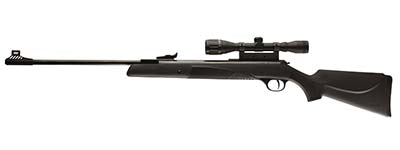
A spring piston air rifle stores energy in a coiled spring. When the rifle is cocked, the spring is compressed. When the trigger breaks, that spring drives a piston forward, which compresses air behind the pellet and launches it. This is the classic springer design that has defined a large part of the airgun market for decades. The Ruger Blackhawk .177 Combo (https://www.umarexusa.com/ruger-blackhawk-177-combo) is a clear example, and Umarex specifically lists its power source as spring and describes it as a spring piston single-stroke break barrel rifle.
The appeal of spring piston is not hard to understand. It is simple, self-contained, and easy to explain. You cock the rifle, load the pellet, shoot, and repeat. There is no dependence on gas cartridges and no extra support gear to think about. For many shooters, that kind of independence is still one of the strongest reasons to buy a mechanical rifle in the first place.
The tradeoff is in the shot cycle. Spring rifles are known for a more traditional springer feel, which is part of their charm for some shooters and part of their challenge for others. They tend to reward consistency and punish sloppy technique more than beginners sometimes expect. That does not make them inferior. It makes them more interactive in the hands of the shooter.
What a Gas Ram Air Rifle Is
A gas ram air rifle replaces the coiled spring with a sealed gas strut. The basic operating sequence is still mechanical. You cock the rifle, store force in the power unit, then release that stored force when the trigger breaks. The Ruger Targis Hunter Max .22 (https://www.umarexusa.com/ruger-targis-hunter-max-22-black) is a direct example, and Umarex lists its power source as gas piston.
This is why the gas ram is best understood as a variation within the same mechanical family, not an entirely separate category of airgun. It still gives you a self-contained rifle. It still requires cocking before each shot. It still creates a piston-driven shot cycle that the shooter has to manage.
Where gas ram starts to feel different is in the way many shooters describe the firing behavior. The appeal is usually a smoother, less springy sensation compared with a conventional spring piston rifle. That does not mean gas ram eliminates recoil-like movement or removes the need for technique. It means the system often feels a little more refined to the person behind the gun.
That difference is exactly why gas ram keeps showing up in buyer conversations. It offers a different feel without changing the core ownership advantages of a mechanical rifle.
What Spring and Gas Ram Have in Common
Spring piston and gas ram share more with each other than either one shares with CO2 or NitroAir. Both are mechanical systems. Both are self-contained. Both usually appear in break barrel formats. Both require manual cocking before each shot. Both are attractive to shooters who want to avoid disposable gas cartridges or external charging setups.
That common ground matters because it explains why these two systems are so often cross-shopped. A buyer who likes the idea of a fully self-contained rifle is usually not deciding between spring and CO2 first. They are deciding whether the traditional springer route or the gas ram route fits them better. This is a very specific branch of the decision tree. For the wider comparison, see Spring vs Gas Ram vs CO2 vs NitroAir Air Rifles: Which System Is Best? (https://www.umarexusa.com/spring-vs-gas-ram-vs-co2-vs-nitroair-air-rifles).
They also share the same basic lifestyle advantage. If you want a rifle that is functionally ready as long as the rifle itself is in working order and the shooter can cock it, both systems solve that problem. That can be a major advantage for shooters who value simplicity, independence, and fewer ongoing supplies.
The key is that common ground should not hide the meaningful differences in shot character and user preference. These are similar systems, not identical experiences.
The Real Difference in Shot Feel and Shooting Character
The biggest reason people debate spring piston versus gas ram is not because the loading sequence changes. It is because the rifle often feels different at the moment of the shot.
Spring piston rifles tend to deliver the traditional springer experience. That is part of why many experienced airgun shooters still like them. They have a recognizable rhythm and a familiar firing character that feels mechanical in the most literal sense. The system is direct, proven, and very easy to understand.
Gas ram rifles are usually chosen by people who want that same self-contained mechanical ownership model, but with a somewhat smoother shot cycle. The gas strut changes the way energy is stored and released, and many shooters respond to that difference immediately. In practice, the distinction often shows up as preference more than theory. One shooter may find the gas ram more refined. Another may prefer the classic feel of a springer.
This is why there is no universal winner. Shot feel is part mechanics and part preference. A rifle can be “better” on paper for one shooter and less satisfying in actual use for another. That is especially true in airguns, where shooter interaction with the system matters more than many first-time buyers realize.
Cocking Effort, Rhythm, and Day-to-Day Use
One of the most overlooked parts of the spring versus gas ram decision is not the shot itself. It is the rhythm that happens before the shot. Both systems require cocking. That makes them very different from CO2 and NitroAir platforms, where the user does not have to perform the same manual action before every round.
For some shooters, that rhythm is a positive. It slows the pace, makes the rifle feel more deliberate, and reinforces the sense that the airgun is a fully self-contained machine. That is a big part of the appeal of mechanical rifles in general. You do not need to think about cartridge stock or fill procedures. You simply use the rifle as designed and keep going.
For other shooters, that same rhythm becomes the reason they eventually move away from mechanical systems. Repeated cocking adds effort, and effort changes how often some people want to shoot. This is especially relevant for longer sessions, younger shooters, or buyers who know they want the easiest possible shooting experience.
So while spring and gas ram belong in the same lane, they also sit on the same side of a bigger divide: both ask more from the shooter before every shot than cartridge-driven systems do.
Which One Is Better for Accuracy?
The wrong way to ask this question is, “Which system is more accurate?” The better question is, “Which system is easier for the shooter to use accurately?”
Spring and gas ram are both capable of strong practical accuracy, but both are also mechanical systems that ask the shooter to manage the shot cycle properly. In that sense, accuracy is tied not just to the rifle, but to how consistently the shooter interacts with it. That is why these systems are often described as technique-sensitive. For the wider performance discussion, see What Affects Air Rifle Accuracy: Power, Pellets, and Technique Explained (https://www.umarexusa.com/air-rifle-accuracy-factors).
A gas ram rifle may feel easier for some shooters to manage because of its smoother firing character. A spring piston rifle may reward a skilled shooter just as well, but it can feel less forgiving to someone who is inconsistent with hold or follow-through. That does not mean gas ram is automatically more accurate. It means the user experience can make it easier for some shooters to reach that accuracy.
This is one of those areas where the rifle that feels easier to shoot well often becomes the “more accurate” rifle in practical ownership, even if the underlying conversation is really about consistency and technique.
Which One Is Better for Beginners?
There is no universal beginner answer, but there is a practical one.
If the beginner wants a traditional, self-contained rifle and is willing to learn on a more technique-sensitive platform, spring piston is still a legitimate starting point. The Ruger Blackhawk .177 Combo (https://www.umarexusa.com/ruger-blackhawk-177-combo) is exactly the kind of rifle that can teach fundamentals because it makes the shooter pay attention. Some experienced shooters actually prefer that as a learning path.
If the beginner wants that same kind of independence but would prefer a somewhat smoother-feeling shot cycle, gas ram can make more sense. It keeps the self-contained ownership model intact while potentially softening some of the harshness beginners sometimes associate with springers.
The bigger point is that both systems are still more demanding than CO2 or NitroAir for a brand-new shooter whose main goal is easy operation. So when beginners compare spring and gas ram, the right answer usually depends on whether they are specifically committed to mechanical rifles or simply looking for the easiest way to start.
Which One Is Better Overall?
If your definition of “better” is total self-contained simplicity and proven traditional design, spring piston still has a very strong case. It remains one of the clearest expressions of the classic air rifle model.
If your definition of “better” is keeping that same self-contained model while getting a smoother shot character, gas ram has the stronger argument. That is exactly why rifles like the Ruger Targis Hunter Max .22 (https://www.umarexusa.com/ruger-targis-hunter-max-22-black) exist in the first place.
In other words, this is not a fight between a winner and a loser. It is a decision between two closely related systems that emphasize different strengths. Spring piston is the more classic answer. Gas ram is often the more refined-feeling answer. The better one is the one whose tradeoffs line up with your preferences, not the one that wins a generic internet argument.
If you already know you want a self-contained rifle and are not interested in cartridges or fill systems, this is the comparison that matters most.
Key Takeaways
-
Spring piston and gas ram air rifles are both self-contained mechanical systems.
-
Spring piston airguns use a coiled spring, while gas ram airguns use a sealed gas strut.
-
Spring rifles usually appeal to shooters who want traditional simplicity and classic springer behavior.
-
Gas ram rifles usually appeal to shooters who want the same independence with a smoother shot cycle.
-
Neither system is automatically more accurate in all hands. The real issue is how easily the shooter can manage the rifle consistently.
-
For the broader cluster path, go back to Air Rifles 101: Power Systems, Accuracy, and How to Choose the Right One (https://www.umarexusa.com/air-rifles-101-guide), then compare with Best Air Rifle Power System for Backyard Shooting, Beginners, and Accuracy (https://www.umarexusa.com/best-air-rifle-power-system-guide).
FAQ
Is a gas ram air rifle better than a spring piston air rifle?
Not automatically. Gas ram airsguns often feel smoother, but spring piston airguns remain a proven, self-contained mechanical system. The better choice depends on whether you value traditional springer simplicity or a more refined shot cycle.
What is the main difference between spring piston and gas ram?
The main difference is the power unit. Spring piston air rifles use a powerful coil spring, while gas ram air rifles use a sealed gas strut that acts as a spring. That difference changes the shot feel more than the basic ownership model.
Are both spring piston and gas ram rifles self-contained?
Yes. Both systems are self-contained mechanical platforms and do not rely on CO2 cartridges, NitroAir cartridges, or external fill gear.
Which one is better for beginners?
Either can work for beginners who specifically want a mechanical rifle. Spring piston airguns can teach strong fundamentals, while gas ram airguns may feel a little easier for some shooters to manage.
Do gas ram rifles still need to be cocked?
Yes. Gas ram rifles are still mechanical rifles that require cocking before each shot.
Which one is better for backyard shooting?
Both can work well in a backyard, but they are best for shooters who prioritize self-contained ownership more than maximum convenience. Buyers who want the easiest possible backyard platform often end up looking at CO2 instead.
Works Cited
-
Umarex USA. “Ruger Blackhawk .177 Caliber Pellet Rifle.” Umarex USA. https://www.umarexusa.com/ruger-blackhawk-177-combo
Umarex USA. “RUGER TARGIS HUNTER MAX .22 Caliber.” Umarex USA. https://www.umarexusa.com/ruger-targis-hunter-max-22-black