



What Affects Air Rifle Accuracy: Power, Pellets, and Technique Explained
Quick Answer
Air rifle accuracy is affected by a combination of factors, not one single part or specification. The most important variables are the power system, pellet fit and consistency, barrel behavior, trigger control, hold technique, sighting setup, and the conditions in which the rifle is being used. That is why two shooters can use the same rifle and get very different results.
In practical terms, the rifle’s power system changes how easy it is to shoot consistently. A spring or gas ram rifle may be very accurate, but it often asks more from the shooter because of the shot cycle. A CO2 or NitroAir rifle may feel easier to shoot well because it reduces some of that disruption, but those systems bring their own considerations. The real question is not whether one system is “accurate” and another is not. The question is whether the full setup allows the shooter to repeat the same shot over and over.
Pellets matter just as much as many buyers expect, and often more. A rifle that groups poorly with one pellet may group much better with another. Technique also matters more than most new shooters realize, especially with mechanical rifles. If you want the system-level foundation first, see Air Rifles 101: Power Systems, Accuracy, and How to Choose the Right One (https://www.umarexusa.com/air-rifles-101-guide). If you want the mechanics page first, see How Air Rifles Work: Complete Guide to Airgun Mechanics (https://www.umarexusa.com/how-air-rifles-work).
This page exists because people often blame the wrong variable when accuracy falls apart. They blame the scope, or the pellets, or the rifle, when the real answer is often a combination of system behavior and shooter input. Good accuracy comes from matching the rifle, pellet, and technique into one repeatable pattern.
Accuracy Starts With Repeatability, Not Hype
A lot of buyers talk about accuracy as if it is something built into the rifle alone. That is only partly true. A rifle can have the potential to shoot well, but accuracy in real use depends on repeatability. The rifle has to behave predictably, the pellet has to fit and fly well, and the shooter has to do the same thing from shot to shot.
That is why the most useful definition of air rifle accuracy is not “how fast the rifle shoots” or “how powerful the rifle is.” It is how consistently the rifle places pellets where the shooter intends them to go when all the relevant variables are managed well.
This point matters because it shifts the entire conversation. Instead of asking which rifle is “most accurate” in the abstract, the better question becomes: what factors are changing the shot before the pellet leaves the barrel, and what factors are changing it after? Once you look at accuracy that way, the category becomes much easier to understand.
It also explains why air rifles often frustrate new buyers. They assume the rifle alone should do all the work. In reality, air rifle accuracy is a system-level outcome.
How the Power System Changes Accuracy
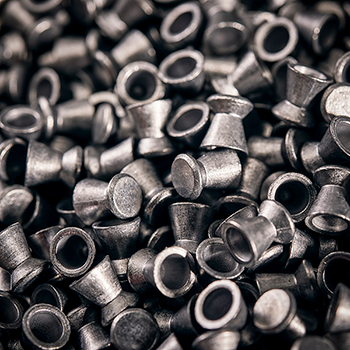
The power system affects accuracy because it changes how the rifle behaves at the moment of the shot. That includes internal movement, recoil feel, operating consistency, and how forgiving the rifle is of inconsistent technique.
A spring piston rifle like the Ruger Blackhawk .177 Combo (https://www.umarexusa.com/ruger-blackhawk-177-combo) can absolutely be accurate, but it asks more from the shooter. The internal spring and piston create a shot cycle that rewards a consistent hold and disciplined follow-through. If the shooter grips the rifle differently from shot to shot, that inconsistency often shows up on target.
A gas ram rifle like the Ruger Targis Hunter Max .22 (https://www.umarexusa.com/ruger-targis-hunter-max-22-black) belongs in the same mechanical family, but many shooters find the shot cycle a little smoother. That can make it easier for some people to manage in practical shooting. It does not make gas ram automatically more accurate. It makes it easier for some users to repeat the shot more consistently.
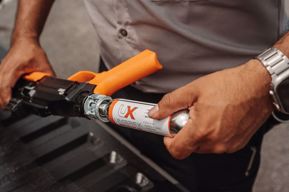
CO2 rifles change the conversation because they reduce the manual effort and shot-cycle disruption that many shooters struggle with in mechanical rifles. A rifle like the Umarex Fusion 2 Quiet CO2 Pellet Rifle (https://www.umarexusa.com/umarex-fusion-2-quiet-co2-pellet-rifle-177-compact-airgun) may feel easier to shoot well, especially in relaxed target use. The tradeoff is that CO2 behavior can change with temperature and rapid-fire cooling, which means the system itself can add variability under the wrong conditions.
NitroAir and regulated PCP-style platforms like the Komplete NCR .177 (https://www.umarexusa.com/umarex-komplete-ncr-177-pcp-air-rifle-2251556) are attractive in the accuracy discussion because they are built around a more controlled pressure model. That often makes it easier to get repeatable performance without the shot-cycle demands of a springer. For the direct system comparison, see Spring vs Gas Ram vs CO2 vs NitroAir Air Rifles: Which System Is Best? (https://www.umarexusa.com/spring-vs-gas-ram-vs-co2-vs-nitroair-air-rifles).
Why Pellets Matter So Much
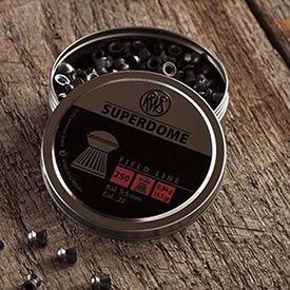
Pellets are one of the most important and most misunderstood parts of the accuracy equation. Many new shooters assume pellets are interchangeable as long as the caliber matches. In practice, that is rarely true. A rifle can show a strong preference for one pellet weight, shape, or fit and perform much worse with another.
That happens because the pellet is the final thing the system is trying to launch consistently. If the fit is inconsistent, if the skirt seals differently from shot to shot, or if the pellet design simply does not pair well with the rifle’s power level and barrel behavior, group size usually suffers. This is one reason experienced shooters often test several pellet types before deciding what a rifle “really” shoots well.
This is also where buyers make costly assumptions. They decide the rifle is inaccurate before they have actually tested the ammo variable seriously. In airguns, that is a mistake. Pellet selection is not a minor tuning step. It is one of the central parts of practical accuracy.
The main takeaway is simple: if accuracy matters, pellet choice cannot be treated as an afterthought.
Barrel Quality, Barrel Condition, and Barrel Consistency
The barrel matters because it is the last controlled environment the pellet passes through before it enters free flight. Even if the power system is behaving well and the shooter does everything correctly, the pellet still has to travel through the barrel consistently.
That does not mean every accuracy problem is a barrel problem. In fact, many are not. But barrel condition still matters. Consistent internal dimensions, rifling that matches the projectile well, and a clean, undamaged crown all influence how predictably the pellet exits the rifle.
This is also why “accuracy” is not solved by buying the most powerful rifle in the rack. If the barrel, pellet, and system do not work together, more power does not save the group. Sometimes it makes the problem more obvious.
For most buyers, the practical lesson is not to obsess over abstract barrel theory. It is to understand that the barrel is part of the full chain, not a magic fix by itself.
Trigger Control and Why It Matters More Than Most Shooters Expect
The trigger matters because it is the point where all the stored energy becomes motion. If the shooter disturbs the rifle while breaking the shot, accuracy falls apart before the pellet has even left the barrel.
This sounds basic, but it is one of the most common causes of poor groups. A shooter may blame the scope, the pellets, or the rifle when the real problem is that the trigger press is inconsistent. That is especially true with air rifles because some systems are already more sensitive to hold and follow-through than many shooters expect.
A clean, repeatable trigger press is not about shooting slowly for the sake of looking disciplined. It is about keeping the rifle stable while the system does its work. That matters in every power system, but it becomes even more important in spring piston and gas ram rifles, where the shot cycle is more interactive.
For a lot of shooters, improving trigger control is the fastest way to see better groups without changing any hardware at all.
Hold Technique and Follow-Through
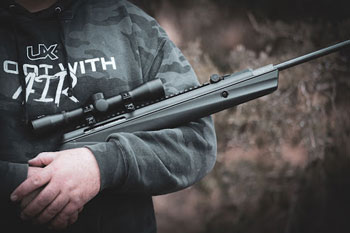
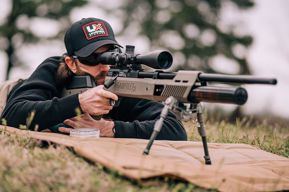
Hold technique is one of the biggest accuracy variables in air rifles, especially in mechanical rifles. A spring or gas ram rifle often reacts differently to changes in grip pressure, forearm placement, shoulder pressure, and follow-through than a cartridge-based rifle does.
That is why a spring piston rifle can feel unpredictable to a new shooter even when the rifle is functioning perfectly. The issue is often not that the rifle lacks accuracy. The issue is that the system is sensitive to how it is being held.
Follow-through matters for the same reason. If the shooter breaks the shot and immediately changes pressure or position, the rifle can move differently from shot to shot while the pellet is still traveling down the barrel. That small inconsistency becomes a larger miss downrange.
CO2 and NitroAir platforms can reduce some of that hold sensitivity by offering a smoother shot experience, but no system completely removes the need for consistency. That is why technique is still a major part of practical accuracy no matter what rifle you buy.
Sights, Scopes, and Mounting Stability
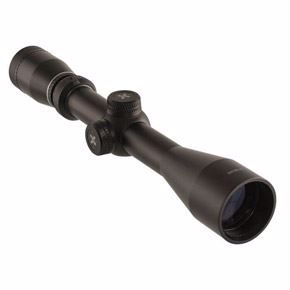
A rifle can only shoot to the point the sighting system allows the shooter to reference consistently. That is why optics and mounting matter, even when the rifle itself is mechanically sound.
The key point here is stability. If the optic shifts, if the mounts are not secure, or if the sight picture changes from shot to shot because of poor setup or inconsistent eye position, the group opens up. Buyers sometimes treat optics as an accessory problem rather than an accuracy problem. In practice, it is both.
This is particularly important with mechanical rifles because the shot cycle can be more disruptive to the full setup. But even in smoother systems like CO2 or NitroAir, a weak optic setup can ruin otherwise solid shooting.
The simplest rule is this: before you conclude the rifle is inaccurate, make sure the aiming system is actually stable and repeatable.
Environmental Conditions Still Matter
Air rifle accuracy does not happen in a vacuum. Temperature, wind, and shooting pace can all change what the shooter sees on target.
Wind matters because pellets are relatively light and more easily pushed around than many firearm projectiles. Even if the shooter does everything else right, outdoor groups can open up quickly when wind becomes inconsistent.
Temperature matters because it can affect how some systems behave. CO2 is the clearest example. Umarex’s cold-weather guidance explains that CO2 performance can drop in colder conditions and during rapid shooting because the system cools as gas is used. That can change practical consistency in ways the shooter may not notice immediately. For the dedicated comparison, see CO2 vs NitroAir Air Rifles: Key Differences in Performance and Consistency (https://www.umarexusa.com/co2-vs-nitroair-air-rifles).
Shooting pace matters because it changes whether the rifle and the shooter remain consistent. A rushed shooting rhythm often makes technique worse. With CO2, it can also affect how the system behaves. This is one reason disciplined shot cadence improves accuracy more often than beginners expect.
Common Accuracy Problems and What They Usually Mean
If shots are scattered in no obvious pattern, the cause is often inconsistency in hold, trigger control, pellet selection, or optic stability. This is especially common when a shooter is still learning a spring or gas ram rifle.
If the rifle shoots acceptably for a few shots and then opens up, the cause may be pacing, sight stability, or system behavior under use. In a CO2 rifle, fast shooting can be part of that story. In any rifle, fatigue or technique drift can do the same thing.
If the rifle groups poorly with one pellet and much better with another, that is normal. It usually means the rifle has a clear pellet preference, not that something is wrong.
If accuracy falls apart only outdoors, wind is often the missing variable. Air rifles are especially good at teaching shooters how much small environmental changes matter.
The point is that bad groups usually have a cause that can be found. The worst move is to assume the rifle itself is defective before working through the real variables.
What Usually Improves Air Rifle Accuracy the Fastest
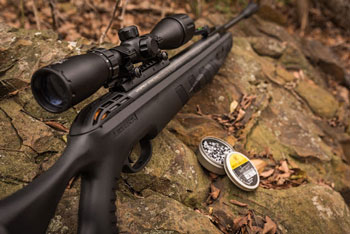
The fastest accuracy improvements usually come from simplifying the process.
Start with one pellet type and test it carefully. Slow down the shot cadence. Make the hold and shoulder pressure as repeatable as possible. Focus on a smooth trigger break. Confirm that the optic or sights are stable. Then repeat. This method sounds basic, but it works because it removes variables one at a time.
This is also why chasing upgrades too early can waste money. Many shooters would see better results by tightening their process before changing hardware. In air rifles, repeatability is king. Any improvement that makes the full shot more repeatable usually helps more than a random equipment change.
The practical goal is not perfection. It is to build a stable shooting pattern that lets the rifle, pellet, and shooter work together predictably.
Key Takeaways
-
Air rifle accuracy depends on repeatability, not just on raw rifle specifications.
-
The power system changes how easy the rifle is to shoot consistently.
-
Pellet choice is one of the most important variables in practical accuracy.
-
Hold technique and follow-through matter most in spring piston and gas ram rifles, but every system rewards consistency.
-
CO2 and NitroAir can be easier for some shooters to manage, but each system still has its own tradeoffs.
-
For the broader cluster path, go back to Air Rifles 101: Power Systems, Accuracy, and How to Choose the Right One (https://www.umarexusa.com/air-rifles-101-guide) and How Air Rifles Work: Complete Guide to Airgun Mechanics (https://www.umarexusa.com/how-air-rifles-work).
FAQ
What affects air rifle accuracy the most?
The biggest factors are the power system, pellet choice, hold consistency, trigger control, barrel behavior, and sight stability. Accuracy is usually the result of several variables working together, not one part acting alone.
Do pellets really make that much difference?
Yes. A rifle that shoots poorly with one pellet may group much better with another. Pellet fit, weight, and design all matter in practical accuracy.
Are spring piston rifles less accurate than CO2 rifles?
Not automatically. Spring piston rifles can be very accurate, but they often require more consistent technique. CO2 rifles can feel easier to shoot well because they reduce some of the shot-cycle disruption.
Does CO2 affect accuracy?
It can. CO2 can be very usable and accurate, but temperature changes and rapid-fire cooling can affect consistency, which can influence point of impact shift.
Is NitroAir better for accuracy?
NitroAir can make practical consistency easier to access because it is built around a high-pressure cartridge system and regulated PCP-style platform. That does not make it the only accurate option, but it can be very attractive for shooters who want easier repeatability.
What is the fastest way to improve air rifle accuracy?
The fastest way is usually to improve repeatability. Use a pellet the rifle likes, slow down the shooting pace, keep the hold consistent, confirm the optic is stable, and focus on clean trigger control.
Works Cited
-
National Shooting Sports Foundation. “Safety.” NSSF. https://www.nssf.org/safety/
-
Umarex USA. “Ruger Blackhawk .177 Caliber Pellet Rifle.” Umarex USA. https://www.umarexusa.com/ruger-blackhawk-177-combo
-
Umarex USA. “RUGER TARGIS HUNTER MAX .22 Caliber.” Umarex USA. https://www.umarexusa.com/ruger-targis-hunter-max-22-black
-
Umarex USA. “Umarex Fusion 2 Quiet CO2 Pellet Rifle .177 Compact Airgun.” Umarex USA. https://www.umarexusa.com/umarex-fusion-2-quiet-co2-pellet-rifle-177-compact-airgun
-
Umarex USA. “Umarex Komplete NCR .177 PCP Air Rifle.” Umarex USA. https://www.umarexusa.com/umarex-komplete-ncr-177-pcp-air-rifle-2251556
Umarex USA. “Using CO2 When It’s Cold Outside!” Umarex USA. https://www.umarexusa.com/using-co2-when-its-cold-outside-blog