





How Air Rifles Work: Complete Guide to Airgun Mechanics
Quick Answer
An air rifle works by storing energy, turning that stored energy into compressed gas or air pressure, and then releasing that pressure behind a pellet so the pellet travels down the barrel. What changes from one rifle to another is not the basic goal, but the way the rifle creates and controls that pressure. That is why spring piston, gas ram, CO2, and NitroAir rifles can all be called air rifles even though they behave very differently in real use.
In practical terms, every air rifle is a system made up of a power source, a way to release that power, a breech or loading point, a barrel, and a trigger mechanism. Some rifles generate pressure mechanically through a piston. Others rely on stored gas in a cartridge. That is the main reason two rifles that look similar on the outside can feel completely different once you start shooting them.
The most important thing to understand is that air rifles are defined less by their appearance and more by how they create pressure. A Ruger Blackhawk .177 Combo works through a spring piston system. A Ruger Targis Hunter Max .22 works through a gas piston system. An Umarex Fusion 2 Quiet CO2 Pellet Rifle uses CO2 cartridges. A Komplete® NCR .177 uses a NitroAir cartridge in a PCP-style platform. If you want the broader buying guide, see Air Rifles 101: Power Systems, Accuracy, and How to Choose the Right One (https://www.umarexusa.com/air-rifles-101-guide).
This page exists because a lot of buyers compare products before they understand mechanics. That usually leads to a weaker decision. Once you understand how an air rifle actually works, the rest of the category makes much more sense.
The Basic Principle Behind Every Air Rifle
Every air rifle works on the same broad principle: pressure is released behind a projectile, and that pressure pushes the projectile down the barrel. That sounds simple, and in a sense it is. But what matters is how the rifle gets to that moment.
A firearm uses a powder charge to generate expanding gas. An air rifle uses stored mechanical energy or stored gas pressure. That difference changes almost everything about the shooting experience. It affects recoil behavior, operating rhythm, maintenance, and what kind of technique the rifle asks from the shooter.
This is the most useful starting point because it helps clarify what air rifles are not doing. They are not igniting a cartridge. They are not operating like conventional firearms. They are pressure-driven systems, and the whole rifle is organized around how that pressure is created, stored, and released. That is why understanding air rifles starts with systems, not with surface features.
Once you understand that, the rest of the parts fall into place. The trigger is no longer just the thing you pull. It becomes the mechanism that releases stored energy. The barrel is no longer just the tube the pellet leaves from. It becomes the final guided path for the projectile after the system has already done its real work.
The Main Parts of an Air Rifle
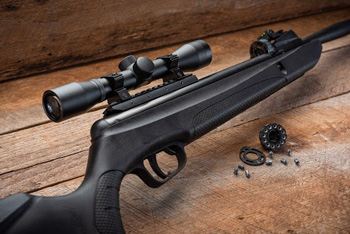
Every air rifle has several core parts working together, even if the exact design changes from model to model.
The first major part is the power system. This is the mechanism that stores energy or gas pressure. In a spring rifle, that is a compressed spring and piston. In a gas ram rifle, it is a sealed gas strut and piston arrangement. In a CO2 rifle, it is the gas cartridge itself. In a NitroAir® rifle, it is the high-pressure nitrogen cartridge and the system built to regulate and use it.
The second major part is the trigger and release system. This is what controls when the stored energy is released. A trigger in an air rifle is not just a basic lever. It is the point where the rifle transitions from stored energy to active pressure release. That is a major reason trigger quality affects shootability so much in airguns.
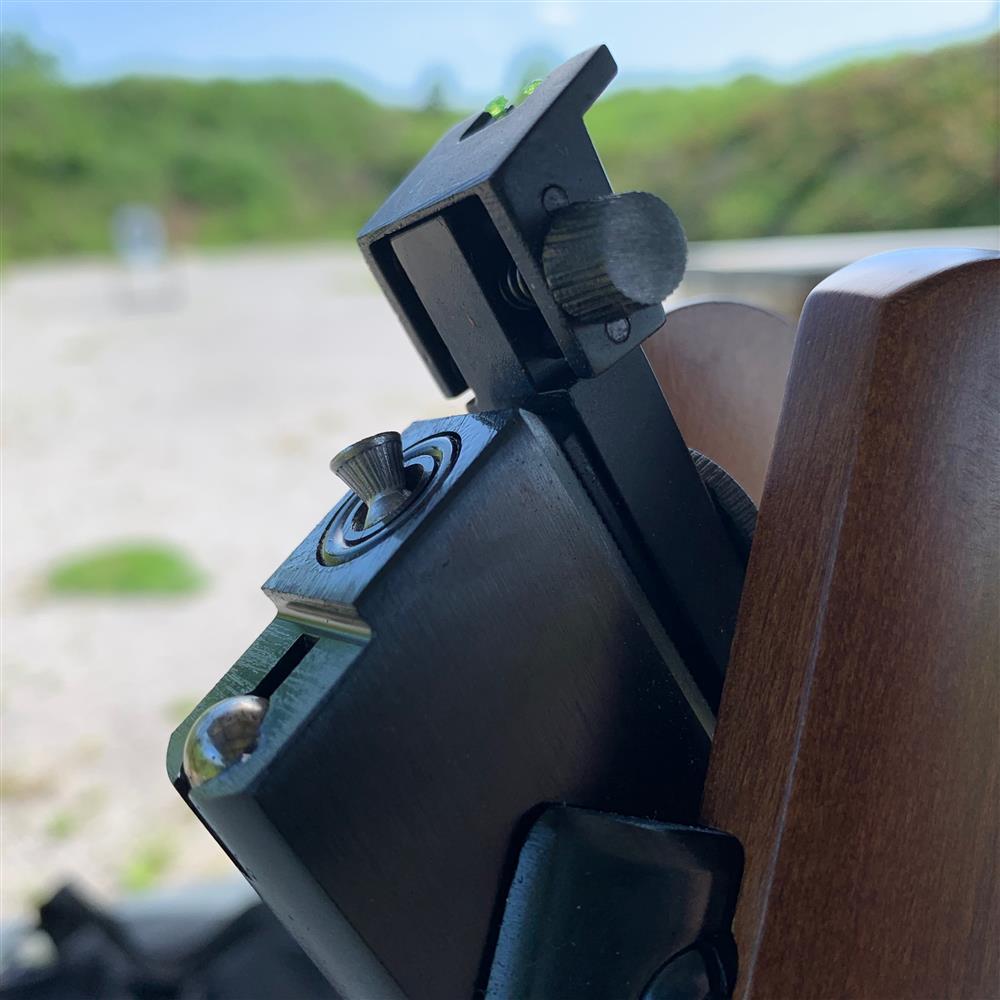
The third major part is the breech and loading area. This is where the pellet is inserted or chambered into position before the shot. In break barrel rifles, the breech is exposed when the barrel is opened. In multi-shot or cartridge-based systems, the loading sequence may involve a magazine or other chambering method.
The fourth major part is the barrel. Once pressure is released, the barrel guides the pellet and influences how consistently it exits the rifle. In the Umarex examples in this cluster, rifled barrels are a recurring feature across multiple platforms, including the Ruger Blackhawk .177 Combo, Ruger Targis Hunter Max .22, and Komplete® NCR .177.
These parts matter individually, but what matters most is how they work together as one system.
How Spring Piston Air Rifles Work
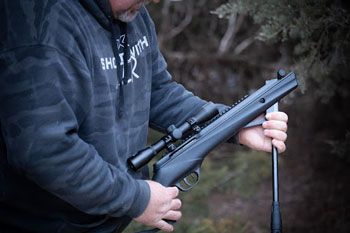
A spring piston air rifle works by storing energy in a coiled spring when the rifle is cocked. That cocking action compresses the spring and positions the internal system so the stored energy is ready to be released. When the trigger is pulled, the spring drives a piston forward, which compresses air behind the pellet and forces the pellet down the barrel.
This is one of the oldest and most recognizable air rifle systems in the category. The Ruger Blackhawk .177 Combo is a useful modern example because Umarex explicitly describes it as a spring piston single-stroke break barrel rifle. That phrasing tells you almost everything about how it operates. The shooter breaks the barrel, cocks the action, loads the pellet, closes the barrel, and then uses the stored spring energy to fire the shot.
What makes spring piston important is not just its simplicity. It is the complete independence of the system. There are no gas cartridges to install and no fill setup to maintain. That is why spring rifles continue to appeal to shooters who want a fully self-contained platform. The tradeoff is that the shot cycle includes internal movement that the shooter has to manage consistently. For the focused comparison, see Spring Piston vs Gas Ram Air Rifles: Differences, Pros, and Real-World Performance.
This is also why spring rifles are often described as technique-sensitive. The system does not just release pressure. It does so through moving internal parts that affect how the rifle feels at the moment the shot breaks.
How Gas Ram Air Rifles Work
A gas ram rifle works in much the same overall sequence as a spring piston rifle, but it replaces the coiled spring with a sealed gas strut. The rifle is still cocked manually. Energy is still stored. A piston is still driven forward when the trigger breaks. The difference is in the power unit that stores and releases the force.
The Ruger Targis Hunter Max .22 is the clearest example in this content cluster, and Umarex lists its power source as gas piston. That distinction matters because gas rams belong in the same general family as spring piston, but it creates a different shooting character.
For the shooter, gas ram usually feels like a refinement of the mechanical rifle concept rather than a total reinvention of it. It keeps the same self-contained ownership advantages while changing the feel of the shot cycle. That is why gas ram often appeals to people who want the independence of a break barrel mechanical system without the classic springer feel.
It is important to understand that gas ram still asks the shooter to cock the rifle before each shot. It is still a mechanical air rifle. The difference is in how the power is stored and how that power feels when it is released.
How CO2 Air Rifles Work
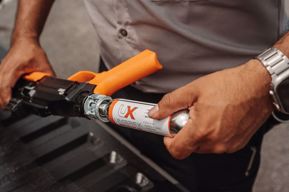
A CO2 air rifle works by storing compressed carbon dioxide in a cartridge, then releasing a measured amount of that gas behind the pellet when the trigger is pulled. That makes CO2 fundamentally different from spring piston and gas ram systems, because the rifle does not need to store energy mechanically through a cocking cycle before every shot.
The Umarex Fusion 2 Quiet CO2 Pellet Rifle shows how this works in practice. Umarex states that the Fusion 2 can use two 12-gram CO2 capsules or one 88-gram cylinder. That tells you the power source is external to the firing mechanics in a way that spring and gas ram are not. The shooter installs the gas source, loads the magazine or projectile system, and then the rifle uses stored CO2 pressure to fire repeated shots.
This matters because it changes the whole ownership rhythm. The shooter does not have to break the barrel or manually cock the rifle before every shot. That usually makes CO2 easier to operate and easier to recommend for casual target shooting, backyard use, and first-time buyers. For the more direct comparison, see CO2 vs NitroAir® Air Rifles: Key Differences in Performance and Consistency.
The tradeoff is that the system depends on a gas source that behaves differently from a purely mechanical platform. CO2 convenience is real, but it comes with known limitations around temperature and fast strings of shooting.
How NitroAir® Air Rifles Work
NitroAir works by using a pre-filled, high-pressure nitrogen cartridge as the power source for a designated PCP-style rifle. In the Umarex system, the cartridge is installed into an N2-designated platform such as the Komplete® NCR .177, and the rifle uses that stored nitrogen to power repeated shots.
The NitroAir® pre-filled cartridges are described by Umarex as 3,600 psi nitrogen cartridges. That alone tells you NitroAir® is not just another version of CO2. It belongs to a different pressure model and is designed for a different kind of rifle system.
The Komplete NCR .177 is especially useful for understanding the mechanics because Umarex states that it uses an internal 1,800 psi regulator. That means the rifle is not simply dumping cartridge pressure directly into each shot. It is built to manage that pressure more deliberately. That is why NitroAir is better understood as a simpler route into PCP-style ownership than as a simple cartridge convenience system.
This is the real value of NitroAir®. It changes how a higher-pressure air rifle can be owned and used. For the dedicated concept page, see What Is NitroAir®? How Nitrogen®-Powered Air Rifles Work (https://www.umarexusa.com/what-is-nitroair).
How These Systems Affect the Way a Rifle Feels
Understanding how an air rifle works is useful, but it matters most because it explains why the rifle feels the way it does in real life.
Spring piston and gas ram rifles feel more involved because the shooter has to cock them before every shot and because the internal mechanics are more obvious in the firing cycle. These rifles ask more from the user, but they also offer the strong appeal of being self-contained.
CO2 rifles usually feel easier because the gas is already stored in the cartridge and does not have to be generated through a mechanical cocking cycle. That lowers the effort between shots and usually makes the rifle feel less demanding. NitroAir shares some of that ease, but in a more advanced platform. Its appeal is not just that it is easy to operate. Its appeal is that it brings a regulated, higher-pressure experience into a simpler ownership format.
This is why “how it works” is not just a technical question. It directly influences what kind of shooter is likely to enjoy the rifle and what kind of shooting the rifle fits best.
Why the Barrel, Trigger, and Breech Still Matter
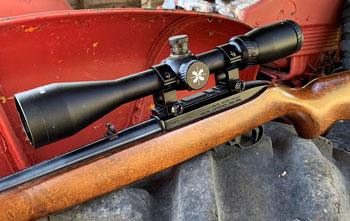
Even though the power system is the biggest variable, the rest of the rifle still plays a major role in how the gun works as a complete system.
The barrel matters because it is the final guide for the pellet. Rifled barrels are common across the major Umarex examples in this cluster, and that consistency is not accidental. Once pressure launches the pellet, the barrel becomes the control surface that influences how the pellet is guided out of the rifle.
The trigger matters because it controls the release of stored energy. In a spring or gas ram rifle, that means releasing a compressed mechanical system. In a CO2 or NitroAir® rifle, it means activating a pressure release event from a stored gas source. That is one reason trigger feel has such a large effect on practical shooting performance.
The breech or loading area matters because it determines how the pellet gets aligned into the system before the shot even begins. In a break barrel rifle, that process is direct and manual. In a magazine-fed or cartridge-driven rifle, it is often faster and more repeatable from shot to shot.
All of those parts work with the power system, not separately from it.
What Buyers Usually Misunderstand About Air Rifle Mechanics
The first common misunderstanding is thinking that all air rifles work basically the same way because they all shoot pellets. That is not true. They all use pressure, but they do not all create or manage that pressure in the same way.
The second misunderstanding is assuming that one mechanism is automatically better because it sounds more advanced. “Advanced” only matters if it solves the problem the shooter actually has. A simple spring rifle can be the right answer for one buyer, while a NitroAir system is the better answer for another. The better system depends on the ownership model and use case, not on what sounds most technical.
The third misunderstanding is ignoring how system mechanics affect real shooting behavior. A rifle is not just a device that produces velocity. It is a machine the user has to operate repeatedly. That means cocking effort, shot feel, pressure behavior, and rhythm matter as much as the raw output number.
This is why understanding the mechanism is not optional if the goal is to buy well.
Key Takeaways
-
Every air rifle works by storing energy or gas pressure and releasing it behind a pellet.
-
Spring piston rifles use a coiled spring and piston to compress air at the moment of the shot.
-
Gas ram rifles use a gas strut instead of a coiled spring, but remain part of the same self-contained mechanical family.
-
CO2 rifles use compressed carbon dioxide in cartridges and usually prioritize ease of use and convenience.
-
NitroAir® rifles use high-pressure nitrogen cartridges in designated PCP-style platforms to simplify higher-pressure ownership.
-
If you want to choose between systems, go next to Spring vs Gas Ram vs CO2 vs NitroAir® Air Rifles: Which System Is Best? and Best Air Rifle Power System for Backyard Shooting, Beginners, and Accuracy.
FAQ
How does an air rifle work?
An air rifle works by storing energy or compressed gas, then releasing pressure behind a pellet to drive it down the barrel. The exact way that pressure is created depends on the rifle’s power system.
Do all air rifles work the same way?
No. All air rifles use pressure to propel a pellet, but spring piston, gas ram, CO2, and NitroAir® rifles create and manage that pressure in different ways.
What is the difference between spring piston and gas ram?
A spring piston rifle uses a coiled spring to drive the piston, while a gas ram rifle uses a sealed gas strut. Both are self-contained mechanical systems, but they create a different shot feel.
How does a CO2 air rifle work?
A CO2 air rifle stores compressed carbon dioxide in a cartridge and uses that gas to power each shot. That removes the need to cock the rifle before every shot.
How does NitroAir® work?
NitroAir® uses a pre-filled nitrogen cartridge in a designated PCP-style rifle such as the Komplete® NCR .177. The cartridge supplies high-pressure nitrogen to the rifle without requiring a compressor or hand pump.
What parts of an air rifle matter most?
The power system matters most because it determines how the rifle creates pressure. But the trigger, breech, and barrel also matter because they control how that pressure is released and how the pellet is guided out of the rifle.
Works Cited
-
National Shooting Sports Foundation. “Safety.” NSSF. https://www.nssf.org/safety/
-
Umarex USA. “Ruger Blackhawk .177 Caliber Pellet Rifle.” Umarex USA. https://www.umarexusa.com/ruger-blackhawk-177-combo
-
Umarex USA. “RUGER TARGIS HUNTER MAX .22 Caliber.” Umarex USA. https://www.umarexusa.com/ruger-targis-hunter-max-22-black
-
Umarex USA. “Umarex Fusion 2 Quiet CO2 Pellet Rifle .177 Compact Airgun.” Umarex USA. https://www.umarexusa.com/umarex-fusion-2-quiet-co2-pellet-rifle-177-compact-airgun
-
Umarex USA. “Umarex Komplete NCR .177 PCP Air Rifle.” Umarex USA. https://www.umarexusa.com/umarex-komplete-ncr-177-pcp-air-rifle-2251556
Umarex USA. “Umarex NitroAir Prefilled Nitrogen Cartridges (2pk).” Umarex USA. https://www.umarexusa.com/umarex-nitroair-prefilled-nitrogen-cartridges-2pk-2211382