IMPORTANT LEGAL NOTICE: Air-powered bowfishing equipment, including PCP arrow-launching systems and air archery platforms, may not be specifically addressed or permitted under the laws and regulations of every state, province, water body, or local jurisdiction. Regulations involving bowfishing, spearing, airguns, arrows, fishing methods, and air-powered hunting or fishing equipment may vary significantly and may change over time. Always contact your state or local fish and wildlife agency to verify the current legality of any equipment, species, fishing method, season, or water before use. Nothing in this article should be interpreted as legal advice or as confirmation that any specific equipment or method is lawful in your area.
Airgun bowfishing safety starts with legal verification, equipment compatibility, clear line control, safe arrow handling, target identification, and responsible recovery. A safe setup is not only about launching an arrow. It is about knowing whether the method is lawful, where the line will travel, what fish is being targeted, what lies beyond the shot, and whether the fish can be recovered.
Air-powered bowfishing systems may not be clearly addressed in every fishing regulation. Some agencies use bowfishing or spearing language, while others may not specifically define PCP arrow-launching equipment. Before use, contact the appropriate fish and wildlife agency to confirm whether the equipment, method, species, and water body are lawful.
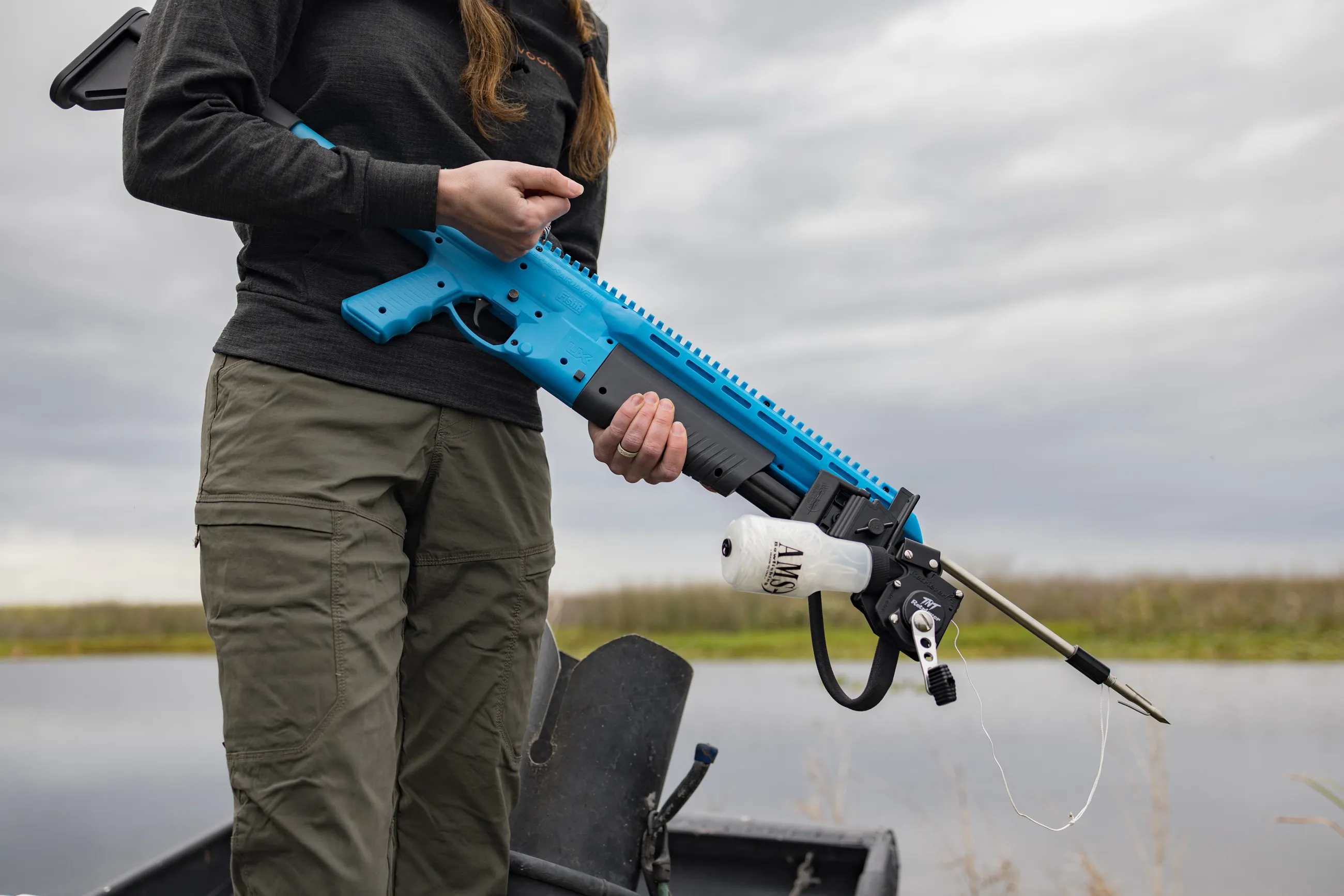
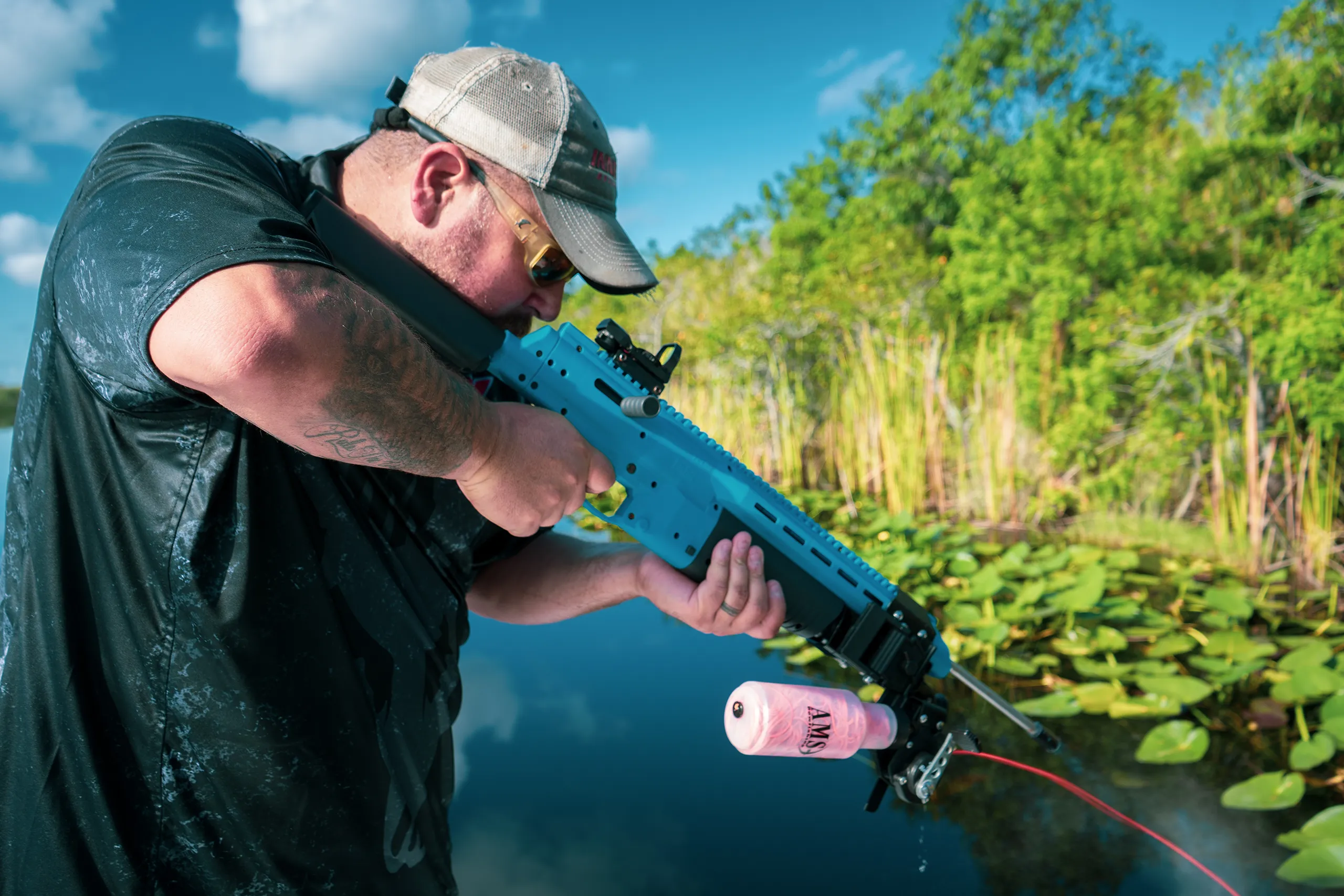
The Umarex AirJavelin FishR is listed as a PCP bowfishing platform with a 155 cc onboard tank, universal reel mount, and corrosion-resistant features for harsh or salt environments. The Umarex FishR Airgun Fishing Arrow is listed as a 1,248-grain, 26-inch solid fiberglass arrow with stainless steel hardware and an Innerloc head. Those product details matter, but product capability is not the same as legal permission.
The safest bowfishing shots are usually made before the fish appears. They are made through preparation.
The air system is checked. The arrow is inspected. The line is clear. The reel is mounted correctly. The water has been researched. The species rules have been verified. The shooter already knows where people, boats, docks, rails, vegetation, and hard structure are before a fish moves into view.
That kind of preparation matters because bowfishing rarely gives perfect conditions. Fish move fast. Glare hides details. Muddy water makes identification harder. Current changes angles. A boat drifts. A line brushes against something it should not touch. The moment a fish appears, everything compresses into seconds.
Airgun bowfishing adds another layer because the platform uses compressed air to launch a fishing arrow. The shooter needs to manage not only normal bowfishing concerns, but also air system handling, arrow compatibility, fill procedures, and retrieval setup.
The simplest safety rule is also the most important: do not shoot unless the equipment is ready, the line is clear, the fish is identified, the shot is legal, and recovery is realistic.
For the larger category foundation, see Airgun Bowfishing: The Complete Guide to Air-Powered Bowfishing Systems. For setup preparation, see Airgun Bowfishing Setup Guide.
Legal verification is not paperwork. It is part of safe use.
Air-powered bowfishing systems may not be specifically named in every regulation. Some rules may refer to bowfishing, spearing, gigs, bows, arrows, or other fishing methods without clearly explaining whether PCP arrow-launching systems are included. That uncertainty matters because a user can be unsafe legally even when handling the equipment carefully.
Texas Parks and Wildlife publishes bowfishing regulations and notes that some waters and properties may have additional restrictions. Florida’s saltwater spearing rules define spearing broadly to include bowfishing and other devices used to take fish by piercing the body, but species and area restrictions still apply. Those official examples show why users must rely on current agency guidance rather than assumptions.
Before using air-powered bowfishing equipment, verify the specific legal questions that apply to the trip:
|
Legal Question |
Why It Matters |
|
Is bowfishing or spearing allowed on this water? |
Some waters may restrict the method |
|
Are air-powered arrow systems addressed or permitted? |
Regulations may not specifically name PCP arrow systems |
|
Which species may be taken? |
Species rules vary by jurisdiction |
|
Are there area closures or local restrictions? |
Parks, cities, refuges, and managed waters may differ |
|
What license or permit is required? |
Requirements can vary by state and water type |
|
Are possession or disposal rules listed? |
Legal harvest includes lawful handling after recovery |
If the regulation is unclear, contact the responsible fish and wildlife agency before use. Do not assume traditional bowfishing approval automatically includes air-powered equipment.
For deeper legal context, see Airgun Bowfishing Laws and Regulations (https://www.umarexusa.com/airgun-bowfishing-laws-and-regulations).
The retrieval line is what makes bowfishing possible, but it is also one of the biggest safety concerns.
A bowfishing arrow is connected to line. When the arrow launches, the line moves with it. If that line is wrapped around a hand, foot, rail, branch, cleat, reel mount, or piece of gear, the shot can become dangerous fast.
Experienced bowfishers treat the line path like part of the target. They do not only ask, “Can I hit the fish?” They ask, “Where will the line go, and what will happen when it tightens?”
The AirJavelin FishR product information states that the system includes a universal mounting rail designed to accept a wide mouth reel or bottle reel, with line tied to the arrow’s slider in a bowfishing-style setup. That means the user must understand how the reel, line, slider, and arrow work together before taking the equipment onto the water.
A safe line check should happen before every shot. Look for loose loops, knots, frays, bad angles, and contact with gear or people. If the line is not clear, the shot should wait.
A fishing arrow is not a normal target arrow. It is heavier, tougher, and connected to a recovery system.
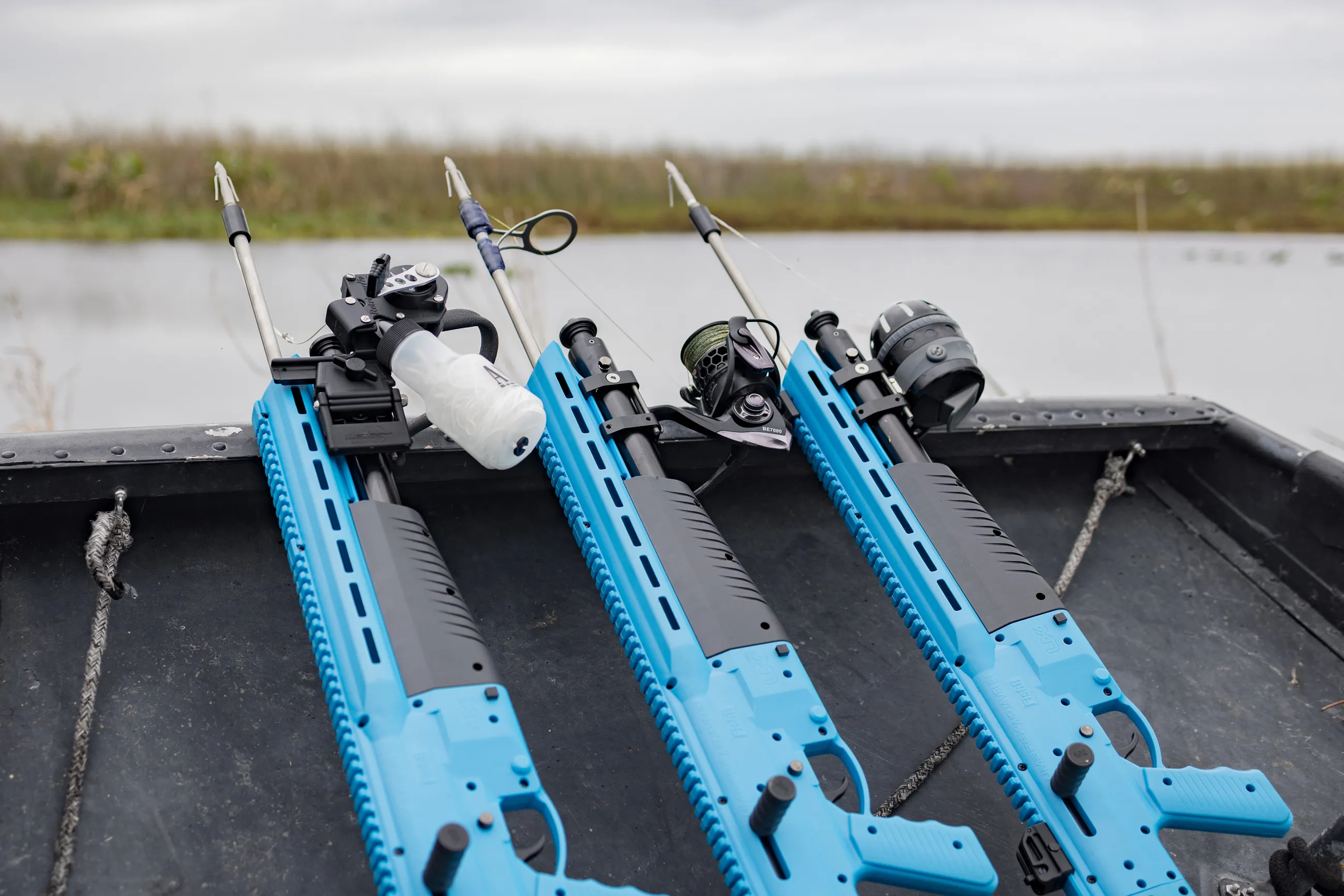
The Umarex FishR Airgun Fishing Arrow is listed as fitting the AirJavelin FishR, weighing 1,248 grains, measuring 26 inches long, and using solid fiberglass construction with a stainless steel tip and slide. Umarex also lists an Innerloc head for bowfishing conditions.
Those details matter because bowfishing arrows face rough use. They enter water. They contact fish. They pull against line. They may run through mud, vegetation, shell, rocks, or debris during recovery.
Compatibility matters for safety. A mismatched arrow can affect loading, launch behavior, line travel, and recovery. Air-powered bowfishing systems should be paired only with arrows and components designed for the specific platform and bowfishing application.
|
Arrow Safety Check |
What to Look For |
|
Shaft condition |
Cracks, splintering, bending, or damage |
|
Point security |
Loose or damaged bowfishing point |
|
Slide movement |
Proper function and no binding |
|
Line connection |
Secure tie-in and clean path |
|
Platform fit |
Arrow designed for the launcher |
|
Post-shot damage |
Wear from rocks, shell, mud, or impact |
A damaged arrow should not be reused until it is inspected and confirmed safe. Bowfishing is hard on equipment, and small damage can become a bigger problem under line tension.
For more on compatible equipment, see the Umarex FishR Airgun Fishing Arrow.
PCP bowfishing systems use stored compressed air. That means air pressure is part of the safety routine.
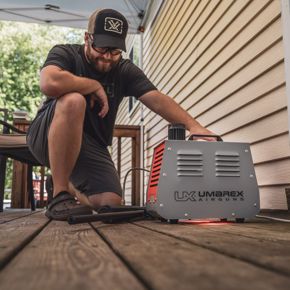
The AirJavelin FishR is listed by Umarex as using a 9.5 cubic inch, 155 cc onboard tank at 4,500 psi regulated to 800 psi. Umarex also states that the platform can be filled with a 3-stage airgun hand pump, an electric airgun compressor, or an external tank.
That information should be treated with respect. High-pressure air systems require proper fill equipment, correct procedures, and attention to manufacturer guidance. Guessing is not acceptable. Overfilling, using improper equipment, or ignoring damage can create risk.
A good safety routine includes checking the air system before leaving home, confirming the fill method is appropriate, inspecting for visible damage, and following the manufacturer’s instructions. The water is not the place to troubleshoot pressure questions for the first time.
PCP air systems are reliable when used correctly, but they are not casual gear. If a user is new to PCP equipment, learning safe filling and handling should happen before any bowfishing trip.
For a deeper explanation of how the platform works, see How Airgun Bowfishing Works.
A safe shot starts with a clearly identified target.
Bowfishing often happens in difficult visual conditions. Fish move under glare, mud, current, grass, shadows, and surface distortion. A shape in the water is not enough. A flash of movement is not enough. If the species is not identified clearly, the shot should not happen.
This matters even more when regulations are species-specific. A fish that is legal in one place may be protected or restricted somewhere else. Similar-looking fish may share the same water. Young or partially visible fish may be difficult to identify accurately.
Target identification is also tied to recovery. A responsible shooter should consider whether the fish can be recovered safely after impact. A fish buried in heavy vegetation, moving into fast current, or positioned near hard structure may create recovery problems even if the shot looks possible.
Good bowfishing is disciplined. It is not shooting at every movement. It is waiting for a legal, identifiable, recoverable target under conditions that allow a controlled shot.
For species and condition guidance, see Best Fish Species for Airgun Bowfishing.
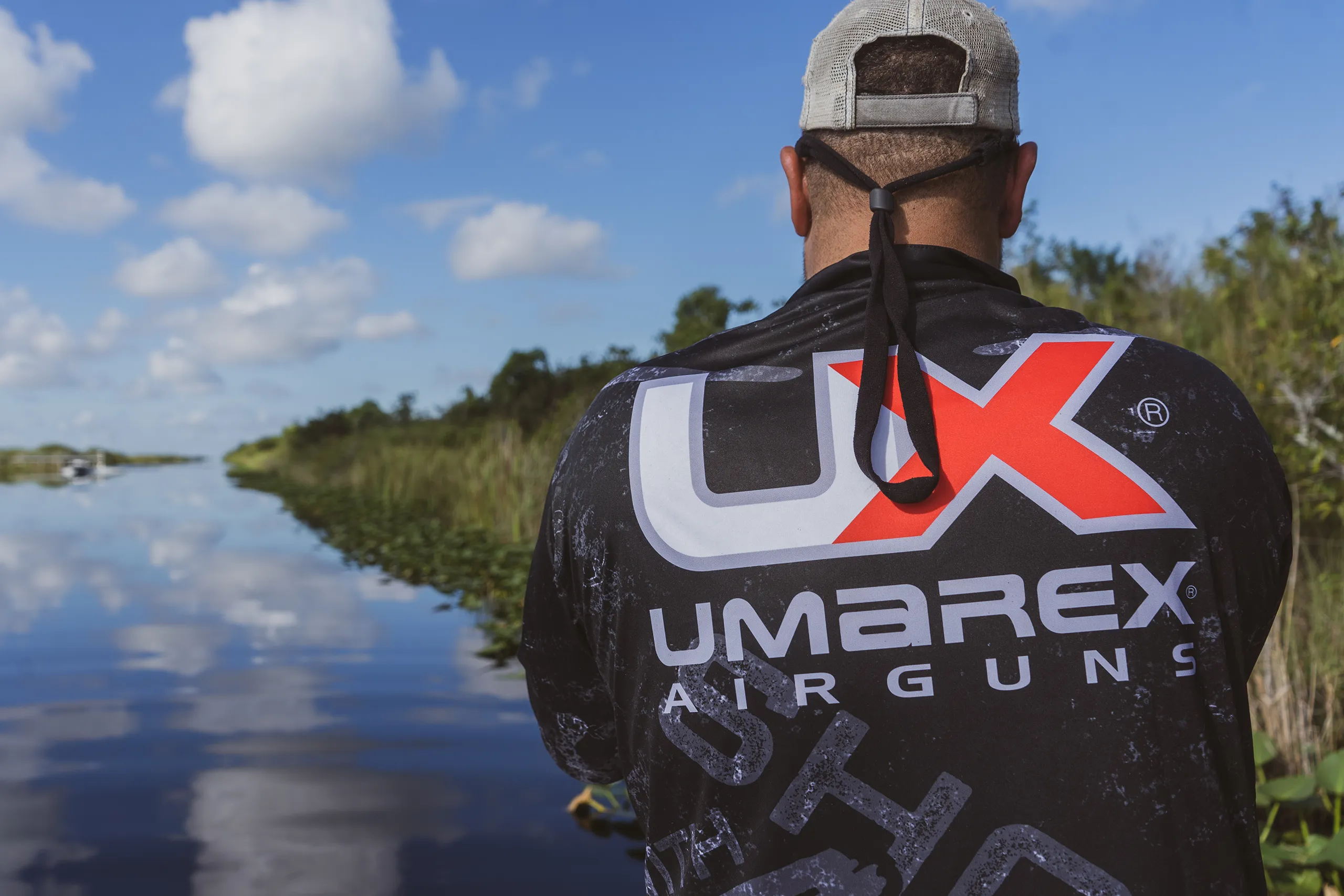
Water changes what the shooter sees, how the arrow enters, and how recovery works.
The first issue is refraction. Fish appear in a different position than they actually are because light bends through water. That is why bowfishers often aim lower than the visible fish position. The deeper the fish and the sharper the angle, the more dramatic the adjustment can become.
Visibility is another safety factor. Clear water supports better identification. Muddy water hides body shape. Glare can erase details. Vegetation can hide the fish or trap the line. Current can move both the fish and the arrow during recovery.
|
Water Condition |
Safety Concern |
|
Muddy water |
Poor identification and difficult recovery |
|
Strong current |
Increased retrieval difficulty |
|
Heavy vegetation |
Line tangles and hidden targets |
|
Bright glare |
Reduced target certainty |
|
Deep angle |
More refraction and harder shot judgment |
|
Shell or rocks |
Arrow and line damage during recovery |
|
Night lighting |
Depth perception and shadow distortion |
A safe bowfisher reads the water before reading the target. If conditions make identification or recovery uncertain, passing the shot is the responsible choice.
Bowfishing can happen from boats, banks, docks, or shallow-water access points. Each setting changes the safety picture.
On a boat, stability matters. A shooter should understand footing, rail position, line direction, and where others are standing. Boat drift can change angles quickly. A fish that appears on one side of the boat can pull attention away from line hazards or other people.
From the bank, background and access matter. The shooter needs to know what lies beyond the fish, whether other people are nearby, and whether recovery is possible without unsafe movement. Mud, rocks, steep banks, and vegetation can complicate retrieval.
Saltwater adds corrosion, tides, grass flats, shell, sand, and stronger glare. The AirJavelin FishR product page notes stainless and corrosion-resistant parts for harsh and salt environments, but saltwater still demands cleaning, drying, and inspection after use.
For coastal use, see Saltwater Airgun Bowfishing Guide.
The shot is only the beginning. In bowfishing, the line comes tight and the recovery begins.
Safe retrieval means keeping control without wrapping line around hands or body parts. It also means watching where the fish is moving, where the arrow is pulling, and whether the line is contacting vegetation, shell, rocks, boat hardware, or other hazards.
Retrieval should be steady, controlled, and deliberate. Jerking line blindly can damage equipment or create unsafe tension. If the line hangs up, slow down and evaluate the problem rather than pulling aggressively.
The shooter also needs to think about fish handling. Follow current possession, handling, and disposal rules for the jurisdiction. Do not assume that a fish may be discarded anywhere or handled however the shooter chooses. Regulations may include rules beyond the shot itself.
Responsible recovery is part of responsible bowfishing. A shot that cannot be recovered safely is usually a shot that should not be taken.
The most common safety mistake is rushing. A fish appears, and the shooter forgets the line, the water, the people nearby, or the legal question.
The second mistake is treating airgun bowfishing like ordinary target shooting. It is not. The projectile is a fishing arrow attached to a line, and the shot happens around water, people, boats, banks, and changing conditions.
The third mistake is ignoring equipment compatibility. A bowfishing setup works as a system. The launcher, arrow, reel, line, slide, and point all need to match the application.
The fourth mistake is assuming legality. Product descriptions, online videos, and traditional bowfishing language do not confirm that an air-powered arrow system is lawful in a specific place.
The fifth mistake is neglecting post-trip inspection. Mud, salt, sand, vegetation, and impact can damage arrows, line, reel mounts, and hardware. A safe trip next time starts with cleaning and inspection after this trip.
|
Mistake |
Safer Habit |
|
Rushing shots |
Wait for clear identification and line control |
|
Ignoring line path |
Check line before every shot |
|
Guessing legality |
Confirm with the responsible agency |
|
Using mismatched gear |
Use compatible bowfishing equipment |
|
Skipping inspection |
Check arrow, line, reel, and hardware after use |
|
Shooting through poor visibility |
Pass until target identification is clear |
Safety is not complicated, but it does require discipline.
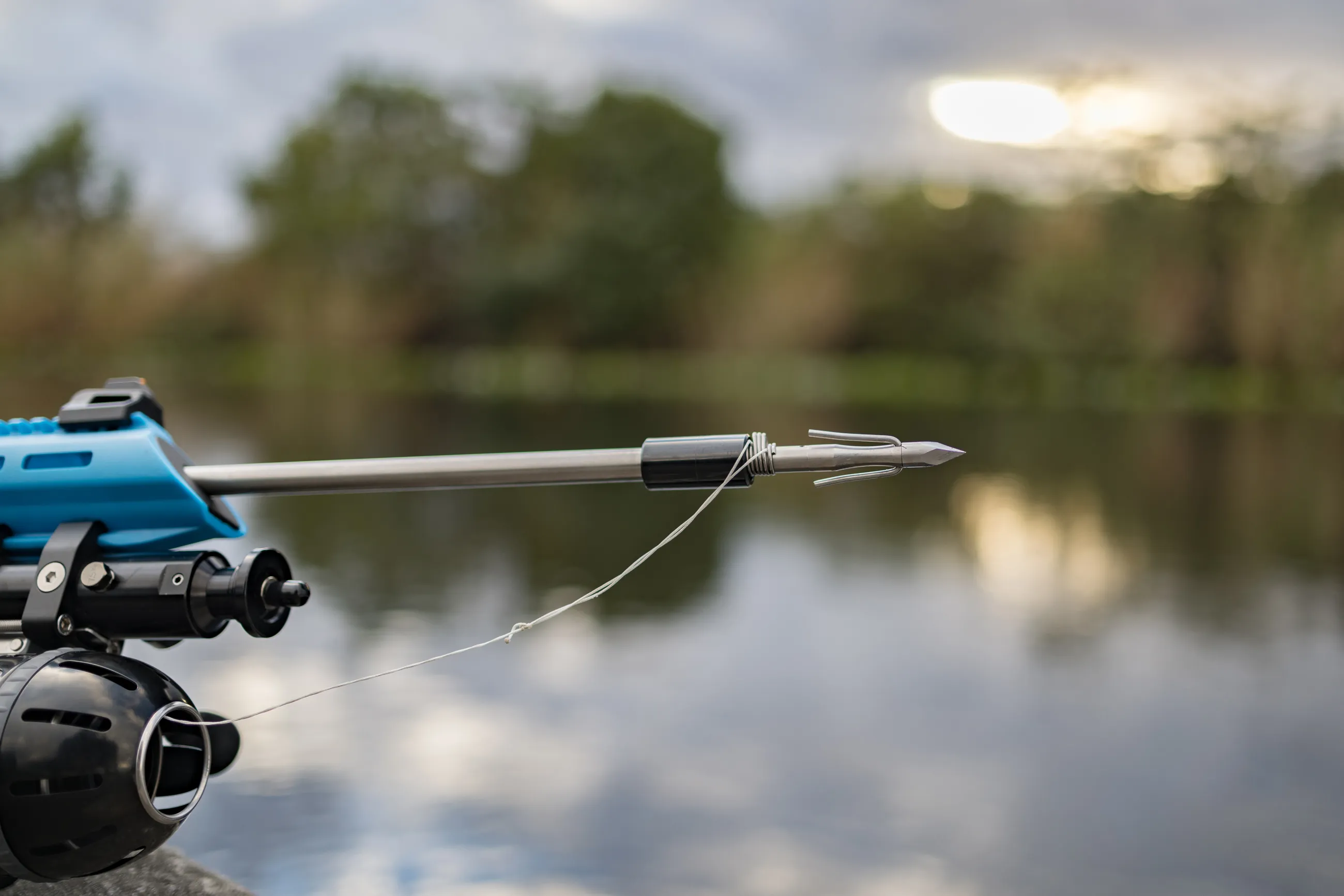
A pre-trip checklist helps remove guesswork.
Before any outing, confirm the legal status, inspect the equipment, and evaluate the water. A few minutes of preparation can prevent the worst mistakes.
|
Pre-Trip Check |
What to Confirm |
|
Legal status |
Species, method, water, equipment, license, local rules |
|
Air system |
Correct fill method and safe condition |
|
Arrow |
Correct fit, no visible damage, secure point |
|
Reel |
Mounted securely and feeding properly |
|
Line |
No frays, knots, wraps, or blocked path |
|
Slide |
Moving properly and attached correctly |
|
Water |
Visibility, current, tide, recovery path |
|
Surroundings |
People, boats, property, docks, and safe direction |
The best safety habit is consistency. Run the same checks every time. Do not skip them because the fish are moving or the water looks easy.
A safe setup creates confidence. Not confidence to take careless shots, but confidence to pass bad ones and take clean ones when the conditions are right.
Airgun bowfishing safety begins before the shot with legal verification, equipment inspection, line control, and target identification.
Air-powered bowfishing equipment may not be specifically addressed in every jurisdiction, so users must confirm legality with the appropriate fish and wildlife agency before use.
Line control is one of the most important safety habits because the arrow is connected to a retrieval line.
The Umarex FishR Airgun Fishing Arrow is listed as a 1,248-grain solid fiberglass arrow with stainless steel hardware and an Innerloc head for bowfishing conditions.
The AirJavelin FishR is listed as a PCP bowfishing platform with a 155 cc onboard tank, universal reel mount, and salt-environment features.
Safe bowfishing means passing shots when the line is unclear, the fish is unidentified, the legal status is uncertain, or recovery is not realistic.
Airgun bowfishing can be used responsibly only when the equipment is compatible, the line is controlled, the target is clearly identified, the shot is recoverable, and the method is lawful for the water being fished.
Line control is one of the biggest safety risks. The retrieval line must be clear before every shot and should never be wrapped around hands, feet, gear, boat parts, or nearby objects.
No. Air-powered bowfishing equipment may not be specifically addressed or permitted in every jurisdiction. Users should verify legality directly with the responsible fish and wildlife agency before use.
No. Bowfishing requires equipment designed for arrow use and compatible bowfishing hardware. A pellet rifle is not an airgun bowfishing setup.
Check the legal status, air system, arrow, point, slide, reel, line path, water conditions, target identification, and surroundings before use.
Species rules vary by location, and water conditions can distort what the shooter sees. If the fish cannot be identified clearly, the shot should not happen.
Yes. Saltwater adds glare, tides, current, shell, sand, corrosion exposure, and often more complex regulations. Gear should be cleaned and inspected after saltwater use.
Umarex USA. “Umarex FishR Airgun Fishing Arrow.” Used for FishR arrow compatibility, weight, length, fiberglass construction, stainless hardware, slide, and bowfishing product details. https://www.umarexusa.com/2252159
Umarex USA. “Umarex AirJavelin FishR.” Used for AirJavelin FishR PCP platform details, onboard tank size, pressure, regulated pressure, reel mount, fill methods, and salt-environment features. https://www.umarexusa.com/umarex-airjavelin-fishr
Texas Parks and Wildlife Department. “Bow Fishing Regulations.” Used for state-level bowfishing regulation and local restriction context. https://tpwd.texas.gov/regulations/outdoor-annual/fishing/general-rules-regulations/bow-fishing-regulations
Florida Fish and Wildlife Conservation Commission. “Spearing.” Used for saltwater spearing and bowfishing definition context. https://myfwc.com/fishing/saltwater/recreational/spearing/