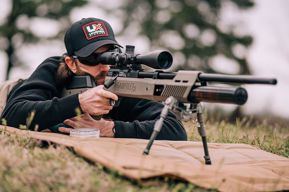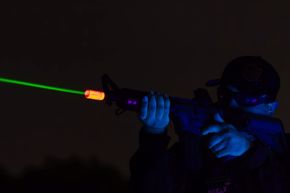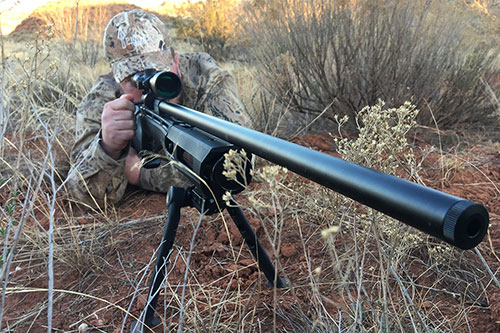
A small-bore PCP air rifle is a pre-charged pneumatic rifle chambered in the smaller common airgun calibers, usually .177, .22, or .25. Unlike a spring piston or gas ram rifle, a PCP stores high-pressure air in a reservoir before the shot. When the trigger breaks, the rifle releases a controlled amount of that stored air to drive the pellet down the barrel. That is why PCP rifles usually feel smoother, cycle faster, and are easier to shoot consistently than many mechanical air rifles. Umarex’s PCP lineup currently spans compact carbines, entry-level rifles, regulated precision platforms, and NitroAir-powered PCP variants, with small-bore offerings including the Origin, Iconix, Notos, Zelos, Gauntlet family, and Komplete NCR rifles.
For most buyers, the real question is not whether PCP rifles are good. It is which kind of PCP ownership model makes sense. Some shooters want the easiest entry into traditional PCP ownership. Others want a compact PCP for backyard use. Others care most about precision, regulator behavior, and shot consistency. Others want PCP-style performance but do not want the usual pump, tank, or compressor commitment. That is why small-bore PCP deserves its own cluster and why a useful pillar has to explain the category as a system, not as a generic product roundup.
This guide is built to help you make that decision the right way. It explains what makes a PCP different, why small-bore PCP is its own buying category, how fill methods and calibers shape ownership, where Komplete fits without taking over the cluster, and how to match the right rifle to the way you actually plan to shoot. If you want the mechanics page next, see What Is a PCP Air Rifle? How Pre-Charged Pneumatic Airguns Work. If you want the fill logistics page next, see How to Fill a PCP Air Rifle: Hand Pumps, Compressors, Tanks, and NitroAir Explained.
A PCP air rifle is different because it stores pressure before the shot instead of generating it at the moment the trigger breaks. That sounds like a technical distinction, but it changes nearly everything about how the rifle feels and how it fits into real-world use. A spring piston or gas ram rifle asks the shooter to compress the power source before every shot. A PCP rifle stores its power in advance, which means the shooter is working with a charged air reservoir rather than recreating the pressure cycle each time.
That single change is why PCP rifles often feel more refined. They tend to have less disruptive shot behavior, easier follow-up shooting, and a different relationship between effort and performance. The rifle is doing more of the work ahead of time, so the shooter is not constantly reloading the power system through cocking effort. That makes PCP especially attractive for people who want multi-shot capability, smoother operation, or longer sessions where repeated manual effort becomes tiresome.
It also changes the ownership model. A PCP rifle asks the buyer to think about fill method, pressure management, and shot count in a way that mechanical rifles do not. Those are not secondary details. They are part of the category. When someone buys an Origin, an Iconix, a Notos, a Zelos, or a Gauntlet, they are not just buying a rifle. They are buying into a certain kind of air management routine. When they buy a Komplete, they are buying into a variation of PCP ownership that replaces conventional fill gear with pre-filled nitrogen cartridges.
That is why PCP has to be explained as a category of systems rather than a single type of product. It includes entry-level platforms, compact carbines, bench-capable rifles, regulated precision rifles, and NitroAir-powered alternatives. They all belong under the PCP umbrella, but they do not solve the same user problem in the same way.
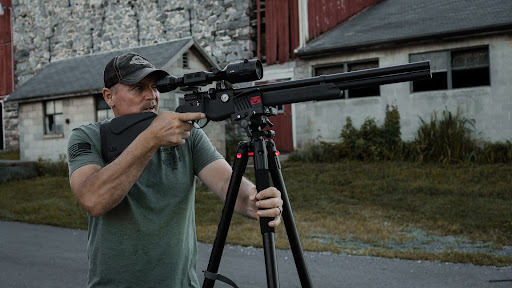
Small-bore PCP is broad enough to support a deep educational cluster and narrow enough to stay commercially focused. That is exactly what you want in a topic area. It covers the calibers most buyers consider first, usually .177, .22, and .25, and it supports the most common real-world use cases: target shooting, backyard practice, pest control, small game use, and general precision airgun ownership.
That matters because the buyer journey in small-bore PCP is not the same as the buyer journey in big-bore PCP. Small-bore buyers are usually earlier in the learning curve, more likely to compare fill methods, more likely to ask whether .177 or .22 is better, more likely to care about compactness and affordability, and more likely to be cross-shopping their first PCP against other air rifle systems. Big-bore PCP, by contrast, narrows faster into specialized hunting and high-energy use. Mixing the two clusters would blur intent and weaken topical clarity.
Umarex’s current lineup reinforces why the split is useful. The PCP category includes small-bore options such as the Gauntlet Limited .22 and .25, the Notos .22, the Zelos .22 and .25, the Komplete NCR .177 and .22, and other PCP platforms, while .30 and larger models sit at the edge of a different buyer conversation. That makes small-bore PCP the right cluster to build first because it owns the broader educational territory.
Small-bore PCP also gives you a natural internal architecture. You can explain how PCP works, how to fill it, how to choose a caliber, how to choose a first PCP, how to think about backyard versus hunting versus target use, and where NitroAir belongs inside the broader PCP conversation. That is a much stronger authority system than a scattered set of isolated rifle pages.
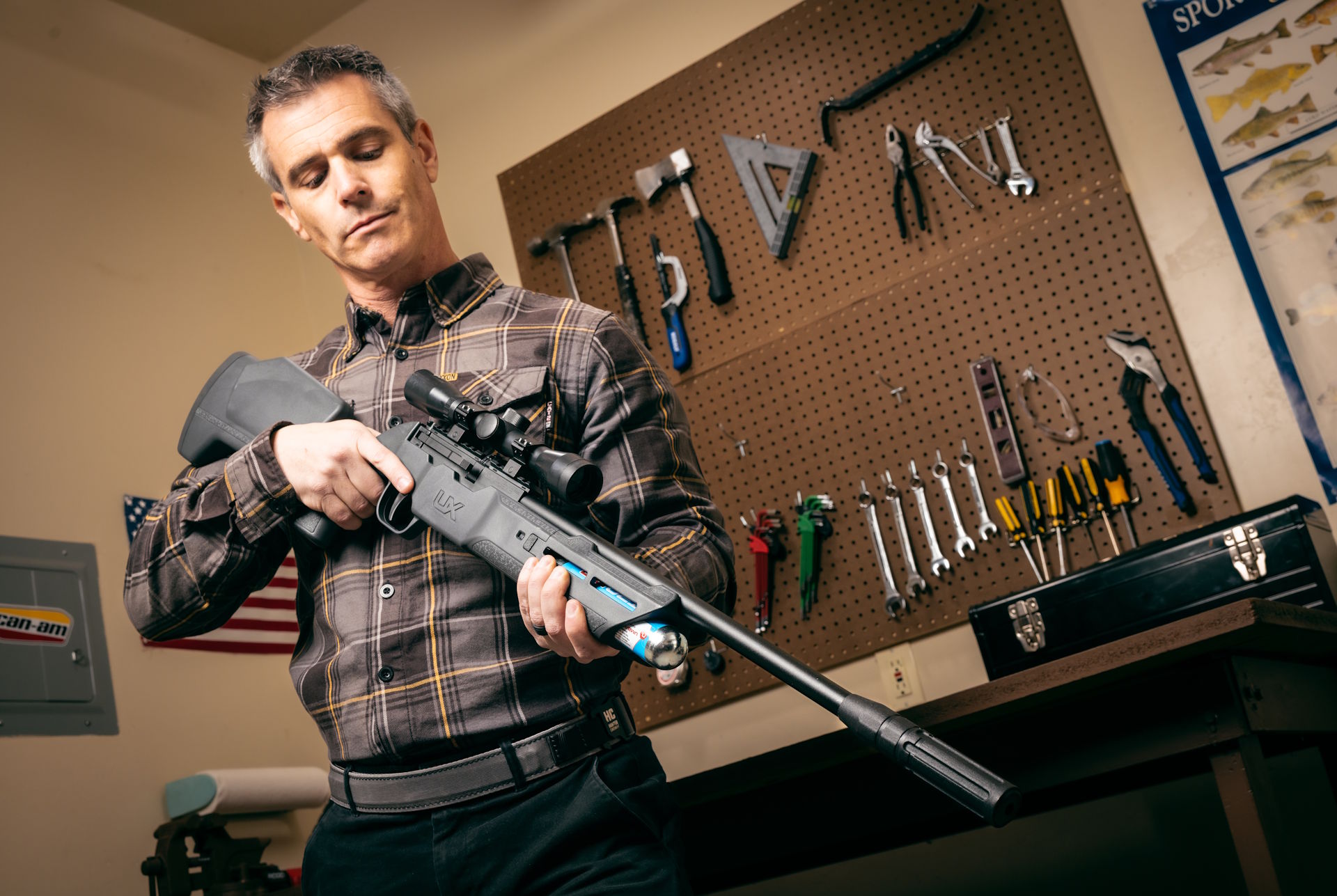
At a basic level, a PCP rifle works by storing high-pressure air or nitrogen in a reservoir, then releasing a controlled amount of that stored pressure when the trigger is pulled. Once the reservoir is charged, the rifle is ready to fire multiple shots without recreating the pressure through cocking effort before every shot.
The sequence is simple to describe, but important to understand. First, the rifle is filled from a pressure source. In conventional PCP ownership, that source is usually a hand pump, compressor, or air tank. In the NitroAir branch of the category, that source can be a removable pre-filled nitrogen cartridge. Once the reservoir is charged, the rifle stores the air internally until the trigger is pulled. The trigger then initiates a controlled release of pressure behind the pellet, which launches it down the barrel. The shooter cycles the action, often by sidelever or bolt, and the system is ready for the next shot.
Real product examples make this clearer. The Umarex Origin .22 cal PCP Air Rifle Kit with Pump uses an Ever Pressure tank system, a sidelever action, and a 3,625 max fill pressure. The Umarex Iconix .22 PCP Air Rifle uses an easy-to-fill onboard 3,000 PSI tank and a smooth side-lever action. The UMAREX NOTOS .22 CARBINE uses a fixed tank that fills to 3,625 PSI and is regulated at 1,900 PSI. The Umarex Zelos .25 Caliber PCP uses a 250cc tank, 3,625 max fill pressure, and an adjustable regulator. The Gauntlet 2 PCP .22 Pellet Rifle uses a 24 cubic inch onboard tank, 4,500 max fill pressure, and regulation at 1,900 PSI. The Komplete NCR .177 uses a disposable NitroAir N2 cartridge and an internal 1,800 PSI regulator.
Those details matter because they show how broad the PCP category really is. “PCP” is not one fixed ownership experience. It is a platform family built around stored pressure, and the specifics of tank size, fill pressure, regulator design, and air source meaningfully change how the rifle behaves.
This is where the revised cluster logic really matters. Komplete belongs in the PCP family because Umarex explicitly markets it as a PCP rifle, but it should not become the center of a traditional small-bore PCP pillar. It is better handled as a secondary ownership branch inside the PCP conversation.
Traditional PCP means the rifle has an onboard air reservoir that the shooter refills by pump, compressor, or tank. That is the world of the Origin, Iconix, Notos, Zelos, and Gauntlet. Each of those rifles asks the buyer to accept conventional PCP air management, even if some are easier to live with than others. The Origin reduces pumping friction through its Ever Pressure design and included hand pump. The Iconix lowers entry friction with a 3,000 PSI tank and lighter ownership ask. The Gauntlet and Zelos move further toward higher-performance conventional PCP ownership.
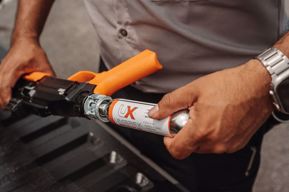
NitroAir changes that model. The Komplete rifles are still PCPs in the sense that they are pre-charged pneumatic platforms using stored high-pressure gas and internal regulation, but they simplify ownership by replacing the normal external fill setup with removable pre-filled nitrogen cartridges. Umarex says the Komplete uses disposable NitroAir N2 cartridges, a 1,800 psi internal regulator, 45+ consistent shots in .177, and requires no air compressor or hand pump. That is still PCP, but it is a distinct PCP ownership experience.
The strategic implication is important. This pillar should treat traditional PCP as the core of the cluster and NitroAir-powered PCP as the secondary branch. That keeps the topic clean while still honoring the actual Umarex taxonomy. It also creates a natural bridge to the dedicated article NitroAir vs Traditional PCP: Which Ownership Model Makes More Sense?
One of the biggest mistakes new PCP buyers make is thinking fill method is a technical afterthought. It is not. It is often the most important front-end decision in the entire category, because it determines whether the rifle feels easy, annoying, scalable, or too much trouble once the first excitement wears off.
For some buyers, a hand-pump-ready system is perfectly reasonable. That is part of what makes the Origin such a strong entry point. Umarex specifically positions it around reduced pumping burden, a patented pre-pressurized chamber design, an included 4,500 PSI hand pump, roughly 100 pumps per full fill, and about 40 shots per fill. That makes it easier for a first-time PCP buyer to step into the category without immediately buying a compressor.
For others, even that is too much friction. They may prefer a rifle with a simpler fill profile like the Iconix, or they may want to go straight to a compressor-supported ownership model because they know they will shoot more often. A larger or more performance-oriented PCP such as the Gauntlet 2 .22 brings a 4,500 PSI tank and regulated performance, but it also nudges the buyer toward a more serious support setup over time. The Zelos .25 similarly speaks to a buyer who is already more committed to PCP ownership.
Then there is Komplete, which reframes the whole question by avoiding conventional fill gear. That is why it should stay in the cluster, but as a contrast point rather than the center of gravity. It is an answer to the fill-method problem, but it is not the same ownership branch as the rifles that build the core of traditional small-bore PCP authority.
For the dedicated breakdown, see How to Fill a PCP Air Rifle: Hand Pumps, Compressors, Tanks, and NitroAir Explained.
Small-bore PCP becomes much easier to understand once you stop treating caliber as a simple number and start treating it as a use-case decision.
.177 usually makes the most sense for shooters who care most about target-oriented shooting, flatter trajectories in the kinds of distances most backyard and target users work within, and lower pellet cost. It is often the caliber people picture first when they think of precision pellet rifles, especially if they are more interested in group shooting than field application.
That does not mean .177 is only for paper punching. It means the shooters attracted to it are often prioritizing ease of shooting, lower projectile weight, and a more target-centric feel. In the current Umarex small-bore PCP lane, the Komplete NCR .177 is the clearest .177 example inside the revised cluster.
.22 is usually the broadest all-around answer. It sits in the practical center of the category and is often the easiest caliber to recommend when the buyer’s needs are not ultra-specialized. That is one reason the current Umarex PCP lineup is so rich in .22 options: Origin, Iconix, Notos, Zelos .22, Gauntlet .22, and Komplete .22 all reinforce that .22 is where the category becomes most versatile.
The reason .22 matters so much is not because it is “best” in the abstract. It is because it works well across more conversations. It is often where backyard, target, and field utility overlap most naturally. That makes it the logical default when the buyer wants one PCP that can live comfortably in multiple roles.
.25 is still small-bore in this cluster, but it signals a more intentional performance choice. Buyers who step into .25 are often leaning toward heavier projectile use, more deliberate field application, or a stronger preference for the kind of shooting experience that comes with the upper end of the small-bore range.
That is why the Zelos .25 and Gauntlet Limited .25 matter so much in the cluster. They show that small-bore PCP is not just entry-level PCP. It also includes serious rifles for shooters who want more than beginner utility without jumping into big-bore territory.
For the dedicated caliber page, see .177 vs .22 vs .25 PCP Air Rifles: Which Caliber Is Best?
One of the best ways to understand this category is to sort it into ownership lanes rather than price tiers. That is much more useful than pretending all PCP buyers are asking the same question.
|
Ownership lane |
Best fit |
Example platforms |
|
Entry-level traditional PCP |
First PCP buyers who want a lower-friction path into conventional PCP ownership |
Origin, Iconix |
|
Compact practical PCP |
Shooters who want a smaller, easier-handling rifle for backyard use, plinking, or light field use |
Notos |
|
Higher-performance traditional PCP |
Buyers who want more refinement, stronger feature sets, regulation, or bench/field capability |
Zelos, Gauntlet |
|
NitroAir-powered PCP |
Buyers who want PCP-style performance without conventional fill gear |
Komplete NCR |
The reason this table matters is that it keeps the cluster from collapsing into generic review logic. A buyer should not choose between an Origin and a Zelos by asking which is “better.” They should choose by asking which ownership lane fits their shooting pattern and tolerance for complexity.
That is also why the cluster should not be dominated by Komplete. Komplete is important, but it is one lane, not the entire category.
If the goal is to buy a first PCP without turning the experience into a gear project, rifles like the Origin and Iconix make the most sense. The Origin is especially strong because the included hand pump and Ever Pressure tank system reduce the first barrier to entry. The Iconix is also compelling because it keeps the platform approachable with a 3,000 PSI onboard tank and straightforward side-lever setup.
If the goal is a compact PCP that still feels like a real rifle and not a compromise, the Notos .22 stands out. Umarex positions it for small game hunting, plinking, and precision target shooting, and the regulated fixed tank plus sidelever action make it a very natural small-bore PCP carbine example. It is a strong reminder that PCP does not have to mean oversized.
If the goal is a more serious PCP platform with more refinement and capability, the Zelos .25 and Gauntlet 2 .22 / Gauntlet Limited .22/.25 are the most natural examples. Zelos shows what a regulator-equipped, 250cc bullpup PCP looks like in Umarex’s lineup. Gauntlet shows what a larger reservoir, higher fill pressure, and more serious shot-count-oriented platform can look like.
If the goal is to access PCP-style performance without buying the usual fill gear, then Komplete is the standout. That does not make it the center of this cluster, but it does make it the clearest solution for one very specific buyer problem. The Komplete NCR .177 gives 45+ consistent shots, uses a disposable NitroAir cartridge, and requires no compressor or hand pump.
For the dedicated use-case page, see Best Small-Bore PCP Air Rifle for Backyard Shooting, Hunting, and Target Use (https://www.umarexusa.com/best-small-bore-pcp-air-rifle-guide).
The first common mistake is assuming PCP automatically means complicated. That can be true, but it is not always true. The Origin was built to cut pumping burden. The Iconix lowers the access barrier. The Komplete eliminates conventional fill gear. PCP is not one fixed ownership experience. It is a family of solutions to the stored-pressure problem.
The second mistake is assuming small-bore means basic. In reality, small-bore PCP contains some of the most scalable and useful rifles in the whole airgun category. A compact PCP carbine, a regulated bullpup, a large-reservoir bench-capable rifle, and a NitroAir-powered PCP can all belong under the same small-bore umbrella without being entry-level in any simplistic sense.
The third mistake is shopping the rifle before choosing the ownership model. Buyers often get pulled toward stock shape, accessory bundle, or pure price before deciding how they want to fill the gun, how often they want to shoot, and what kind of setup burden they are willing to accept. In PCP, that is backwards. Ownership model comes first.
The better buying workflow is simple: choose your fill logic, choose your caliber lane, choose your use case, then choose the platform that fits all three.
Small-bore PCP rifles usually live in .177, .22, and .25 and cover a wide range of backyard, target, and field use.
PCP rifles differ from spring, gas ram, and CO2 rifles because they store high-pressure air or nitrogen before the shot.
Traditional PCP ownership is the core of this cluster. NitroAir-powered PCP should be treated as a secondary ownership branch inside it.
Fill method is one of the most important decisions in the entire category.
.22 is often the broadest all-around caliber, while .177 and .25 each support more specific priorities.
Entry-level PCP, compact PCP, higher-performance traditional PCP, and NitroAir-powered PCP are different ownership lanes, not just different price points.
For the next step, go to What Is a PCP Air Rifle? How Pre-Charged Pneumatic Airguns Work or How to Fill a PCP Air Rifle: Hand Pumps, Compressors, Tanks, and NitroAir Explained.
A small-bore PCP air rifle is a pre-charged pneumatic rifle chambered in smaller airgun calibers, usually .177, .22, or .25. It stores high-pressure air or nitrogen before the shot and releases that pressure to fire the pellet.
A PCP rifle stores pressure in advance, while a spring piston rifle creates its pressure through a spring and piston at the moment of the shot. PCP rifles are usually easier to shoot repeatedly and generally feel smoother in operation.
There is no single best answer, but .22 is often the broadest all-around choice. .177 usually fits more target-oriented priorities, while .25 usually fits buyers who want a heavier-projectile small-bore PCP experience.
Yes. Umarex markets Komplete NCR as a PCP air rifle and specifically describes it as a NitroAir powered PCP pellet rifle. It belongs in the PCP family, but it is best treated as a secondary NitroAir-powered PCP branch rather than the center of a traditional PCP cluster.
Not always. Some PCPs are commonly filled by hand pump, compressor, or tank, while the Komplete NitroAir system avoids the need for a compressor or hand pump by using pre-filled nitrogen cartridges. The right answer depends on the ownership model you choose.
Yes, but the right beginner PCP depends on the ownership model. Origin and Iconix are strong conventional entry points, while Komplete is a strong alternative for buyers who want to simplify the fill side of PCP ownership.
Umarex USA. “PCP Air Rifles.” Umarex USA. https://www.umarexusa.com/pcp-air-rifles
Umarex USA. “Umarex Origin .22 cal PCP Air Rifle Kit with Pump.” Umarex USA. https://www.umarexusa.com/umarex-origin-22-cal-pcp-air-rifle-with-high-pressure-air-hand-pump
Umarex USA. “Umarex Iconix .22 PCP Air Rifle.” Umarex USA. https://www.umarexusa.com/umarex-iconix-22-pcp-air-rifle-2252135
Umarex USA. “UMAREX® NOTOS .22 CARBINE.” Umarex USA. https://www.umarexusa.com/2254847
Umarex USA. “Umarex Zelos .25 Caliber PCP.” Umarex USA. https://www.umarexusa.com/umarex-zelos-25-caliber-precision-pre-charged-pneumatic-pellet-rifle-2251543
Umarex USA. “Gauntlet 2 PCP .22 Pellet Rifle.” Umarex USA. https://www.umarexusa.com/umarex-gauntlet-2-hpa-air-rifle-22-pellet-gun-2254825
Umarex USA. “Umarex Komplete NCR .177 PCP Air Rifle.” Umarex USA. https://www.umarexusa.com/umarex-komplete-ncr-177-pcp-air-rifle-2251556
Umarex USA. “Komplete-ly Ready.” Umarex USA. https://www.umarexusa.com/kompletely-ready