IMPORTANT LEGAL NOTICE: Air-powered bowfishing equipment, including PCP arrow-launching systems and air archery platforms, may not be specifically addressed or permitted under the laws and regulations of every state, province, water body, or local jurisdiction. Regulations involving bowfishing, spearing, airguns, arrows, fishing methods, and air-powered hunting or fishing equipment may vary significantly and may change over time. Always contact your state or local fish and wildlife agency to verify the current legality of any equipment, species, fishing method, season, or water before use. Nothing in this article should be interpreted as legal advice or as confirmation that any specific equipment or method is lawful in your area.
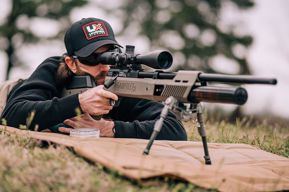
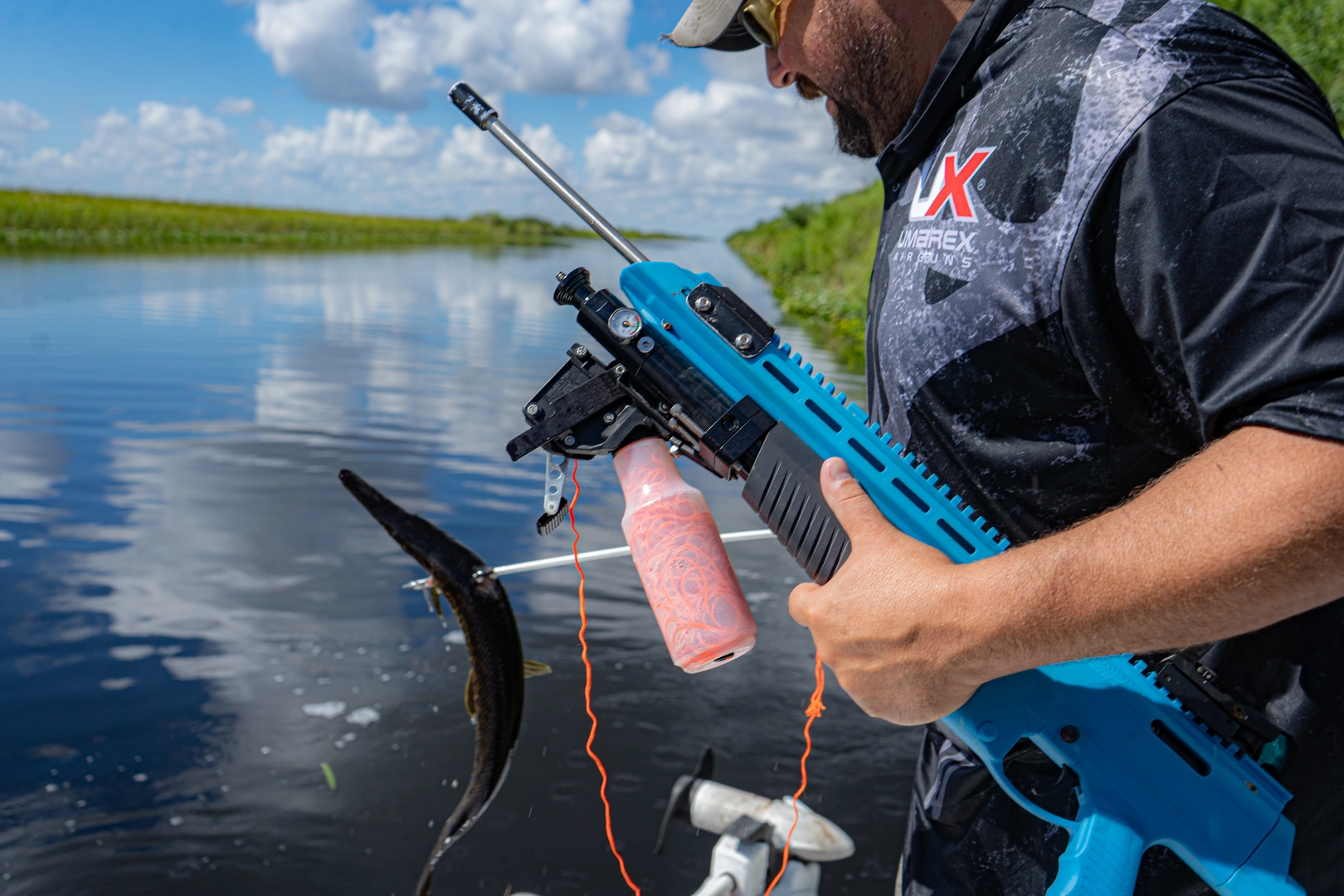
Airgun bowfishing uses compressed air to launch a fishing arrow attached to a retrieval line. Instead of drawing a traditional bowstring, the shooter uses an air-powered arrow platform designed for bowfishing applications.
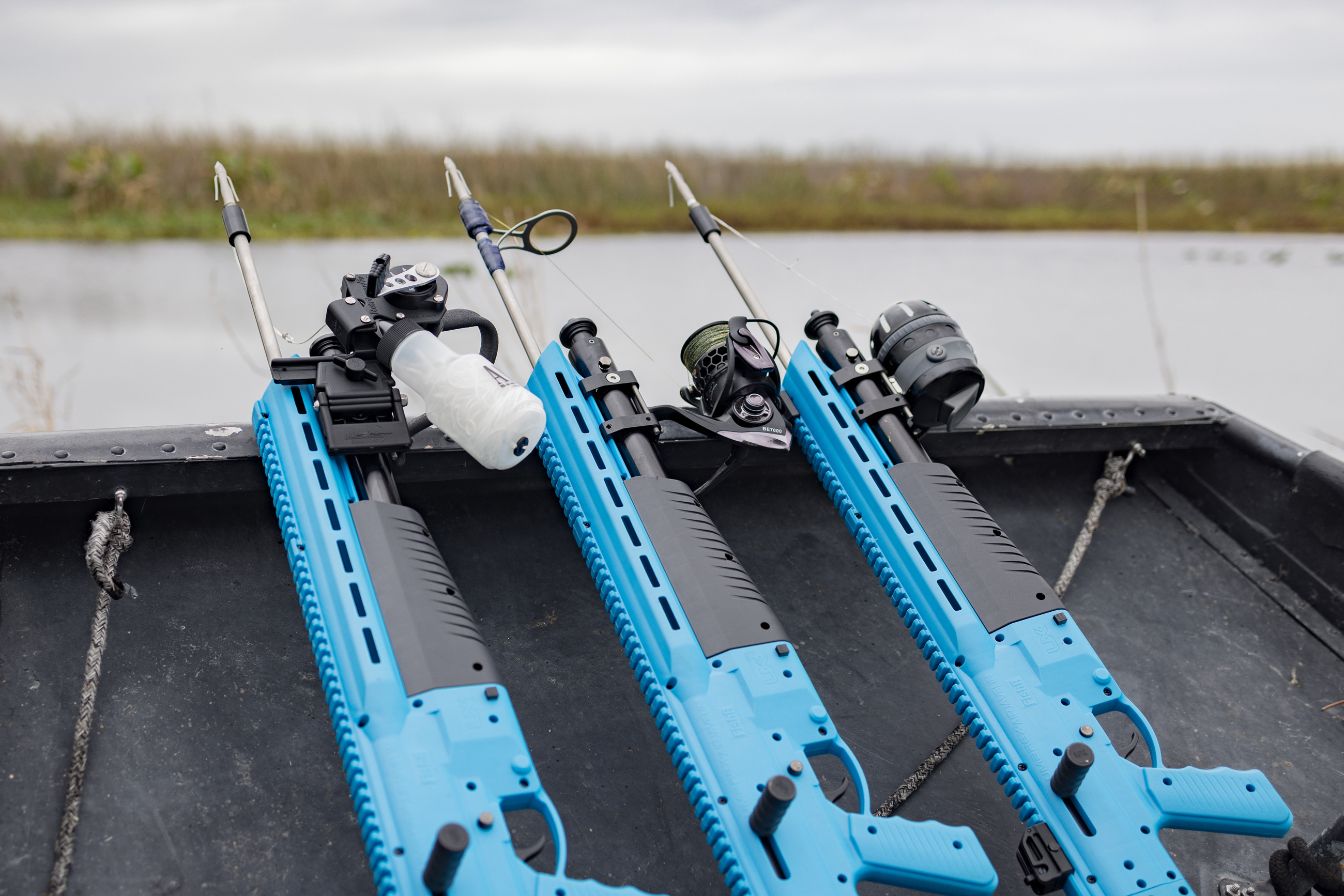
Because the projectile is an arrow rather than a pellet or slug, airgun bowfishing falls under the broader category of air archery. The setup typically includes an air-powered launcher, fishing arrow, retrieval line, reel system, and compatible bowfishing hardware.
Before using any air-powered bowfishing setup, always verify the current regulations for the state and water body where you plan to fish. Bowfishing laws can vary by species, season, location, gear type, and local restrictions.
For decades, most bowfishing setups followed the same pattern: a bow, a reel, a line, and a heavy fishing arrow built for shallow-water shots. That equipment still works well today, and traditional bowfishing continues to grow across rivers, lakes, backwaters, and coastal flats throughout the United States.
At the same time, compressed-air technology has created an entirely new category of bowfishing equipment.
Air-powered arrow systems are introducing a different approach to launching fishing arrows. Instead of relying on limbs and a bowstring, these systems use stored compressed air to propel the arrow. That changes how the setup feels, how it loads, how it carries on the water, and how some shooters approach bowfishing altogether.
This does not replace traditional bowfishing. It expands the category.
Some anglers are longtime PCP airgun shooters looking for a new application. Others are bowfishers who want to explore air-powered arrow systems. Some are simply curious about how air archery technology works in real fishing conditions.
What matters most is understanding that airgun bowfishing is not pellet shooting at fish. It is a specialized form of air archery built specifically around fishing arrows, retrieval systems, safe recovery, and legal bowfishing applications.
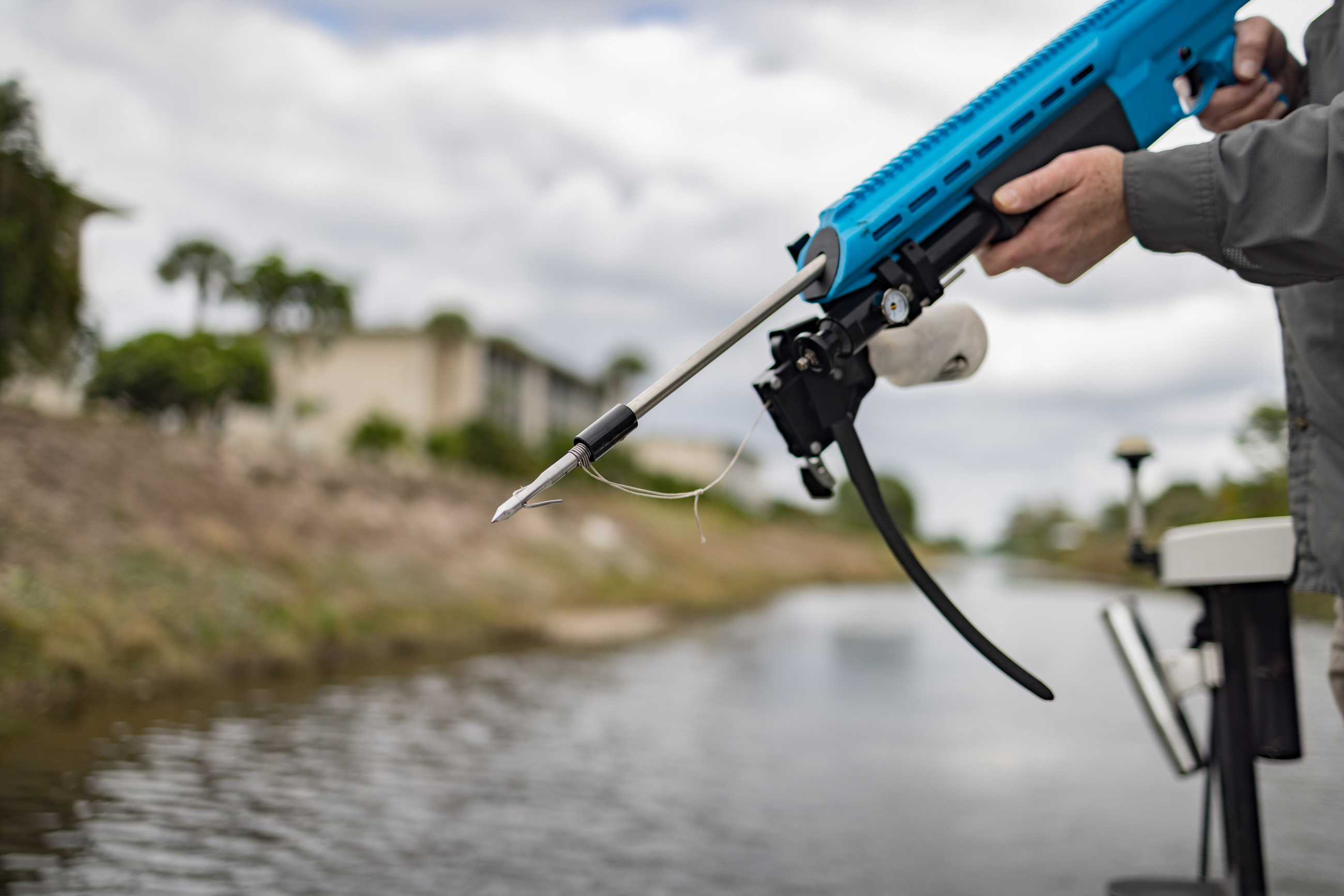
Airgun bowfishing is the use of an air-powered arrow launcher to shoot a fishing arrow connected to a retrieval system. The arrow is propelled with compressed air rather than a traditional bowstring.
The category sits at the intersection of:
bowfishing
air archery
PCP air systems
arrow-based outdoor equipment
The retrieval system is what separates bowfishing from ordinary arrow shooting. Every shot must account for:
the arrow
the line
water resistance
fish movement
recovery angle
safe retrieval
That means the setup has to work as a complete system rather than a collection of unrelated parts.
The projectile also matters. Airgun bowfishing uses arrows, not pellets or slugs. That distinction is important because it changes:
equipment selection
legal considerations
retrieval requirements
shooting dynamics
safety concerns
The Umarex FishR Airgun Fishing Arrow (https://www.umarexusa.com/2252159) was built specifically for bowfishing applications with the AirJavelin FishR platform. Umarex lists the arrow with a solid fiberglass shaft, stainless steel hardware, and an Innerloc Pro Point designed for bowfishing use. (umarexusa.com)
|
Term |
Meaning |
Why It Matters |
|
Airgun bowfishing |
Bowfishing with an air-powered arrow launcher |
Defines the category |
|
Air archery |
Air-powered systems that launch arrows |
Explains the broader technology |
|
PCP system |
Pre-charged pneumatic air system |
Explains the compressed-air platform |
|
Fishing arrow |
Arrow designed for impact and recovery |
Different from target arrows |
|
Retrieval system |
Reel, line, slide, and recovery hardware |
Required for fish recovery |
Airgun bowfishing starts with compressed air stored inside a PCP system. When the system is fired, controlled air pressure launches the fishing arrow forward.
Unlike a standard pellet rifle, the setup is built around arrows and retrieval equipment rather than pellets or slugs.
The arrow itself has to withstand:
water entry
impact
line tension
retrieval pressure
repeated use in wet environments
The retrieval system matters just as much as the launcher. In bowfishing, the shot is only half the process. Recovering the fish safely and legally is the other half.
Most setups use:
a reel
retrieval line
line slide
compatible fishing point
heavy-duty arrow construction
The AirJavelin FishR product page describes a universal reel mounting system that allows users to install a preferred bowfishing reel while attaching a line directly to the arrow slider, similar to traditional bowfishing setups. (umarexusa.com)
Water conditions also change how shots behave.
One of the first lessons new bowfishers learn is that fish are not exactly where they appear. Light bends when it passes through water, making fish appear higher than they really are. Bowfishers often compensate by aiming lower than the visible fish position, especially in deeper or angled shots.
Conditions can also change rapidly:
muddy water reduces visibility
glare hides fish movement
current affects fish positioning
vegetation complicates retrieval
nighttime lighting changes depth perception
The launcher matters, but reading the water matters just as much.
For a deeper technical breakdown, see How Airgun Bowfishing Works (https://www.umarexusa.com/how-airgun-bowfishing-works).
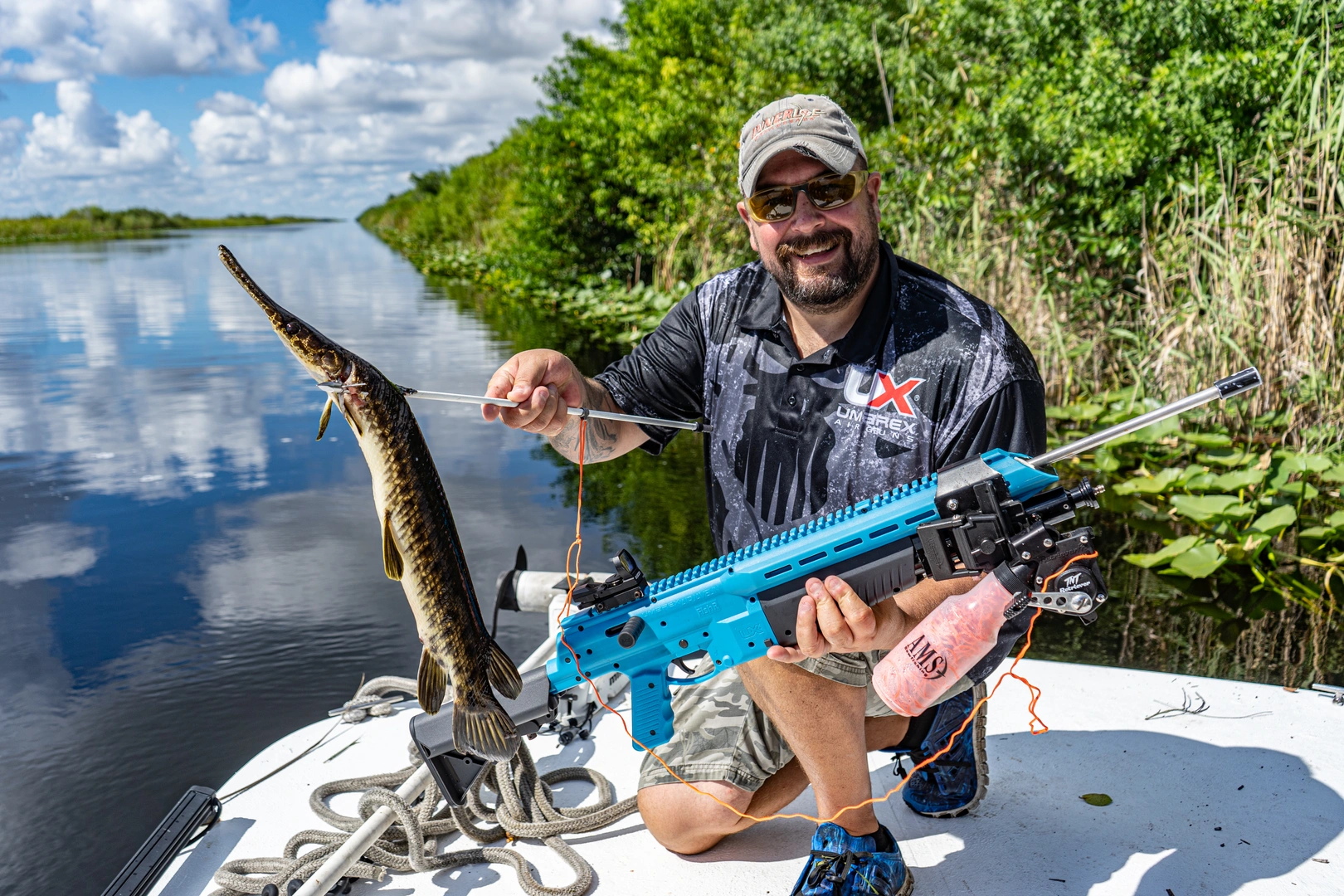
Airgun bowfishing and traditional bowfishing pursue the same goal: launching a fishing arrow attached to a retrieval line at legal fish species.
The biggest difference is how the arrow is powered.
Traditional bowfishing stores energy in the limbs and string of the bow. Airgun bowfishing uses compressed air stored in a PCP system.
That changes:
the loading process
the feel of the shot
how the equipment is carried
how the system is maintained
how energy is managed during the trip
Neither approach automatically makes someone a better bowfisher.
A person who understands fish behavior, water movement, angles, recovery, and safe shooting practices will usually outperform someone relying entirely on equipment.
|
Factor |
Airgun Bowfishing |
Traditional Bowfishing |
|
Power source |
Compressed air |
Bow limbs and string |
|
Projectile |
Fishing arrow |
Fishing arrow |
|
Retrieval line |
Required |
Required |
|
Air management |
Required |
Not required |
|
Bow draw cycle |
Not required |
Required |
|
Water-reading skills |
Critical |
Critical |
|
Fish recovery |
Critical |
Critical |
Traditional bowfishing may feel more natural for experienced bowhunters. Air-powered systems may feel more familiar for PCP airgun users or shooters interested in air archery platforms.
The better choice depends on:
experience
water conditions
equipment familiarity
physical preference
legal requirements
intended use
For a complete comparison, see Airgun Bowfishing vs Traditional Bowfishing (https://www.umarexusa.com/airgun-bowfishing-vs-traditional-bowfishing).
Freshwater bowfishing is where many anglers begin.
Rivers, reservoirs, shallow flats, lakes, creeks, and backwaters can all create opportunities for legal bowfishing depending on state regulations and species rules.
Common bowfishing discussions often include:
carp
gar
buffalo fish
tilapia
other rough or invasive fish species
The exact legality varies by state and water body.
That is why responsible bowfishing always starts with verifying:
legal species
approved methods
local water restrictions
licensing requirements
current regulations
Water conditions shape almost every shot.
Clear water may allow longer visibility windows, while muddy rivers often require quick reactions at close range. Wind can distort the surface. Boat traffic can move fish unexpectedly. Vegetation can hide targets and complicate retrieval.
Experienced bowfishers learn to watch:
shadows
movement patterns
current breaks
shallow feeding behavior
surface disturbances
Success usually comes from understanding fish behavior and water conditions more than chasing maximum distance.
For more species-specific guidance, see Best Fish Species for Airgun Bowfishing (https://www.umarexusa.com/best-fish-species-for-airgun-bowfishing).
Saltwater bowfishing introduces a completely different environment.
Tides, currents, shell bottoms, sand flats, grass beds, visibility changes, and corrosive saltwater conditions all affect equipment and shooting opportunities.
Coastal conditions can change by the hour.
A clear flat at sunrise may become muddy after wind or tide movement. Glare changes constantly. Boat positioning matters more in shallow water. Retrieval paths may cross shell beds, rocks, or grass that place extra stress on line and equipment.
Saltwater also changes maintenance requirements.
After fishing in saltwater, equipment should be cleaned and inspected carefully according to manufacturer guidance and normal marine gear maintenance practices. Salt buildup and sand exposure can shorten the lifespan of neglected equipment.
Florida’s Fish and Wildlife Conservation Commission defines spearing to include bowfishing and other devices used to take fish by piercing the body. Species restrictions and local regulations still apply, which is why anglers should always verify current rules before bowfishing in coastal waters. (myfwc.com)
For a deeper look at coastal conditions and equipment considerations, see Saltwater Airgun Bowfishing Guide (https://www.umarexusa.com/saltwater-airgun-bowfishing).
A dependable setup starts with compatibility.
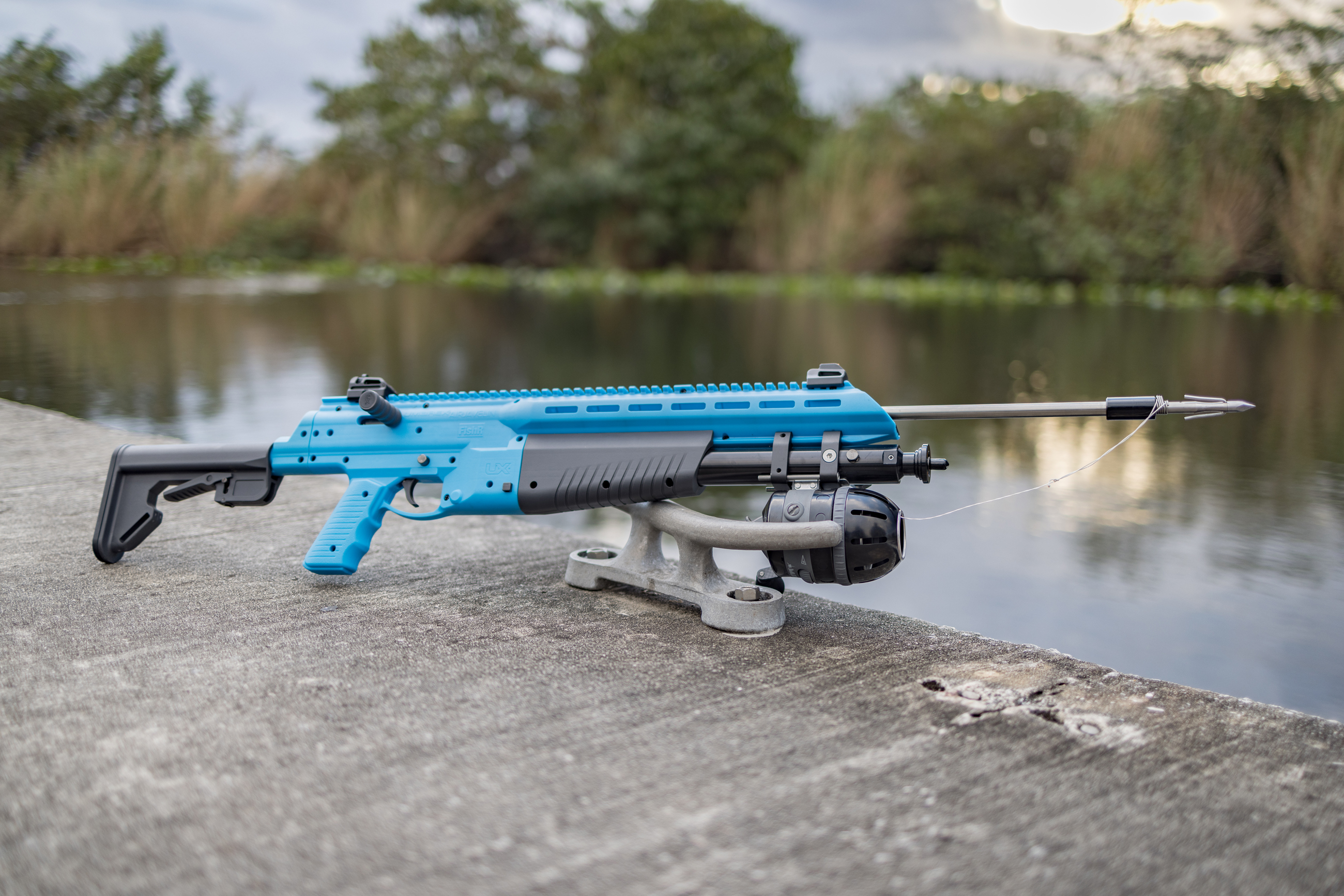
The launcher, fishing arrow, retrieval line, reel system, and mounting hardware should all work together as a complete bowfishing platform.
The fishing arrow is one of the most important parts of the setup because it must withstand:
impact
water entry
line tension
repeated retrieval
harsh outdoor conditions
The Umarex FishR Airgun Fishing Arrow (https://www.umarexusa.com/2252159) uses a solid fiberglass shaft with stainless steel hardware designed for bowfishing conditions. (umarexusa.com)
|
Equipment Component |
Purpose |
Why It Matters |
|
Air-powered launcher |
Launches the fishing arrow |
Must be designed for arrow use |
|
Fishing arrow |
Contacts the fish and supports retrieval |
Must match the platform |
|
Reel system |
Controls retrieval line |
Required for recovery |
|
Retrieval line |
Connects arrow to reel |
Critical for fish recovery |
|
Point system |
Helps retain fish during recovery |
Must fit intended use |
|
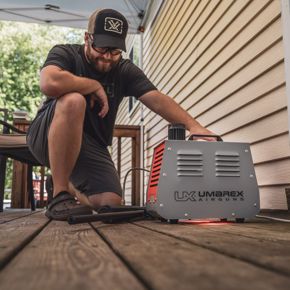
Air fill system |
Supports PCP pressure management |
Needed for field preparation |
Beginners often overcomplicate their first setup.
A better approach is to focus on:
compatible equipment
safe line control
close practical shots
clear target identification
learning water conditions
reliable recovery
Bowfishing rewards consistency and judgment far more than raw speed or maximum range.
For a complete breakdown of equipment considerations, see Airgun Bowfishing Setup Guide (https://www.umarexusa.com/airgun-bowfishing-setup-guide).
Bowfishing is a serious outdoor activity that requires safe handling, legal awareness, and responsible judgment.
A fishing arrow attached to a retrieval line creates different safety considerations than ordinary target shooting.
Bowfishers must constantly think about:
line direction
bystander positioning
boat stability
arrow recovery
fish movement
target identification
what exists beyond the shot
Water conditions can make visibility difficult. Mud, glare, vegetation, current, darkness, and surface movement all affect how clearly a fish can be identified.
Legal verification matters just as much as safe handling.
Bowfishing regulations vary by:
state
species
season
water body
local management area
approved method
licensing requirements
Texas Parks and Wildlife publishes dedicated bowfishing regulations and notes that some waters may have additional restrictions. (tpwd.texas.gov)
The safest long-term approach is simple:
always verify the current regulations with the appropriate fish and wildlife agency before bowfishing.
Responsible bowfishing also means:
recovering fish whenever possible
following possession rules
respecting local waters
avoiding reckless shots
maintaining control of equipment
practicing good judgment around other people
For more detailed guidance, see:
Airgun Bowfishing Safety (https://www.umarexusa.com/airgun-bowfishing-safety)
Ethical Airgun Bowfishing Practices (https://www.umarexusa.com/ethical-airgun-bowfishing-practices)
Airgun Bowfishing Laws and Regulations (https://www.umarexusa.com/airgun-bowfishing-laws-and-regulations)
Airgun bowfishing belongs to the broader category of air archery because it uses compressed air to launch arrows rather than pellets or slugs.
That distinction matters.
Pellet rifles, slug guns, arrow rifles, and fishing-arrow systems all operate differently and are built for different applications.
|
Category |
Projectile |
Typical Use |
|
Pellet air rifles |
Pellets |
Target shooting and small game where legal |
|
Big bore airguns |
Slugs designed for airguns |
Hunting where legal |
|
Air archery systems |
Arrows |
Arrow launching systems |
|
Airgun bowfishing |
Fishing arrows |
Bowfishing applications |
As air-powered arrow systems continue evolving, more shooters are exploring how air archery technology applies to:
target shooting
hunting
bowfishing
outdoor recreation
Understanding the category helps shooters choose the right equipment for the right application.
For more background on the broader category, see:
What Is Air Archery? (https://www.umarexusa.com/what-is-air-archery)
How Air Archery Works (https://www.umarexusa.com/how-air-archery-works)
Air-Powered Hunting Systems Explained (https://www.umarexusa.com/air-powered-hunting-systems-explained)
Technical specifications are important, but bowfishing success usually comes down to reading real conditions.
Experienced bowfishers constantly adjust to:
changing visibility
moving current
fish behavior
glare
depth
vegetation
wind
boat movement
A perfect-looking setup on paper can still struggle in muddy water or poor visibility.
Field experience teaches lessons that are difficult to learn from specifications alone:
how fish react in shallow water
how retrieval changes around vegetation
how nighttime lighting affects visibility
how current changes fish positioning
how glare hides movement
how quickly conditions can change
That practical experience is part of what makes bowfishing rewarding. Every trip is different.
For additional air-powered hunting discussions, field experiences, and outdoor content, visit Airgun Hunting Legion (https://airgunhuntinglegion.com/).
Airgun bowfishing uses compressed air to launch a fishing arrow attached to a retrieval line.
Airgun bowfishing belongs to the air archery category because it uses arrows rather than pellets or slugs.
The Umarex FishR Airgun Fishing Arrow (https://www.umarexusa.com/2252159) was built specifically for bowfishing applications with the AirJavelin FishR platform.
Freshwater and saltwater bowfishing create different challenges involving visibility, retrieval, equipment maintenance, and legal regulations.
A successful setup depends on compatible equipment, safe handling, reliable retrieval, and understanding water conditions.
Bowfishing laws vary by state, species, and water body, so anglers should always verify current regulations before fishing.
Airgun bowfishing is bowfishing with an air-powered arrow launcher that uses compressed air to propel a fishing arrow attached to a retrieval line.
Yes. Airgun bowfishing falls under the broader category of air archery because it uses compressed air to launch arrows instead of pellets or slugs.
Bowfishing legality varies by state, water body, species, season, and approved methods. Always verify current regulations before bowfishing.
Common bowfishing discussions often involve carp, gar, buffalo fish, tilapia, rays, and other species depending on state regulations and local rules.
Most setups include an air-powered launcher, fishing arrow, reel system, retrieval line, compatible point system, and PCP air source.
Yes. PCP air systems can power arrow-launching platforms designed specifically for bowfishing applications.
Neither system is automatically better for every shooter. The right setup depends on experience, water conditions, equipment familiarity, physical preference, and intended use.
Saltwater bowfishing may be legal in some areas, but regulations vary. Always verify local saltwater fishing and spearing rules before bowfishing in coastal waters.
Umarex USA. “Umarex FishR Airgun Fishing Arrow.” Used for product specifications and construction details. https://www.umarexusa.com/2252159
Umarex USA. “Umarex AirJavelin FishR.” Used for PCP system details, reel compatibility, and setup information. https://www.umarexusa.com/umarex-airjavelin-fishr
Texas Parks and Wildlife Department. “Bow Fishing Regulations.” Used for state-level regulation guidance and legal verification context. https://tpwd.texas.gov/regulations/outdoor-annual/fishing/general-rules-regulations/bow-fishing-regulations
Florida Fish and Wildlife Conservation Commission. “Spearing.” Used for saltwater spearing and bowfishing regulation context. https://myfwc.com/fishing/saltwater/recreational/spearing/