

IMPORTANT LEGAL NOTICE: Air-powered bowfishing equipment, including PCP arrow-launching systems and air archery platforms, may not be specifically addressed or permitted under the laws and regulations of every state, province, water body, or local jurisdiction. Regulations involving bowfishing, spearing, airguns, arrows, fishing methods, and air-powered hunting or fishing equipment may vary significantly and may change over time. Always contact your state or local fish and wildlife agency to verify the current legality of any equipment, species, fishing method, season, or water before use. Nothing in this article should be interpreted as legal advice or as confirmation that any specific equipment or method is lawful in your area.
Quick Answer
Airgun bowfishing and traditional bowfishing both use a fishing arrow attached to a retrieval line, but they launch that arrow differently. Traditional bowfishing uses bow limbs and a string. Airgun bowfishing uses compressed air, usually through a PCP system designed for arrow use.
The biggest difference is not the goal. The goal is still legal fish recovery with a line-attached arrow. The difference is how the equipment stores energy, how the shot feels, how the setup is prepared, and what the shooter needs to manage before getting on the water.
Airgun bowfishing may feel familiar to PCP airgun users and shooters interested in air archery. Traditional bowfishing may feel more familiar to bowhunters and anglers who already know compound or recurve equipment. Neither system removes the need for legal verification, safe line control, water-reading skill, and responsible fish recovery.
Two Different Ways to Launch the Same Kind of Shot
Bowfishing has always been a close-range game of water, movement, timing, and recovery. A fish rolls in shallow water. The light hits the surface at the wrong angle. Current pulls the boat sideways. The arrow has to enter the water where the fish actually is, not where it appears to be.
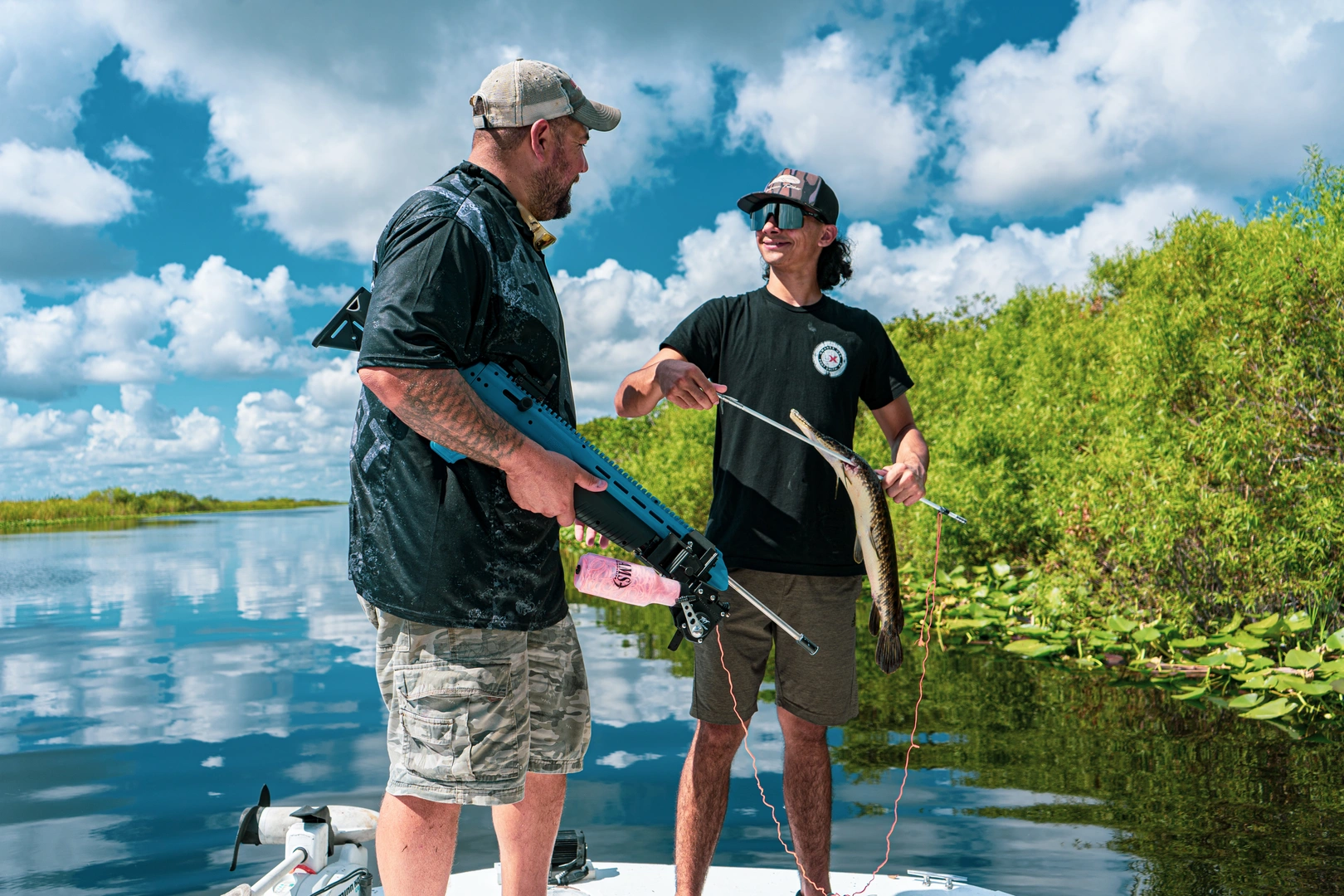
Traditional bowfishing handles that moment with limbs and string. The shooter draws, holds, aims, and releases. Airgun bowfishing handles it with compressed air. The shooter loads a fishing arrow into an air-powered platform, manages the line, and lets stored air pressure launch the arrow.
Both methods still live in the same world. Muddy water still hides fish. Glare still ruins clean sight pictures. Vegetation still grabs line. Current still changes the recovery angle. The launch system changes, but bowfishing still rewards the person who can read water and stay calm when a shot window opens for only a second.
For a full category overview before comparing systems, see Airgun Bowfishing: The Complete Guide to Air-Powered Bowfishing Systems.
What Traditional Bowfishing Does Well
Traditional bowfishing is familiar for a reason. It is simple in concept, widely understood, and deeply connected to bowhunting culture. A bow, reel, line, arrow, and point can make a dependable setup when everything is matched correctly.
The appeal is mechanical directness. The shooter draws the bow, stores energy in the limbs, and releases the string. There is no onboard air tank to fill and no air pressure to monitor. Many bowhunters already understand the draw cycle, anchor point, sight picture, and release feel.
Traditional bowfishing also has a strong community history. A lot of anglers learned from friends, family, river crews, or night-shooting boats long before air-powered arrow systems became common. That field knowledge matters. The person who understands fish movement, glare, depth, and retrieval will usually do better than someone with expensive gear and no water sense.
Traditional bowfishing is not effortless, though. Draw weight, holding position, fatigue, and repeated shots can matter during long outings. Shooting from a boat, leaning over shallow water, and taking quick shots at moving fish can make the draw cycle feel different than shooting at a target.
What Airgun Bowfishing Changes
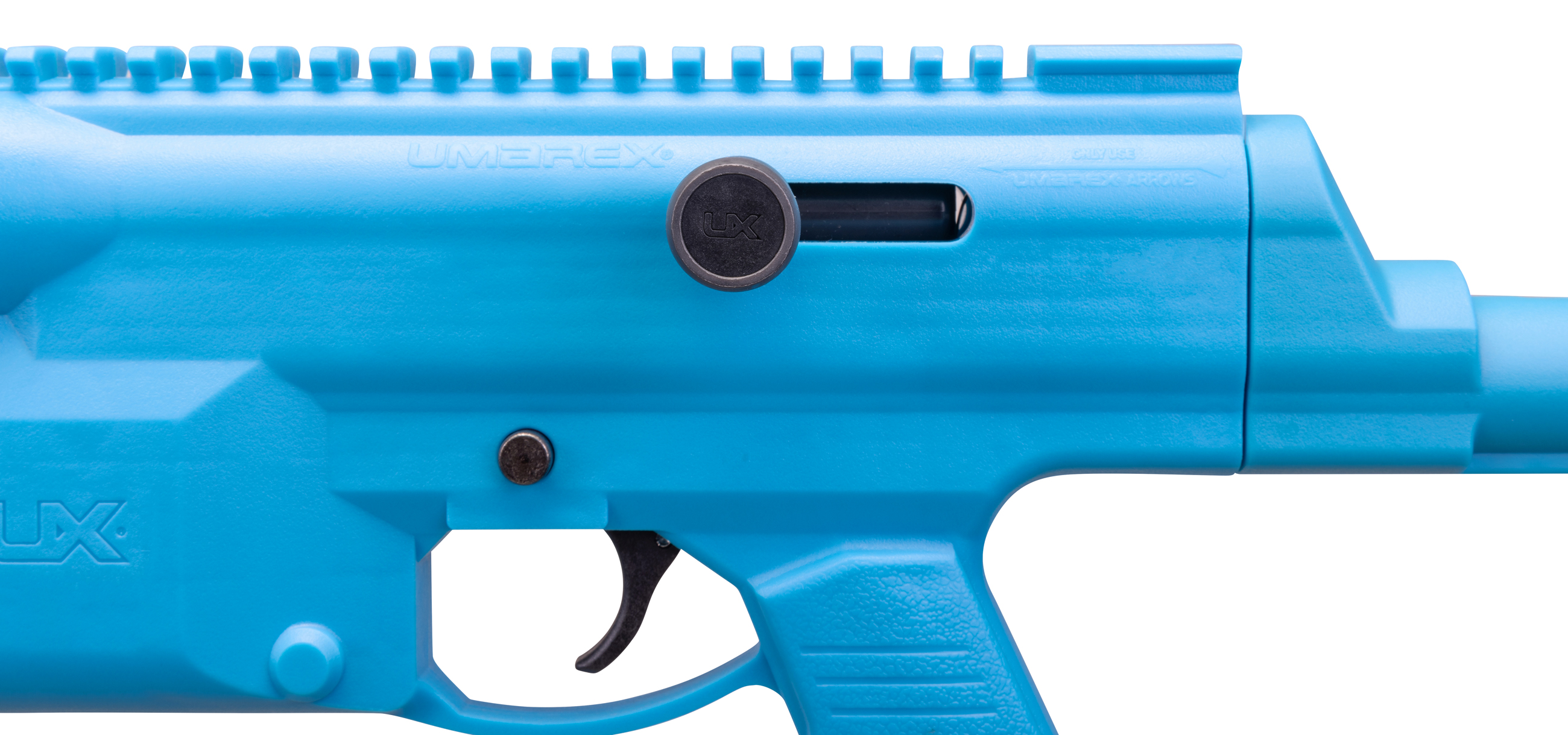
Airgun bowfishing changes the power source. Instead of drawing limbs and string, the shooter uses compressed air to launch the fishing arrow.
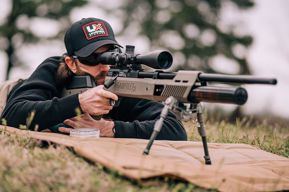
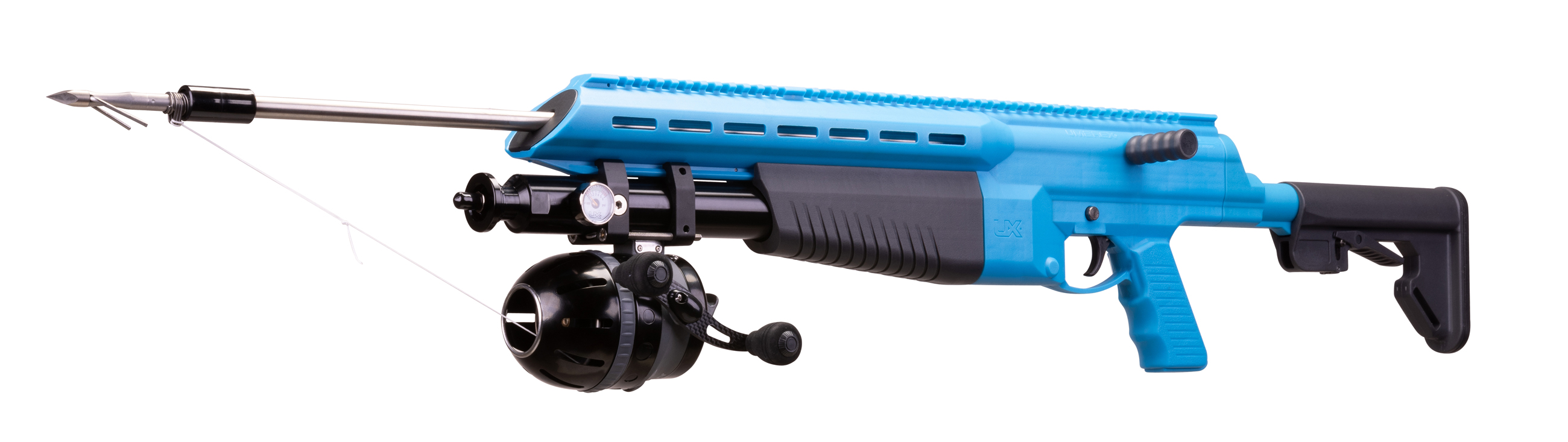
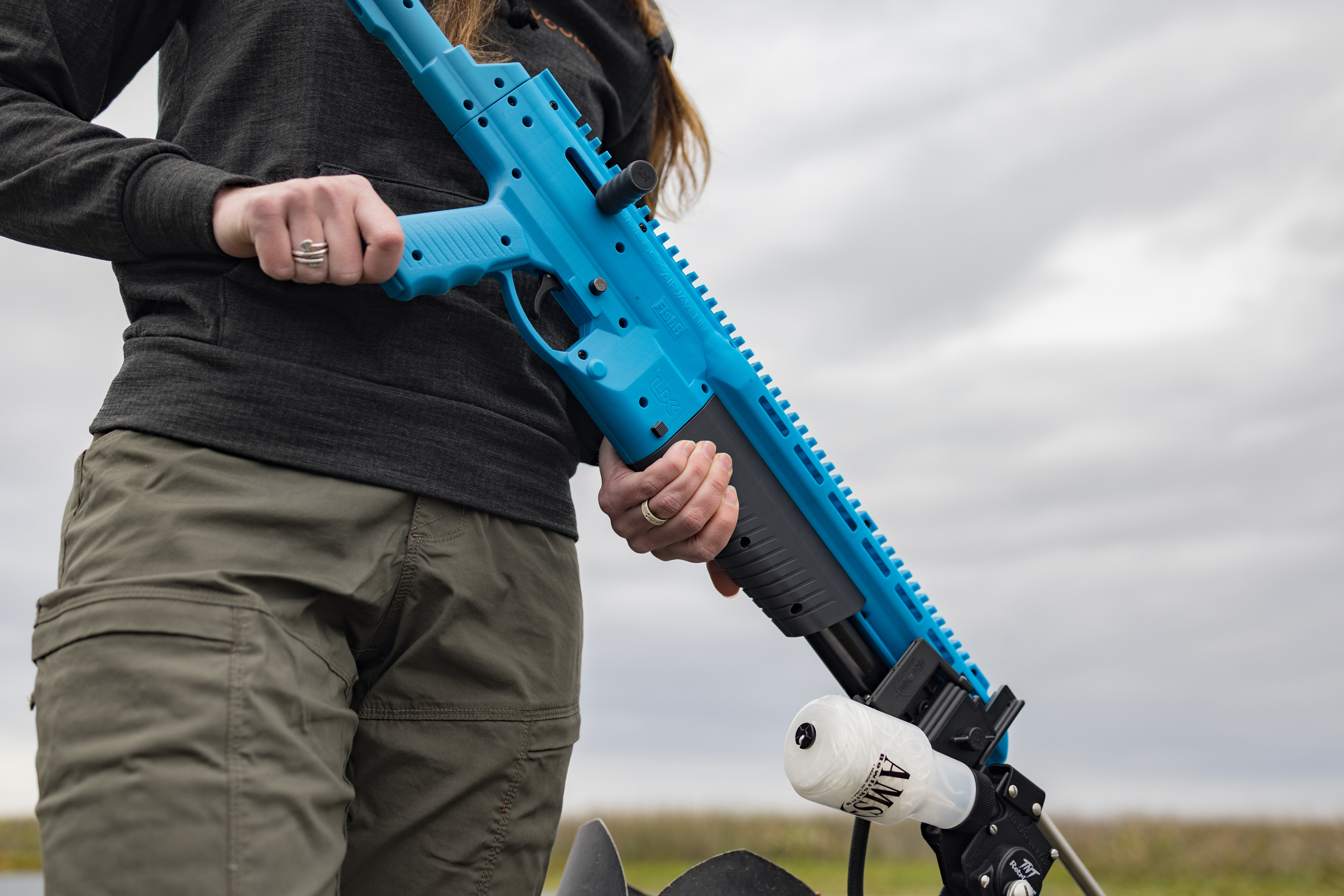
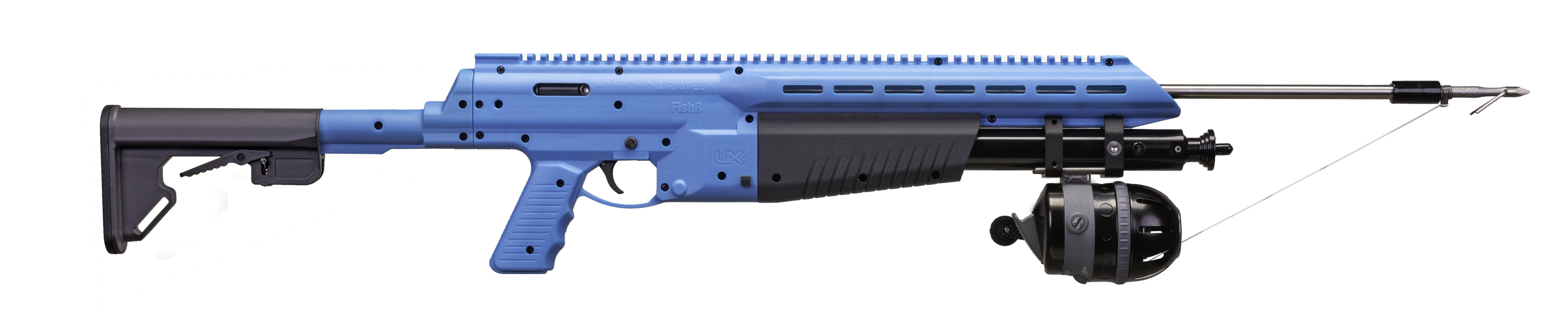
The Umarex AirJavelin FishR is described by Umarex as a PCP bowfishing airgun with a 4,500 psi onboard tank regulated to 800 psi. Umarex lists the system as launching a 1,248-grain solid fiberglass arrow at 100 fps and producing 28 foot-pounds at the muzzle.
That changes the shooting feel. There is no traditional bow draw. There is no holding at full draw while a fish moves through glare or current. The shooter still has to aim, control the line, and make a responsible shot, but the physical mechanics are different.
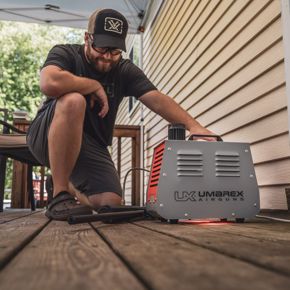
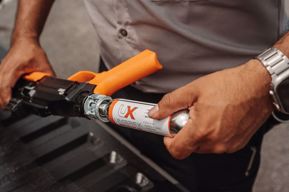
Airgun bowfishing also changes preparation. A traditional bowfisher thinks about bow setup, reel, line, arrow, and point. An airgun bowfisher thinks about all of that plus air supply. The AirJavelin FishR product information notes that it can be filled with a 3-stage hand pump, electric airgun compressor, or external tank.
That is the tradeoff. Air-powered systems can make the launch process feel more familiar to airgun shooters, but they introduce air management. Traditional bows do not require a fill source, but they require a draw cycle. The better system depends on the shooter, the water, and the way the equipment will actually be used.
Side-by-Side Comparison
Airgun bowfishing and traditional bowfishing are not opposites. They are two ways to launch a fishing arrow. The table below shows the practical differences that matter most on the water.
Factor |
Airgun Bowfishing |
Traditional Bowfishing |
|
Power source |
Compressed air, often PCP |
Bow limbs and string |
|
Projectile |
Fishing arrow |
Fishing arrow |
|
Retrieval line |
Required |
Required |
|
Draw cycle |
Not traditional bow draw |
Required |
|
Air fill planning |
Required for PCP systems |
Not required |
|
Familiarity |
Often natural for PCP airgun users |
Often natural for bowhunters |
|
Main learning curve |
Air system, line control, water angles |
Bow draw, line control, water angles |
|
Water-reading skill |
Critical |
Critical |
|
Legal verification |
Required |
Required |
The biggest shared truth is that neither system beats bad judgment. A clear target, safe line path, legal species, and recoverable shot matter more than the launch method.
The biggest difference is how the shooter prepares. Airgun bowfishing asks the user to understand compressed-air equipment. Traditional bowfishing asks the user to manage bow draw and release mechanics. Both ask the user to understand bowfishing itself.
Shooting Feel and Physical Effort
The feel of the shot may be the biggest difference for many users.
Traditional bowfishing feels like archery. The draw, hold, aim, and release are part of the rhythm. Some shooters love that. Others may struggle with repeated draws during long nights or fast action.
Airgun bowfishing feels more like operating an air-powered arrow platform. The shooter still needs control and discipline, but the system does not rely on drawing bow limbs for each shot. For people already comfortable with PCP airguns or air archery platforms, that can feel more intuitive.
That does not make airgun bowfishing easier in every way. It simply shifts the challenge. Instead of managing bow draw, the user manages air pressure, loading, line control, and equipment compatibility.
In real conditions, physical comfort matters. Bowfishing often happens from awkward positions: leaning over a rail, tracking fish beside a boat, standing on a muddy bank, or adjusting quickly as fish move through shallow water. A setup that feels good for five minutes in the yard may feel very different after hours on the water.
Gear Setup and Compatibility
Bowfishing gear works as a system. The launcher, arrow, line, reel, slide, and point all have to work together.
With traditional bowfishing, the core setup usually starts with a bow and bowfishing reel. The arrow and line system must be matched to the bowfishing application. The shooter needs to understand draw weight, arrow choice, line path, and reel behavior.
With airgun bowfishing, the platform must be designed for arrows. A pellet rifle is not a bowfishing setup. The arrow must fit the launcher, and the line system must function safely during launch and retrieval.
The Umarex FishR Airgun Fishing Arrow is listed as engineered specifically for the AirJavelin FishR Bowfishing PCP rig. Umarex lists the arrow as 1,248 grains, 26 inches long, with solid fiberglass construction, stainless steel tip and slide, and an Innerloc head.
|
Setup Area |
Why It Matters |
|
Launcher compatibility |
The arrow must fit and launch correctly |
|
Reel system |
Line must feed and retrieve cleanly |
|
Line path |
A clear line path prevents dangerous tangles |
|
Arrow construction |
Bowfishing arrows handle water, impact, and retrieval stress |
|
Point style |
The point helps retain fish during recovery |
|
Air source |
PCP bowfishing systems need a fill plan |
A clean setup beats a complicated setup. New users should focus on compatible components, safe line travel, legal use, and reliable recovery before adding more accessories.
For a deeper equipment breakdown, see Airgun Bowfishing Setup Guide.
Line Control Matters With Both Systems
The retrieval line is where many beginners get humbled.
Bowfishing is not just launching an arrow. It is launching an arrow attached to a line, then recovering that arrow and fish through water, current, vegetation, mud, or boat movement.
That line has to be clear before the shot. It should not wrap around a hand, rail, foot, branch, gear bag, or boat cleat. A tangled line can ruin the shot or create unsafe tension.
Airgun bowfishing and traditional bowfishing both require disciplined line habits. The difference is not whether line control matters. It always does. The difference is how the line system mounts and feeds from the specific platform.
Umarex notes that the AirJavelin FishR has a universal reel mount and can accept a wide mouth reel or bottle reel, with line tied to the arrow’s slider as with a bowfishing arrow.
The shot is only the beginning. In bowfishing, the real work starts when the arrow disappears beneath the surface and the line comes tight.
Water Does Not Care Which System You Use
Water makes every bowfishing setup harder.
Fish are not exactly where they appear because light bends as it passes through water. That refraction makes submerged fish look higher than their actual position. Bowfishers often compensate by aiming lower than the visible fish.
Glare can hide a fish completely. Wind can turn clear water into broken reflections. Current can shift a fish just as the shot breaks. Vegetation can make retrieval messy. Night lighting can reveal fish, but it can also flatten depth perception and create hard shadows.
Those conditions do not care whether the arrow came from a bowstring or compressed air.
Good bowfishers learn to read:
-
depth
-
angle
-
current
-
water clarity
-
fish movement
-
surface glare
-
retrieval path
This is why equipment comparisons have limits. A better launch system does not replace water sense. Airgun bowfishing gives shooters a different tool, but the water still sets the rules.
Freshwater and Saltwater Use
Both traditional and airgun bowfishing can be used in freshwater or saltwater when the method, location, and species are legal.
Freshwater bowfishing is often associated with rivers, lakes, reservoirs, backwaters, and shallow flats. Many bowfishers think of carp, gar, buffalo fish, and similar species, but legality varies by state and water body.
Saltwater bowfishing adds another layer. Coastal conditions include tides, shell, sand, grass flats, current, salt exposure, and more complicated local rules. Florida’s Fish and Wildlife Conservation Commission defines spearing to include bowfishing and other devices used to take fish by piercing the body, but saltwater species and area restrictions still apply.
The practical gear difference is maintenance. Saltwater is harder on equipment. Stainless and corrosion-resistant parts help, but salt, sand, and spray still call for cleaning and inspection after use. The AirJavelin FishR product information describes stainless and corrosion-resistant parts intended for harsh and salt environments.
Freshwater or saltwater, the rule is the same: check the current regulations before fishing.
For a deeper coastal discussion, see Saltwater Airgun Bowfishing Guide.
Legal and Ethical Considerations
Bowfishing legality is not universal. It can change by state, species, season, water body, gear method, and local management area.
Texas Parks and Wildlife publishes dedicated bowfishing regulations and notes that certain waters and properties may have additional restrictions. Florida treats bowfishing within its broader spearing rules for saltwater, while also maintaining species and area restrictions.
That is why responsible bowfishing starts with current rules, not assumptions.
Before using either system, verify:
-
legal species
-
approved method
-
license requirements
-
season
-
water-body restrictions
-
local access rules
-
possession and disposal rules
Ethics matter too. Take only legal fish. Recover what you shoot whenever possible. Avoid questionable targets. Respect other anglers, boaters, landowners, and public waters. Do not use any bowfishing system where target identification is uncertain.
For deeper guidance, see Airgun Bowfishing Laws and Regulations and Ethical Airgun Bowfishing Practices.
Which Setup Fits Which Shooter?
The best bowfishing setup is the one a shooter can use safely, legally, and consistently.
Traditional bowfishing may be the better fit for someone who already bowhunts, likes the draw-and-release feel, wants a familiar mechanical system, and does not want to manage compressed air.
Airgun bowfishing may be the better fit for someone who already understands PCP airguns, wants to explore air archery, prefers an air-powered launch system, and is comfortable planning fills and compatible gear.
|
Shooter Type |
Setup That May Feel Natural |
Why |
|
Bowhunter |
Traditional bowfishing |
Familiar draw and release |
|
PCP airgun user |
Airgun bowfishing |
Familiar compressed-air platform |
|
New bowfisher |
Either system |
Depends on comfort and training |
|
Saltwater user |
Either system with proper maintenance |
Conditions and legality matter more |
|
Gear minimalist |
Traditional bowfishing |
No air fill source required |
|
Air archery enthusiast |
Airgun bowfishing |
Uses arrow-launching air technology |
The best choice is not always the most advanced one. It is the one that matches the shooter’s experience, the fishery, the regulations, and the conditions on the water.
Where Airgun Bowfishing Has an Advantage
Airgun bowfishing stands out because it brings PCP and air archery technology into a bowfishing application.
For shooters already invested in airguns, that can make the learning curve feel more approachable. The controls, fill process, and platform logic may feel more familiar than a bowstring. That matters for people entering bowfishing from airgun shooting rather than archery.
Air-powered bowfishing also creates a clear connection between air archery and fishing. It gives users another way to experience arrow-launching air systems beyond target shooting or hunting applications.
The benefit is not that airgun bowfishing magically solves bowfishing. It does not. Water refraction, line control, target identification, and recovery still matter. The benefit is that it gives users a different platform for the same demanding water-based activity.
For the technical companion piece, see How Airgun Bowfishing Works.
Where Traditional Bowfishing Still Shines
Traditional bowfishing still has a strong place on the water.
It is familiar, proven, and deeply understood. Many bowfishers already know how to tune, carry, draw, and shoot a bow. There is no air fill process to plan and no onboard reservoir to manage.
That simplicity has value. A traditional bowfishing setup can be rugged, direct, and easy to understand for experienced archers. It also keeps the shooting experience close to the roots of bowfishing.
For some users, the draw cycle is part of the appeal. The act of drawing, tracking, releasing, and recovering creates a rhythm they enjoy. Air-powered systems change that rhythm, which some shooters will prefer and others will not.
A smart comparison respects both systems. Airgun bowfishing expands the category. Traditional bowfishing anchors it.
Key Takeaways
Airgun bowfishing and traditional bowfishing both use fishing arrows attached to retrieval lines.
The main difference is the power source. Airgun bowfishing uses compressed air, while traditional bowfishing uses bow limbs and a string.
Airgun bowfishing may feel more natural to PCP airgun users and air archery shooters.
Traditional bowfishing may feel more natural to bowhunters and archery users.
Both systems require line control, legal verification, safe handling, target identification, and water-reading skill.
The Umarex FishR Airgun Fishing Arrow is designed for the AirJavelin FishR bowfishing platform and is built for bowfishing conditions.
Neither method is automatically better for every user. The right choice depends on experience, water conditions, legal requirements, and equipment comfort.
FAQ
What is the main difference between airgun bowfishing and traditional bowfishing?
The main difference is the power source. Airgun bowfishing uses compressed air to launch the fishing arrow, while traditional bowfishing uses bow limbs and a string.
Is airgun bowfishing easier than traditional bowfishing?
Not automatically. Airgun bowfishing removes the traditional bow draw cycle, but it adds air system management. Both methods still require line control, water-reading skill, legal verification, and responsible recovery.
Does airgun bowfishing use regular pellets?
No. Airgun bowfishing uses fishing arrows attached to retrieval line. It does not use pellets, BBs, or slugs.
Can traditional bowfishers switch to airgun bowfishing?
Yes, but they should expect a different shooting feel. Traditional bowfishers already understand water angles and fish recovery, but they still need to learn the air-powered platform and fill process.
Can PCP airgun users learn bowfishing with an air-powered setup?
Yes. PCP airgun users may find airgun bowfishing familiar because of the compressed-air platform, but they still need to learn line control, refraction, legal species identification, and fish recovery.
Which is better for saltwater, airgun bowfishing or traditional bowfishing?
Neither is automatically better for saltwater. Saltwater use depends on legal approval, target species, equipment maintenance, corrosion resistance, line control, and water conditions.
Do bowfishing laws apply to both airgun and traditional setups?
Yes. Bowfishing laws and fishing regulations still apply. Rules vary by state, water body, species, and method, so always verify current regulations before using any bowfishing equipment.
Works Cited
Umarex USA. “Umarex AirJavelin FishR.” Used for PCP platform details, tank pressure, regulated pressure, arrow weight, reel mounting, salt-environment features, and fill method information. https://www.umarexusa.com/umarex-airjavelin-fishr
Umarex USA. “Umarex FishR Airgun Fishing Arrow.” Used for FishR arrow compatibility, weight, length, fiberglass construction, stainless steel hardware, and Innerloc head details. https://www.umarexusa.com/2252159
Texas Parks and Wildlife Department. “Bow Fishing Regulations.” Used for state-level bowfishing regulation and local restriction context. https://tpwd.texas.gov/regulations/outdoor-annual/fishing/general-rules-regulations/bow-fishing-regulations
Florida Fish and Wildlife Conservation Commission. “Spearing.” Used for saltwater spearing and bowfishing regulation context. https://myfwc.com/fishing/saltwater/recreational/spearing/