

IMPORTANT LEGAL NOTICE: Air-powered bowfishing equipment, including PCP arrow-launching systems and air archery platforms, may not be specifically addressed or permitted under the laws and regulations of every state, province, water body, or local jurisdiction. Regulations involving bowfishing, spearing, airguns, arrows, fishing methods, and air-powered hunting or fishing equipment may vary significantly and may change over time. Always contact your state or local fish and wildlife agency to verify the current legality of any equipment, species, fishing method, season, or water before use. Nothing in this article should be interpreted as legal advice or as confirmation that any specific equipment or method is lawful in your area.
Quick Answer
The best fish species for airgun bowfishing are the species that are both legally accessible and realistically recoverable in the specific water being fished. Bowfishing discussions commonly involve fish such as carp, gar, buffalo fish, tilapia, rays, and other nongame or invasive species depending on local regulations, but legality varies significantly by state, province, water body, and fishing method.
Air-powered bowfishing systems do not automatically fall under the same regulatory language everywhere. Some jurisdictions may specifically address bowfishing or spearing methods, while others may not clearly define the use of air-powered arrow-launching systems. Regulations can also change over time.
Before using any air-powered bowfishing equipment, verify the current rules directly with the appropriate fish and wildlife authority responsible for the area where you plan to fish.
The Water Decides What Matters
The best bowfishing species is rarely determined by internet lists alone.
Water conditions, visibility, local regulations, fish movement, recovery conditions, and species identification all matter more once you are actually standing on a shoreline or drifting across shallow water.
A carp rolling in muddy river current creates a different challenge than a ray crossing a clear coastal flat. Gar slipping through stained backwater timber behave differently than tilapia holding near vegetation in warm water. Every fish changes the shot, and every environment changes the recovery.
That is part of what keeps bowfishing interesting.
Air-powered bowfishing systems introduce a different launch platform into the experience, but they do not change the fundamentals of responsible bowfishing:
-
identify the species clearly
-
understand the local regulations
-
control the line
-
take recoverable shots
-
respect the water and the fishery
The equipment matters, but judgment matters more.
For the complete category overview, see Airgun Bowfishing: The Complete Guide to Air-Powered Bowfishing Systems.
Carp and Shallow-Water Bowfishing
Carp are one of the most recognizable fish associated with bowfishing because they are often visible in shallow freshwater environments where anglers can spot movement near the surface.
In some rivers and reservoirs, carp move slowly through muddy shallows with their backs nearly breaking the water. In clear conditions, they may cruise edges and flats where shooters can track movement and wait for a clean angle. In stained water, the opportunity may last only a second before the fish disappears beneath glare or current.
That unpredictability is what makes carp such a common part of bowfishing culture.
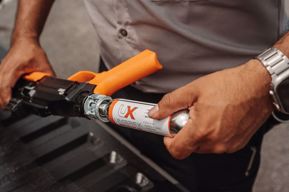
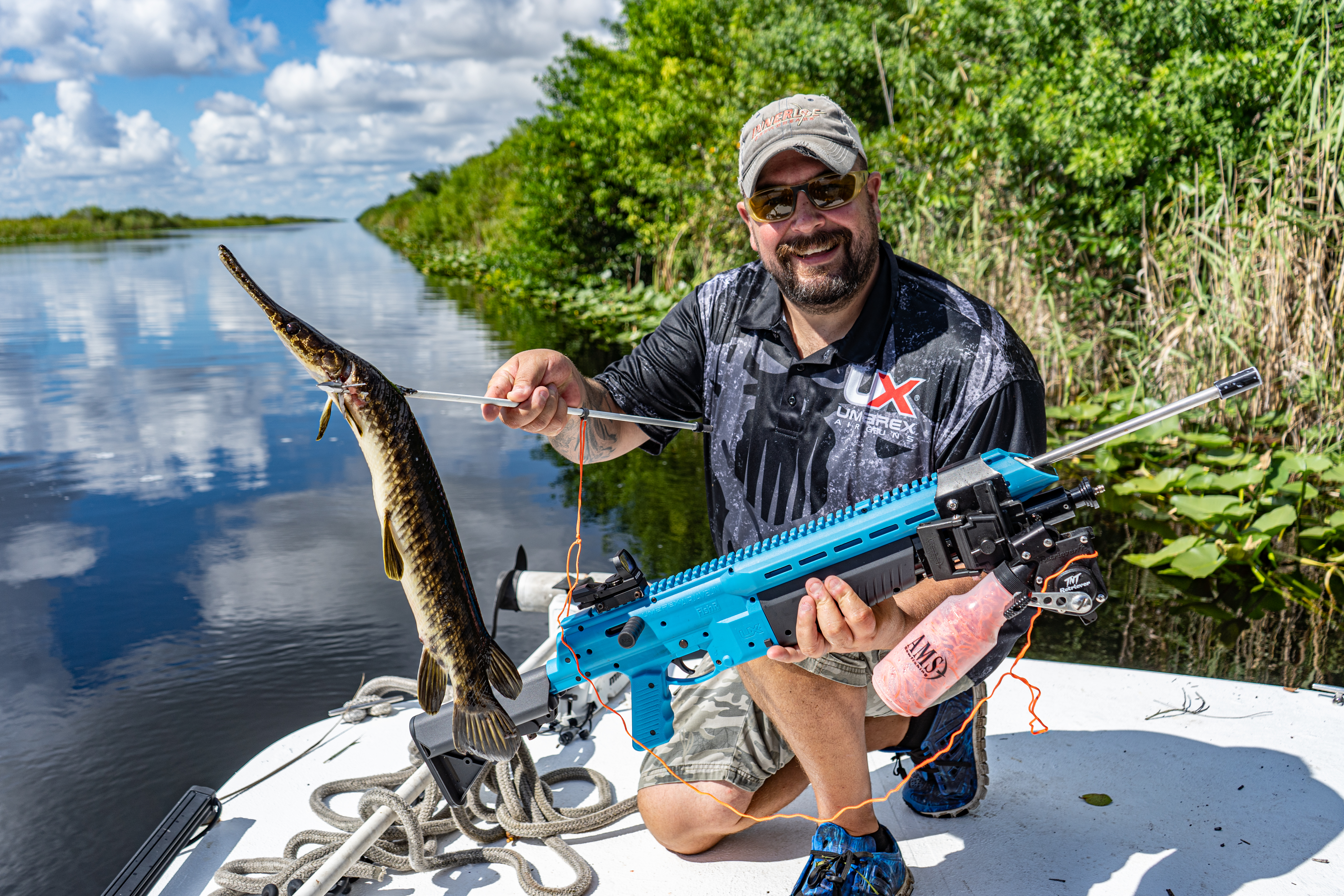
The Umarex FishR Airgun Fishing Arrow is described by Umarex as engineered for the AirJavelin FishR Bowfishing PCP rig and references heavy carp among its intended bowfishing applications. Umarex lists the arrow with a solid fiberglass shaft, stainless steel hardware, and an Innerloc Pro Point designed for bowfishing conditions.
That product context does not replace regulations. Carp rules vary by state and water body, and some locations maintain additional restrictions involving fishing methods, access areas, seasons, or equipment classifications.
Responsible bowfishers treat legality as part of the shot itself, not as an afterthought.
Gar Demand Patience and Identification
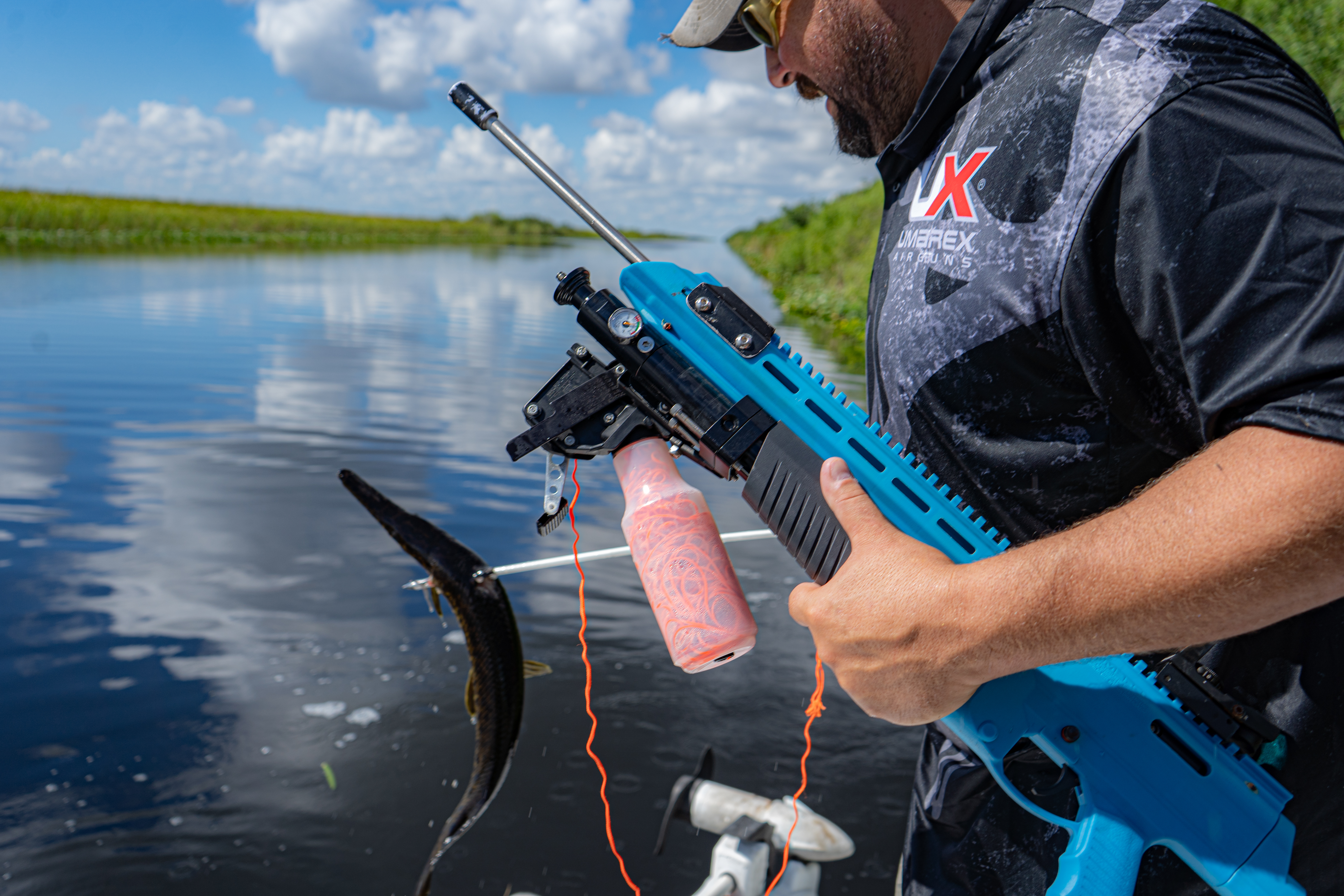
Gar are another fish strongly associated with bowfishing, especially throughout southern rivers, backwaters, reservoirs, and slow-moving systems where surface activity makes them easier to spot.
They are also one of the best reminders that bowfishing requires restraint.
Long shadows under stained water can look obvious until glare changes the angle. Surface movement can distort the body shape. Low light can make identification harder than expected. A fish that looked clear one second may become uncertain the next.
Good bowfishers slow down when identification becomes questionable.
Gar regulations may differ by species, location, protected status, and management area. Some waters may allow certain methods while others may not. The safest approach is always direct verification through the local wildlife authority responsible for that water.
Air-powered bowfishing systems do not remove that responsibility. The shooter still needs to know exactly what is beneath the surface before taking the shot.
Buffalo Fish and River Systems
Buffalo fish often enter bowfishing conversations because they inhabit many of the same freshwater systems where shallow-water opportunities occur.
They can appear broad and slow-moving in current breaks, muddy flats, reservoir edges, and backwater areas where visibility changes constantly with weather and flow conditions.
For beginners, buffalo fish also highlight one of the hardest parts of bowfishing: fish identification under imperfect conditions.
Water changes everything.
Mud softens outlines.
Current distorts movement.
Glare hides details.
Experienced bowfishers learn quickly that uncertainty is a reason to wait, not a reason to rush.
That mindset matters more than equipment choice. Air-powered systems may change how the arrow launches, but they do not change the responsibility to identify species correctly and follow the current rules governing that water.
Tilapia in Warm-Water Environments
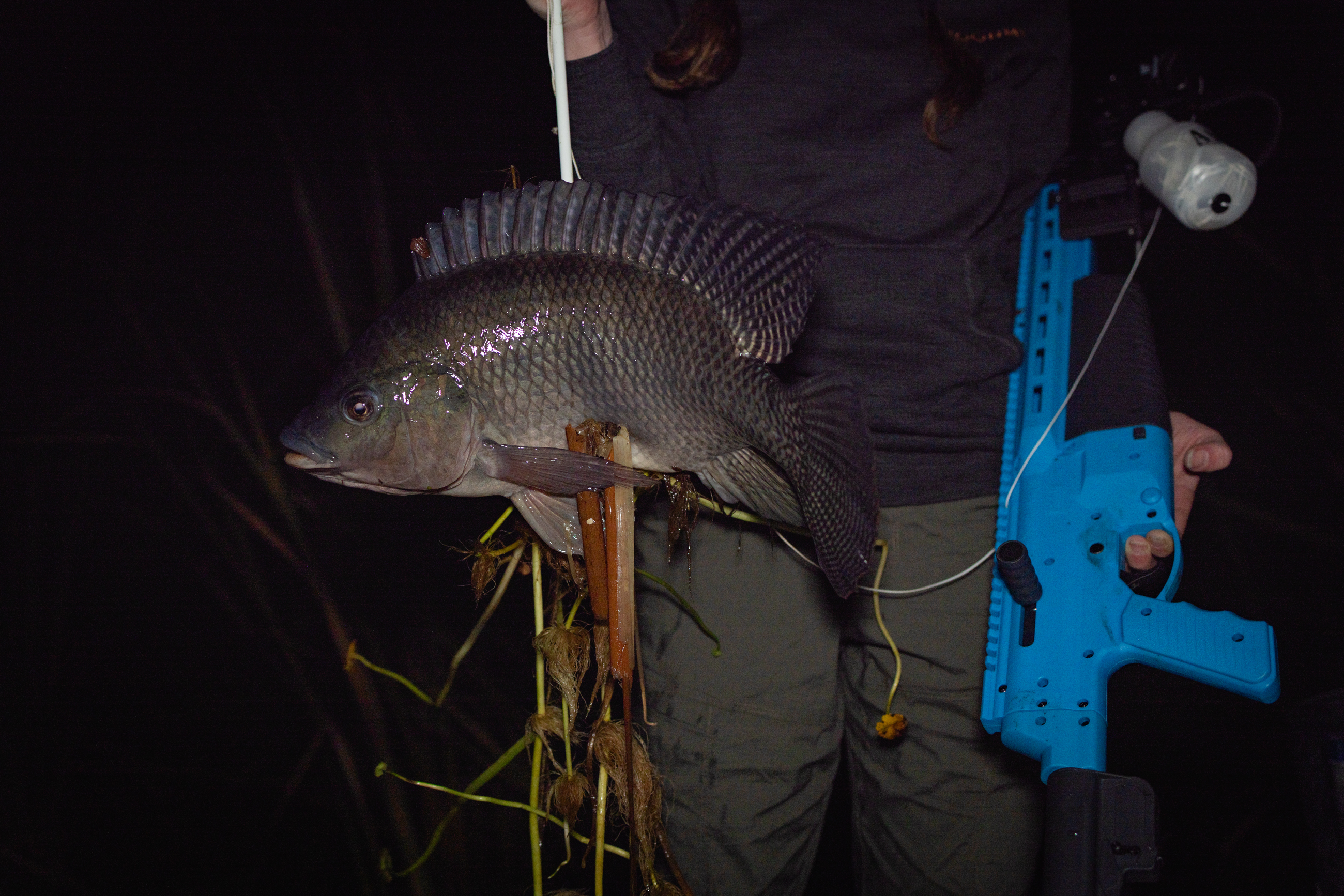
Tilapia are sometimes discussed in bowfishing conversations because they may establish populations in certain warm-water systems, canals, reservoirs, and southern fisheries.
Warm-water environments create their own challenges. Fish may hold near vegetation, structure, warm discharges, shallow feeding areas, or muddy edges where visibility shifts throughout the day.
Tilapia also demonstrate why national bowfishing content must remain cautious. A fish that is common in one region may be regulated differently in another. Some waters may allow harvest under certain rules while others may not clearly address the use of air-powered arrow-launching systems at all.
The Umarex FishR Airgun Fishing Arrow product description references tilapia among possible bowfishing applications, but users should never interpret product descriptions as legal confirmation for any location or method.
The safest approach is always direct verification through the current state or local regulations before using any equipment.
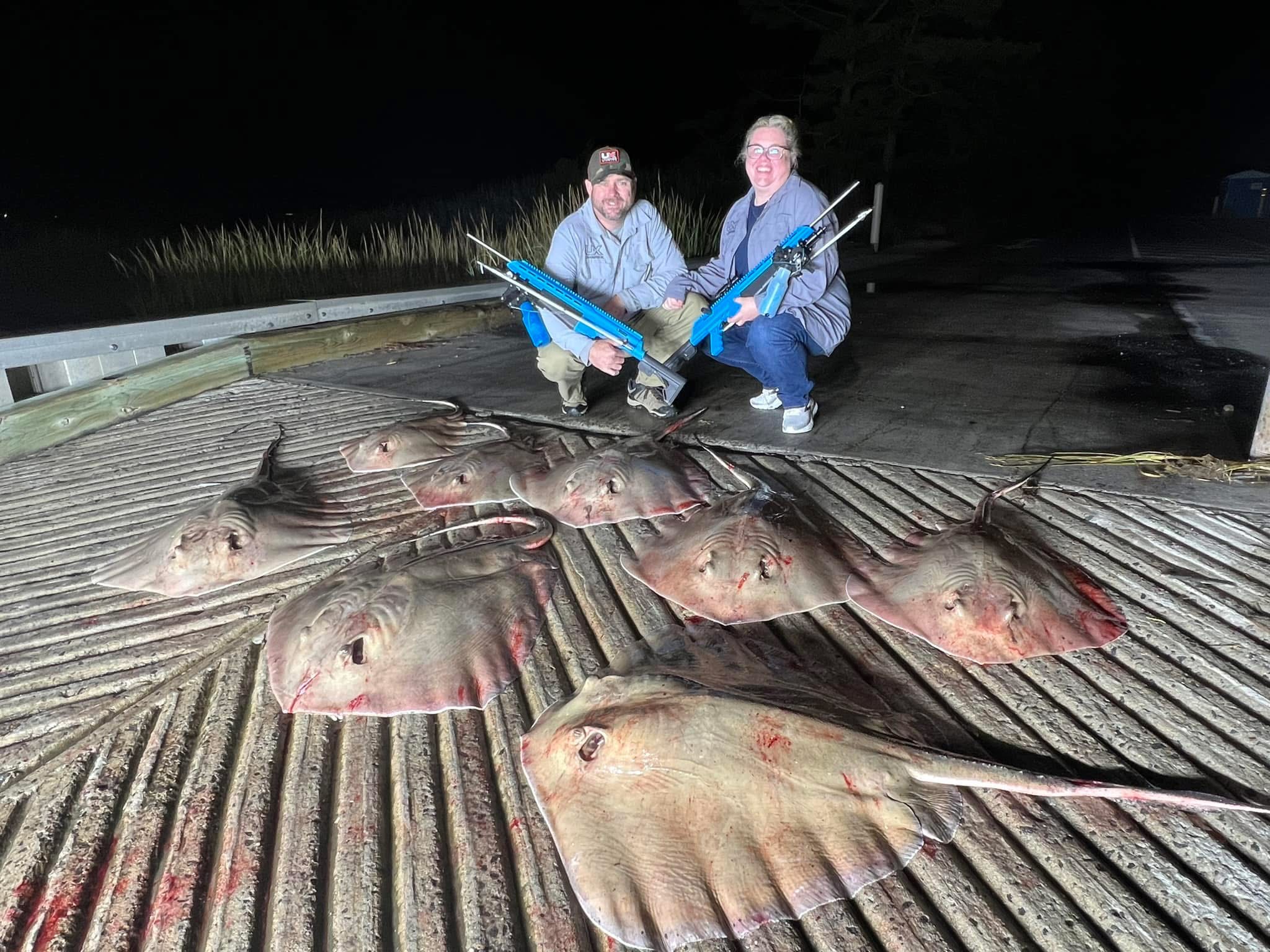
Rays and Saltwater Bowfishing Conditions
Saltwater bowfishing introduces an entirely different environment.
Current moves differently.
Visibility changes faster.
Glare becomes more aggressive.
Tides reshape the water throughout the day.
Rays are often associated with coastal bowfishing discussions because they may be visible across shallow flats, sandy bottoms, and nearshore environments where anglers can spot movement from above the surface.
The AirJavelin FishR product information references harsh and saltwater environments through its use of corrosion-resistant and stainless components intended for marine exposure.
But saltwater regulations are rarely simple.
Florida’s Fish and Wildlife Conservation Commission defines spearing broadly to include bowfishing and other methods involving devices used to capture fish by piercing the body. Florida also maintains species restrictions, area restrictions, and method-specific regulations that may apply differently depending on location and species. (myfwc.com)
That complexity is exactly why air-powered bowfishing content must stay cautious. Regulations involving arrow-launching air systems may not always be clearly defined across jurisdictions.
If there is uncertainty, contact the wildlife agency directly before using the equipment.
For a deeper coastal overview, see Saltwater Airgun Bowfishing Guide.
Water Conditions Matter More Than Species Lists
Most beginner bowfishers spend too much time thinking about species and not enough time thinking about conditions.
The water usually determines what kind of shot is even possible.
Clear water may allow longer visibility windows and cleaner target identification. Muddy rivers may only provide quick flashes of movement before the fish disappears. Wind can break up the surface. Vegetation can interfere with retrieval. Current can move both the fish and the shooter at the same time.
Experienced bowfishers pay attention to:
-
water clarity
-
fish angle
-
current speed
-
glare direction
-
retrieval path
-
vegetation
-
bottom composition
-
boat positioning
Those details matter whether the system is traditional or air-powered.
Airgun bowfishing does not simplify the water. It simply changes how the arrow is launched.
For more on mechanics and shot behavior, see How Airgun Bowfishing Works.
Recovery Matters as Much as the Shot
Bowfishing is not only about hitting the fish.
The recovery matters just as much.
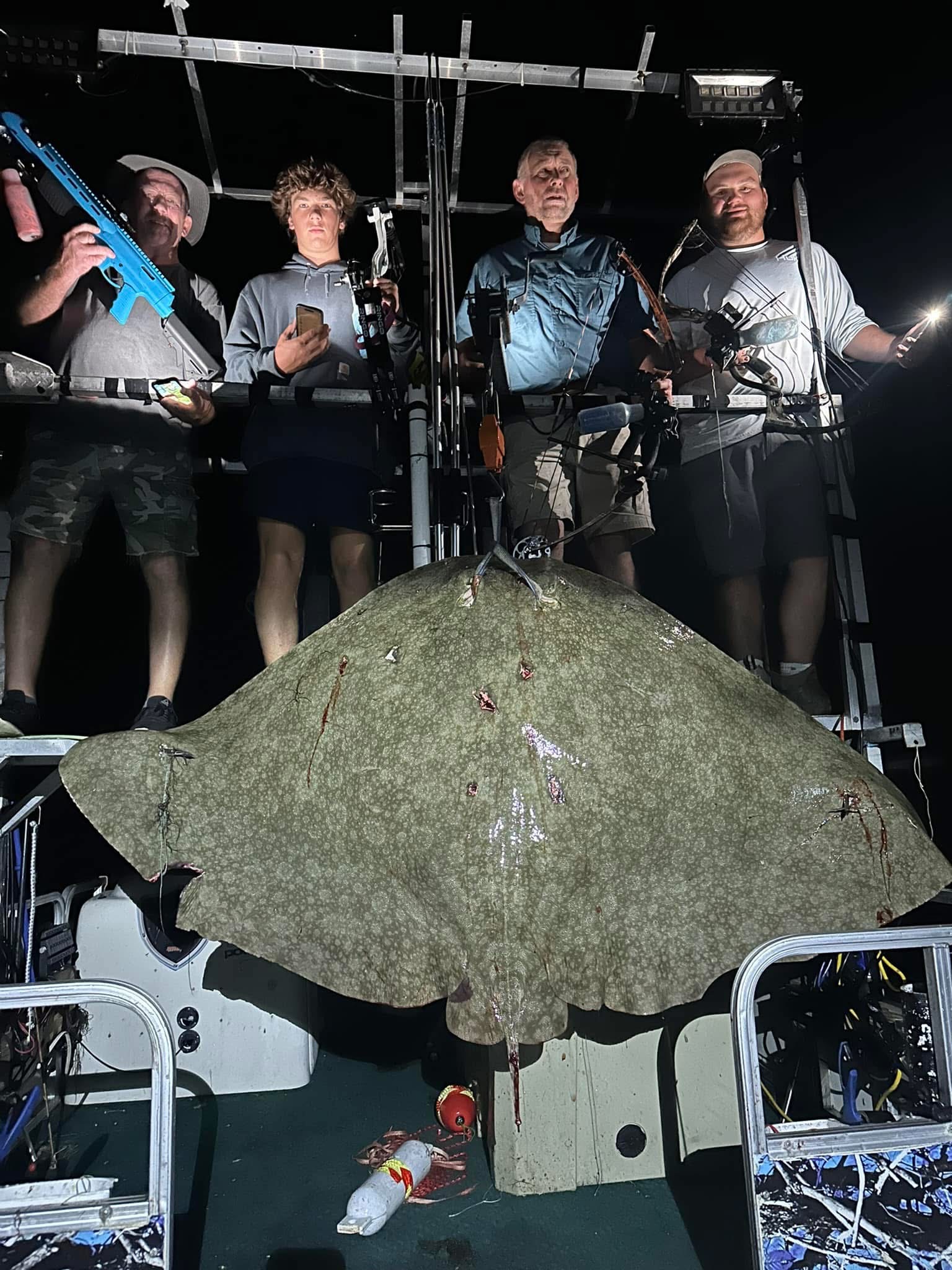
Current, vegetation, mud, shell, rocks, and line angle can all complicate retrieval after the arrow enters the water. Larger fish can create significant pressure on the line and equipment during recovery.
The Umarex FishR Airgun Fishing Arrow uses a 1,248-grain solid fiberglass shaft with stainless steel hardware according to Umarex’s product listing. Those details matter because bowfishing arrows are built for impact, line attachment, and recovery stress rather than target shooting alone.
|
Field Condition |
Why It Matters |
|
Strong current |
Increases recovery difficulty |
|
Vegetation |
Can trap line and fish |
|
Muddy water |
Reduces visibility during retrieval |
|
Bottom structure |
Shell, rock, and debris can stress equipment |
|
Fish size |
Larger fish place more tension on the line |
|
Shot angle |
Poor angles complicate recovery |
The best bowfishing shots are controlled, legal, recoverable shots taken under conditions the shooter understands.
Legal Verification Must Come First
The legal status of air-powered bowfishing equipment is not universally defined.
Some jurisdictions may treat air-powered arrow systems differently than traditional bows. Others may classify them under broader spearing or fishing-method language. Some may not clearly address them at all.
That uncertainty is exactly why bowfishers should never assume legality based on:
-
internet discussions
-
social media videos
-
forum posts
-
product descriptions
-
traditional bowfishing rules alone
Texas Parks and Wildlife publishes dedicated bowfishing regulations and notes that additional restrictions may exist depending on the property or water body involved. (t)
Florida’s saltwater rules similarly maintain species and area restrictions that may affect spearing and bowfishing methods.
Before using any air-powered bowfishing equipment, verify:
-
species legality
-
method legality
-
local restrictions
-
water-body restrictions
-
license requirements
-
season dates
-
possession rules
-
whether air-powered arrow systems are permitted
If the regulations are unclear, contact the responsible wildlife agency directly before use.
For additional guidance, see Airgun Bowfishing Laws and Regulations (https://www.umarexusa.com/airgun-bowfishing-laws-and-regulations).
Choosing the Right Fish for the Conditions
The best fish for airgun bowfishing is the fish that matches the conditions safely and legally.
|
Situation |
Fish Often Discussed |
What Matters Most |
|
Shallow freshwater flats |
Carp and buffalo fish |
Visibility and legal verification |
|
Slow-moving southern rivers |
Gar and carp |
Identification and current |
|
Warm-water canals and reservoirs |
Tilapia in legal waters |
Water clarity and local rules |
|
Coastal flats |
Rays and legal saltwater species |
Species restrictions and tides |
|
Beginner outings |
Clearly identified legal fish |
Recovery and shot control |
The smartest bowfishers do not force difficult shots just because a fish appears briefly.
They wait for:
-
clear identification
-
manageable distance
-
safe line path
-
practical recovery conditions
-
legal certainty
That discipline is what separates responsible bowfishing from reckless shooting.
Key Takeaways
The best fish species for airgun bowfishing depend on local legality, visibility, recoverability, and water conditions.
Carp, gar, buffalo fish, tilapia, and rays are commonly associated with bowfishing discussions, but regulations vary significantly by jurisdiction.
Air-powered bowfishing systems may not be specifically addressed in every state or local regulation.
The Umarex FishR Airgun Fishing Arrow is designed for the AirJavelin FishR platform and built for bowfishing conditions involving line retrieval and wet environments.
Water conditions, fish identification, recovery control, and legal verification matter more than species lists alone.
Users should always verify the legality of air-powered bowfishing equipment directly with the responsible wildlife authority before use.
FAQ
What are the best fish species for airgun bowfishing?
The best species are the ones that are clearly identifiable, legally accessible, safely recoverable, and permitted under the regulations governing the specific water being fished.
Are carp commonly associated with bowfishing?
Yes. Carp are frequently associated with shallow-water bowfishing because they are often visible near the surface in rivers, reservoirs, and backwaters where regulations allow bowfishing methods.
Can gar be targeted with air-powered bowfishing equipment?
Gar are commonly discussed in bowfishing contexts, but regulations involving species, methods, and equipment can vary significantly by location. Always verify legality directly with the appropriate wildlife agency before use.
Are air-powered bowfishing systems legal everywhere?
No. Regulations involving air-powered arrow-launching systems may differ across states, provinces, and local jurisdictions, and some regulations may not specifically address the equipment at all.
Can airgun bowfishing be used in saltwater?
Some jurisdictions may allow certain bowfishing or spearing methods in saltwater, but regulations involving species, equipment, and areas vary widely. Always verify current rules before use.
Why does water clarity matter so much in bowfishing?
Water clarity affects fish identification, depth perception, visibility, shot angle, and recovery conditions. Poor visibility increases the risk of bad identification and poor recovery.
Why is legal verification so important with air-powered bowfishing?
Because some jurisdictions may not specifically define or address air-powered arrow-launching systems under existing bowfishing regulations. Users should confirm legality directly with the responsible wildlife authority before use.
Works Cited
Umarex USA. “Umarex FishR Airgun Fishing Arrow.” Used for FishR arrow specifications, construction details, intended platform compatibility, and product-use context. https://www.umarexusa.com/2252159
Umarex USA. “Umarex AirJavelin FishR.” Used for salt-environment product details and air-powered bowfishing platform context. https://www.umarexusa.com/umarex-airjavelin-fishr
Texas Parks and Wildlife Department. “Bow Fishing Regulations.” Used for state-level bowfishing regulation guidance and local restriction context. https://tpwd.texas.gov/regulations/outdoor-annual/fishing/general-rules-regulations/bow-fishing-regulations
Florida Fish and Wildlife Conservation Commission. “Spearing.” Used for saltwater spearing and bowfishing regulation context. https://myfwc.com/fishing/saltwater/recreational/spearing/