





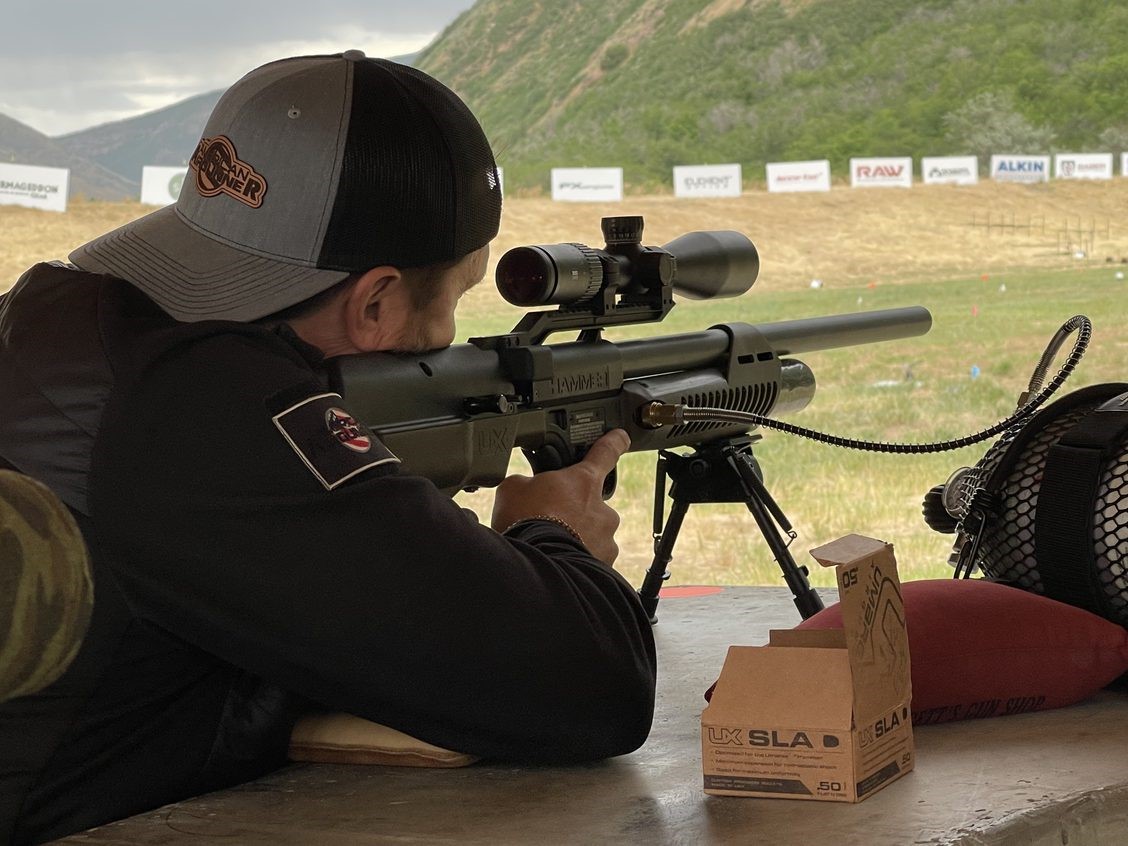
Pre-Charged Pneumatic airgunning is big these days. All it takes is shooting one to figure out why. Airgunners have awoken to the fact that airguns of today are much better than any airgun that was available 20 years ago. Even in the span of the last 10 years, PCP airguns have increased calibers, added more power, granted the consumer much more value, and pushed the thresholds of accuracy in all categories.
The Pre-Charged in Pre-Charged Pneumatic can generally be expressed to represent the tanks that hold the pressurized air used in the airgun. Like many specialized subjects, airguns come with their own jargon- a language that only means something in the context of talking about airguns. With lots of numbers and terms flying around, it’s easy to get lost or just plain old confused in learning about the world of Pre-Charged Pneumatics. Let’s dig into the subject of air tanks and see if we can clear the waters on this subject just a little.
Air Tanks 101
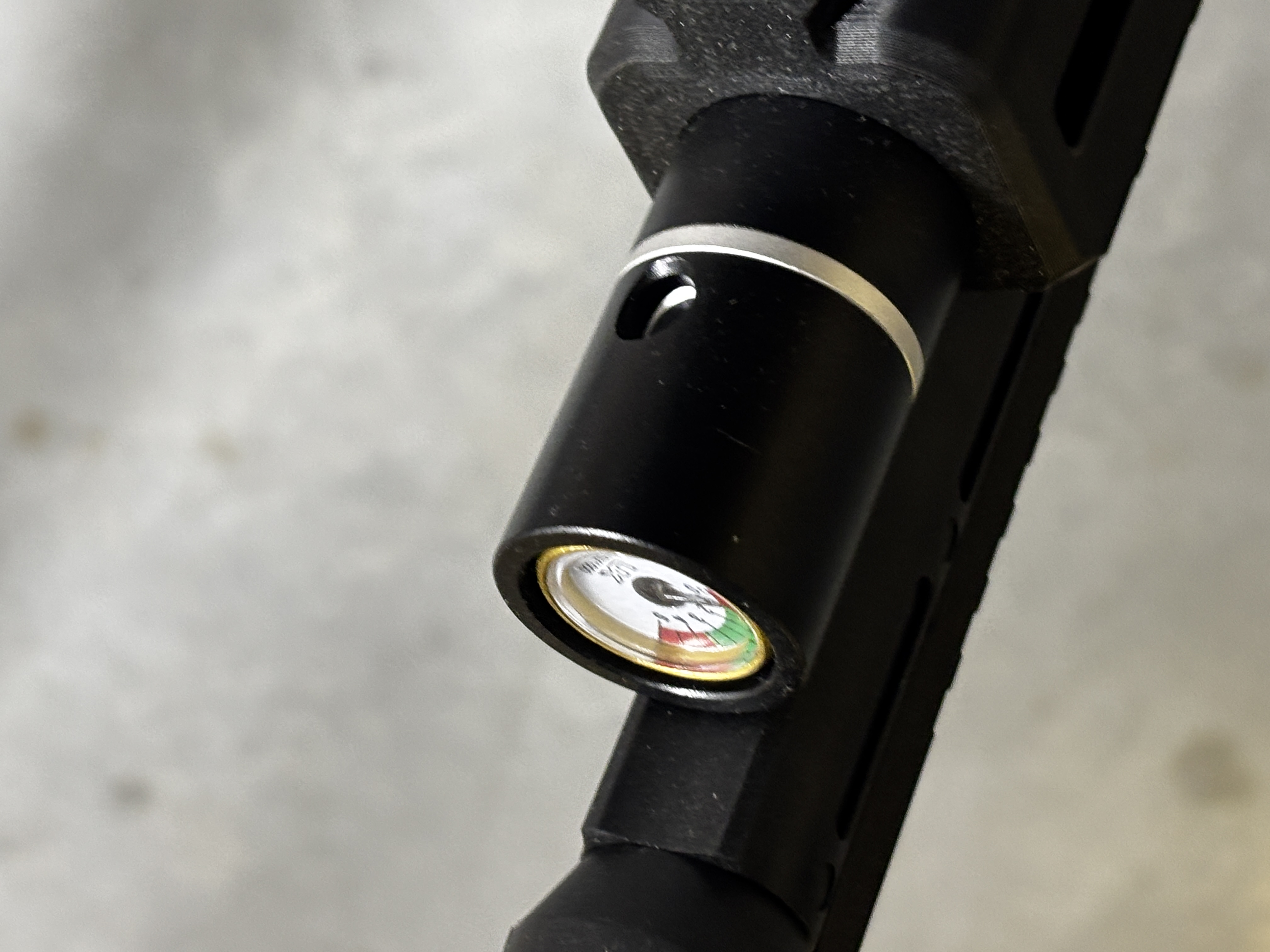
In the world of Pre-Charged Pneumatic airguns you will run into air tanks. For sure, the PCP air rifle you are considering will have a reservoir of highly pressurized air on it. This tank might be located in the fore grip area or in the buttstock area. Either way, the job is simple– hold air at a really high pressure for the gun to consume when you pull the trigger. Easy peasy.
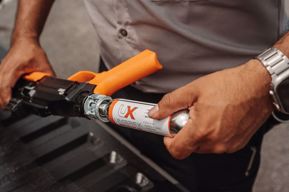
You might also have noticed that some people opt to fill their PCP rifle with a larger, stand alone tank. One tank being used to fill another, as it were.
With PCP airguns, you simply cannot avoid dealing with a tank. On the rifle itself you will hear this tank referred to as either a tank or a bottle. The inference here is that a tank can be fully disassembled, whereas a bottle style reservoir only has one opening in which the connection to the rifle is made. Is one better than the other? Not really. The one real advantage that a bottle will have over a tank is physical capacity. But let’s not get too far ahead.
PSI, Bar– Measuring Pressure at the Tank, Burst Disk, and Regulator
Here in the US, we doggedly hold on to the imperial system with its inches and feet and ounces and pounds. You will find that the door sticker on your car will give you the recommended air pressure for your tires in PSI or pounds per square inch. It is not uncommon to find airguns spec’d for the US market will also have gauges calibrated in PSI as well. In other corners of the world, you might see pressure measured in Bars. Without getting too deep into how the Bar is calculated, just know that one Bar is equal to about 14.5 PSI. Knowing this, you can see that by using Bar, you can use a smaller number to describe the same pressure.
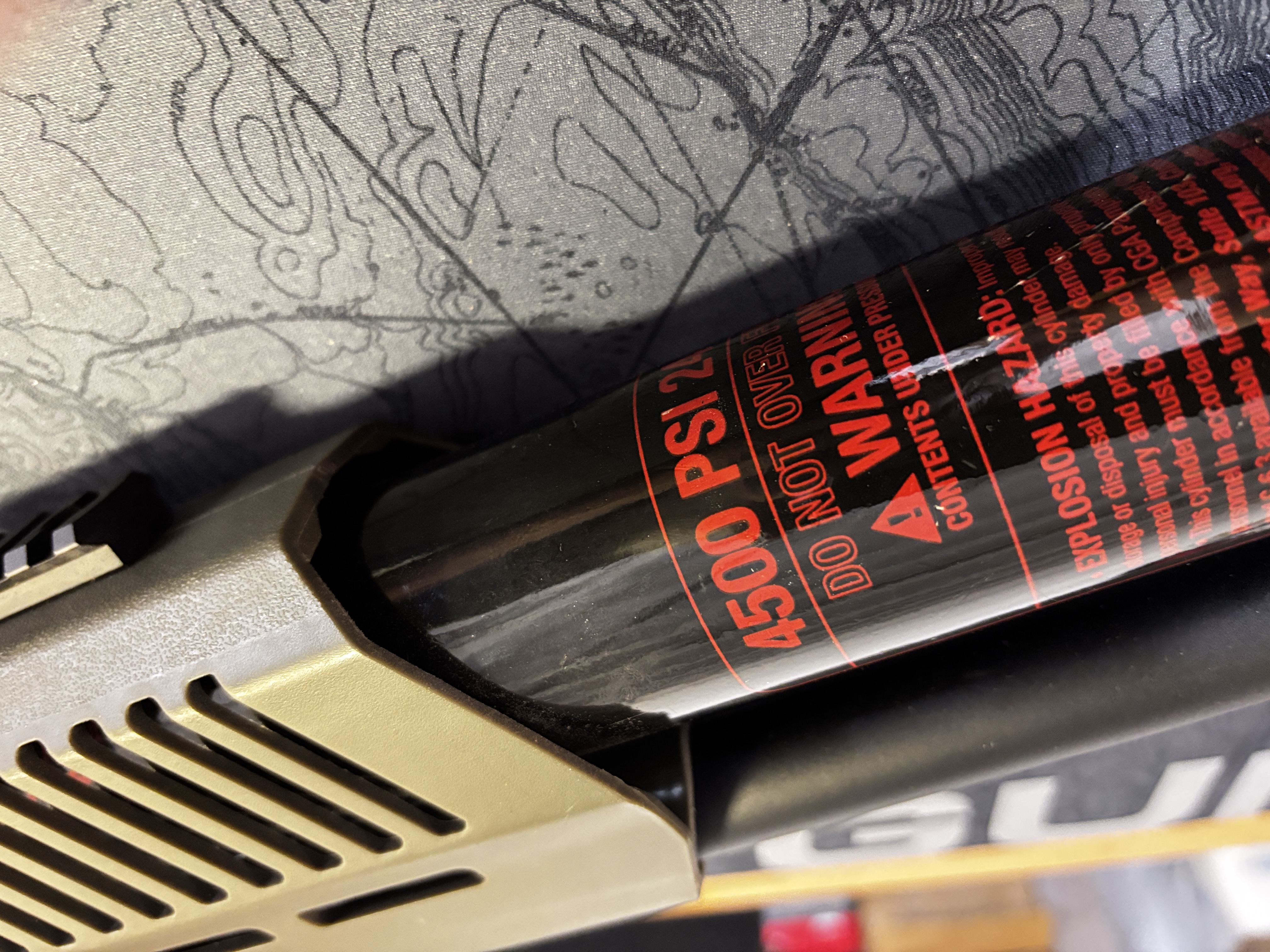
Any tank or bottle will have a maximum fill pressure written on the tank. There will also be a burst disk that is designed to be sacrificed in the event of an accidental overfill. This burst disk will typically be designed to fail around 5,000 PSI or 35 Bar higher than the maximum fill pressure of the tank.
Many PCP airguns have a built-in regulator to control the air tank’s output of air pressure. This helps ensure that the pressure used by the airgun for each shot will be nearly the same, the gun will be as accurate as it can be, and the tank’s air volume is managed as efficiently as possible. The regulator is set to a number, once again, either in PSI or Bar, for the gun’s optimum performance. On some air rifles, the regulator can be adjusted by the shooter to optimize the rifle for various pellets or shooting situations.
An air rifle like the Gauntlet in .22 caliber has a maximum fill pressure of 4,500 PSI or 310 Bar, with a regulator pressure of 1,900 PSI or 131 Bar.This combination will allow the Gauntlet to shoot a 12 grain pellet at 1,100 FPS and make about 48 ft-lbs of energy at the muzzle.
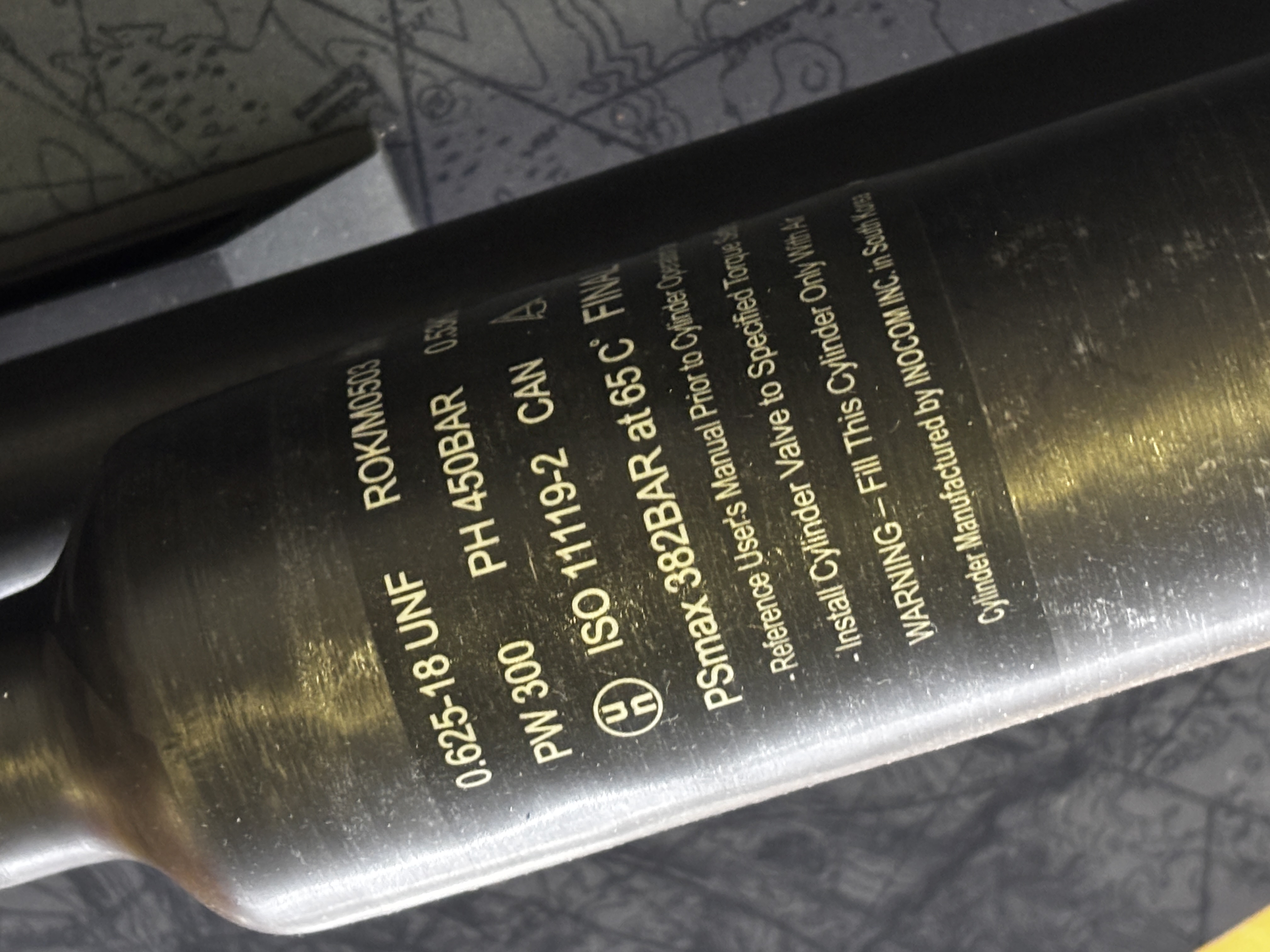
Tank Volume
Air rifle tanks vary in size from pretty small to fairly large. The same can be said for fill tanks. Some are designed for field or hunting use and are on the small side, enough to fill a rifle back up a few times. Others are large enough to allow a shooter to fill their rifle many times. It is common for the tank’s volume of capacity to be measured in either cubic inches or cubic centimeters. Smaller airguns, like our Notos are designed to be very compact and maneuverable and, therefore, it is equipped with a smaller tank. This smaller tank naturally takes less air to fill to the maximum pressure, but will also give the shooter a lower number of shots per fill.
Carbon Fiber fill tanks are very popular among airgun enthusiasts simply because they allow a rifle to be filled very quickly and quietly. These tanks also vary in size from small “pony” bottles to very large tanks. These carbon fiber tanks have their capacity measured in some form of cubic measurement, commonly either metric or imperial in nature. Some retailers represent volume of air in the tank by using the un-compressed volume of air compressed within the tank.
Divers prefer to represent the volume of air in diving tanks in Cubic Feet, rather than in the physical or liquid volume of the tank. Other retailers simply represent the volume of the tank by stating the physical volume of the tank.
In this way, you might see a large carbon fiber tank with a physical volume of 75 Cubic Feet, and a visually similar tank advertised with a volume of 7 liters.
These carbon fiber fill tanks usually have a maximum pressure threshold of 4,500 PSI or 310 Bar. A medium sized (75 cubic feet or 7 liters) carbon fiber fill tank will allow you to refill a smaller caliber rifle 12-16 times, depending on how large the gun’s tank is and how many shots you take before refilling. Naturally, a larger tank, one with around 9 liters or 95 cubic feet of capacity will allow you to fill your rifle many more times than with the smaller tank. As you might expect, the larger tank will cost more, but might be worth the expense in the long run if you have to pay for fills at your local shop. For maximum portability, some shooters opt for a smaller fill tank. This is a good option for hunters looking to store their air supply in a backpack in the field.
Things to Keep in Mind
From a few years of experience in shooting PCP rifles, I’ve picked up a few tips for air management for both your fill method and the rifle itself.
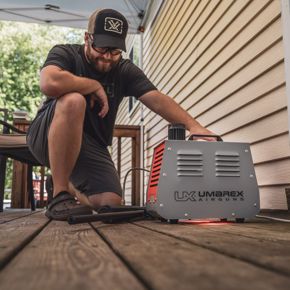
First, just because your rifle has a maximum fill pressure of X that doesn’t mean you need to fill it to X each time you shoot. My Gauntlet SL30 has a maximum fill pressure of 4,500 PSI. In competitions we get maybe one or two fills per day that will approach that limit. Most of the time it ends up being closer to 4,100 PSI. That 4,100 PSI range is closer to the upper end of the gun’s sweet spot of pressure than 4,500 PSI. In other words, a full fill might have me sending unnecessary sighter shots until the gun gets closer to the sweet spot again. Whether I fill from my ReadyAir G2 Compressor or a carbon fiber tank, I just go to that sweet spot of pressure for that rifle.
Second, if you can only buy one tank, buy the largest volume tank you can afford. These days the largest tanks are approaching $1,000. If you are depending upon a shop to keep your tank filled, this will mean longer stretches between fills. If you have your own 100% duty cycle compressor, there’s nothing wrong with getting a more portable fill tank if that suits you best. Another note concerning compressors. Most consumer level compressors are not rated to fill larger carbon fiber tanks. It is best to use that type of compressor for filling air rifles directly.
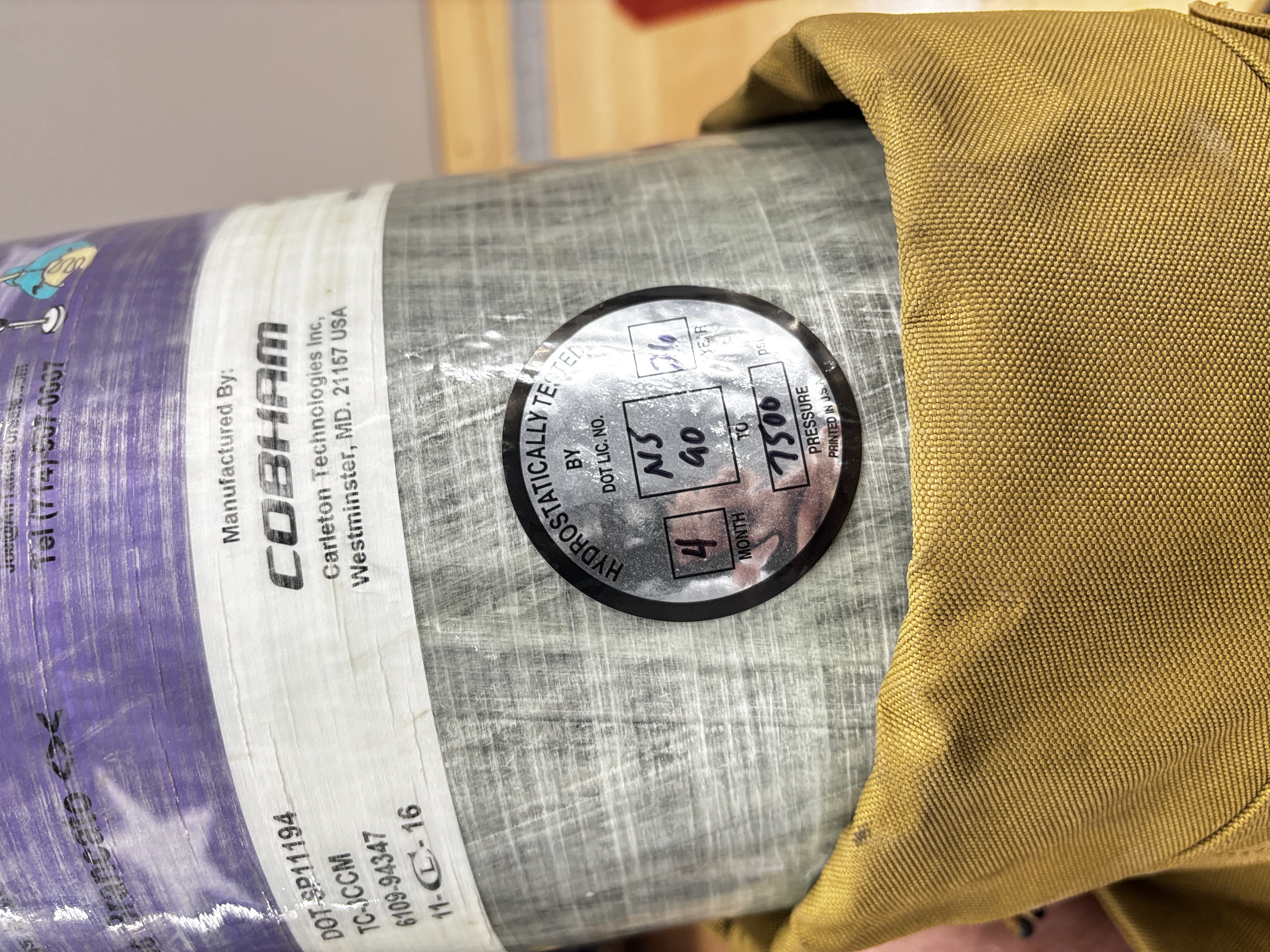
Thirdly, carbon fiber tanks have a 15 year (total) life and have to be recertified every 5 years (from the day it is manufactured). Yes, a carbon fiber air tank is a consumable item, so do be aware of this. The date of manufacture will be on the tank’s label and appear something like this: MM @ YY. A tank made in November of 2025 will appear as such: 11 @ 25. I would strongly recommend buying a tank new from a higher volume airgun dealer. Buying from a larger airgun dealer will allow you to get the most life from the tank. Likewise, I would recommend avoiding used tanks entirely. Buying a tank that is near the end of its life span is not only wasteful, but potentially dangerous. The risk is just not worth it.
Fourth, fill your rifle more often than you might otherwise desire. This becomes really obvious when a person has a big bore air rifle, but the principle remains for small bore PCPs as well. Filling after a fewer number of shots consumes less volume from the fill tank, which allows it to remain at a higher pressure longer. Using my example of a .30 caliber Gauntlet, shooting 30 or more shots will allow the gun’s pressure to fall below the regulator pressure. The refill, therefore, will take a considerable volume of air from the fill source to replenish. When I fill after 17-20 shots, it takes much less air to get back to the sweet spot and keeps the fill source at a higher pressure longer.
Mark Davis, avid outdoorsman, family man, and outdoors writer is the eCommerce Marketing Manager for Umarex USA.