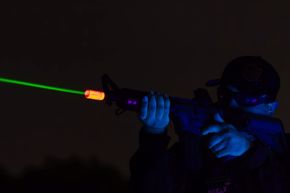
Air archery hunting equipment, including PCP arrow rifles, arrow guns, air-powered arrow-launching systems, air archery platforms, and related hunting accessories, may not be specifically addressed or permitted under the laws and regulations of every state, province, species, season, land type, or local jurisdiction. Regulations involving airguns, arrows, broadheads, hunting methods, caliber or energy requirements, species restrictions, seasons, public land rules, private land rules, and air-powered equipment may vary significantly and may change over time. Always contact your state or local fish and wildlife agency to verify the current legality of any equipment, species, method, season, and location before use. Nothing below should be interpreted as legal advice or as confirmation that any specific equipment or method is lawful in your area.
Air archery hunting uses compressed air to launch arrows from an air-powered platform, often called an arrow rifle, air archery rifle, airbow, or PCP arrow rifle. Unlike traditional bowhunting, the arrow is not launched by bow limbs and a string. Unlike standard airgun hunting, the projectile is an arrow rather than a pellet or slug.
The category includes platforms such as the AirSaber and AirJavelin Pro, but the right use depends on the equipment, arrow compatibility, intended species, hunting method, season, state law, and local rules. Our AirJavelin Pro is listed as a PCP powered air archery gun with a 4,500 PSI maximum fill pressure, 1,500 PSI regulator, 370 FPS velocity with a 170-grain arrow, and 52 ft-lbs of energy. Our AirSaber is listed as a PCP air archery arrow rifle with up to 480 FPS velocity and up to 178 FPE, and it includes a critical warning to use only Umarex AirSaber arrows with the platform.
Product capability does not equal legal permission. Before hunting with any air archery system, verify current regulations directly with the wildlife agency responsible for the species, season, land, and method you plan to use.
Air archery hunting sits at the intersection of airgun technology and arrow-based hunting. That makes it exciting, but it also makes clear definitions important. A PCP arrow rifle is not a traditional bow. It is not a crossbow. It is not a pellet rifle. It is an air-powered arrow system, and responsible use begins with understanding that difference.
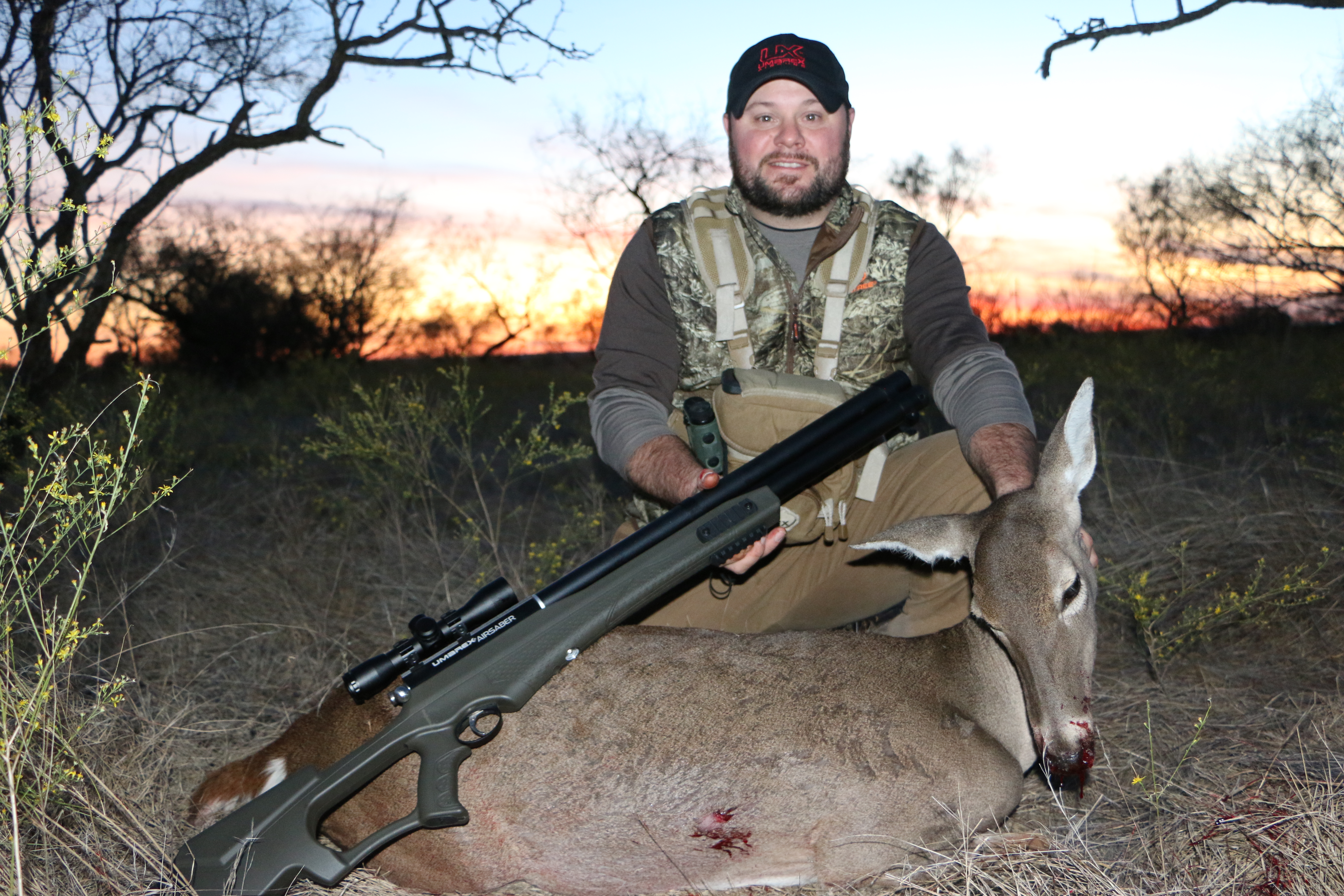
Air archery hunting is the use of an air-powered platform to launch arrows for hunting where that equipment and method are lawful. The power source is compressed air. The projectile is an arrow. The field responsibility is the same serious responsibility that applies to any hunting method: know the law, know the equipment, know the animal, know the conditions, and recover responsibly.
That definition matters because people often use overlapping terms. Some call these platforms arrow rifles. Some call them airbows. Some call them air archery guns. Some regulations may use different language, and some may not clearly address air-powered arrow systems at all. That is why terminology should never be used as a shortcut for legal permission.
Air archery hunting is also different from target air archery. On a target range, the primary concerns are safe backstop, compatible arrows, equipment handling, and controlled shooting conditions. In hunting, the stakes expand. Species rules, season timing, land access, legal equipment definitions, ethical shot selection, broadhead requirements, recovery, and public perception all matter.
A good air archery hunter starts with restraint. The question is not simply whether an arrow rifle can launch an arrow with enough energy. The better question is whether the system is lawful for the species, whether the user understands the platform, whether the arrow is compatible, whether the shot is ethical, and whether recovery is realistic.
For a broader category definition, see What Is Air Archery. For the technical foundation behind pressure, arrows, and platform design, see How Air Archery Works.
Most modern air archery hunting systems use PCP technology. PCP stands for pre-charged pneumatic. In practical terms, that means compressed air is stored in an onboard reservoir before the shot. When the system fires, controlled air pressure propels the arrow.
That one change separates air archery from traditional bowhunting. In a traditional bow, the shooter stores energy by drawing the string and bending the limbs. In a crossbow, limb energy is cocked and held mechanically. In an air archery platform, stored air pressure does the work.
A PCP arrow system depends on the full relationship between air reservoir, fill pressure, regulator or valve design, arrow fit, arrow strength, projectile weight, sighting system, and safe handling. The arrow is not a casual accessory. It is part of the pressure system.
Our AirJavelin Pro shows how compact PCP air archery can work. The product page lists a 7.4 cubic inch tank, 4,500 PSI max fill pressure, 1,500 PSI regulator, 25 effective shots per fill, and 370 FPS velocity with a 170-grain arrow. Our AirSaber represents a higher-energy arrow rifle platform, with product specifications listing PCP power, 14.6 cubic inch air capacity, up to 480 FPS velocity, and up to 178 FPE.
System Part |
What It Does |
Why It Matters |
|
Air reservoir |
Stores compressed air before the shot |
Determines how the platform is powered |
|
Regulator or valve system |
Controls air delivery where applicable |
Helps manage shot behavior |
|
Arrow channel or barrel system |
Supports and guides the arrow |
Requires compatible arrows |
|
Platform-specific arrow |
Receives the pressure and carries energy downrange |
Must match the system |
|
Fill source |
Refills the PCP tank |
Requires safe, correct handling |
|
Sight or optic |
Helps align the shot |
Must match the platform and realistic field use |
The field lesson is simple: air archery is a system. If the arrow, air pressure, fill method, optic, or legal use is misunderstood, the setup is not ready for hunting.
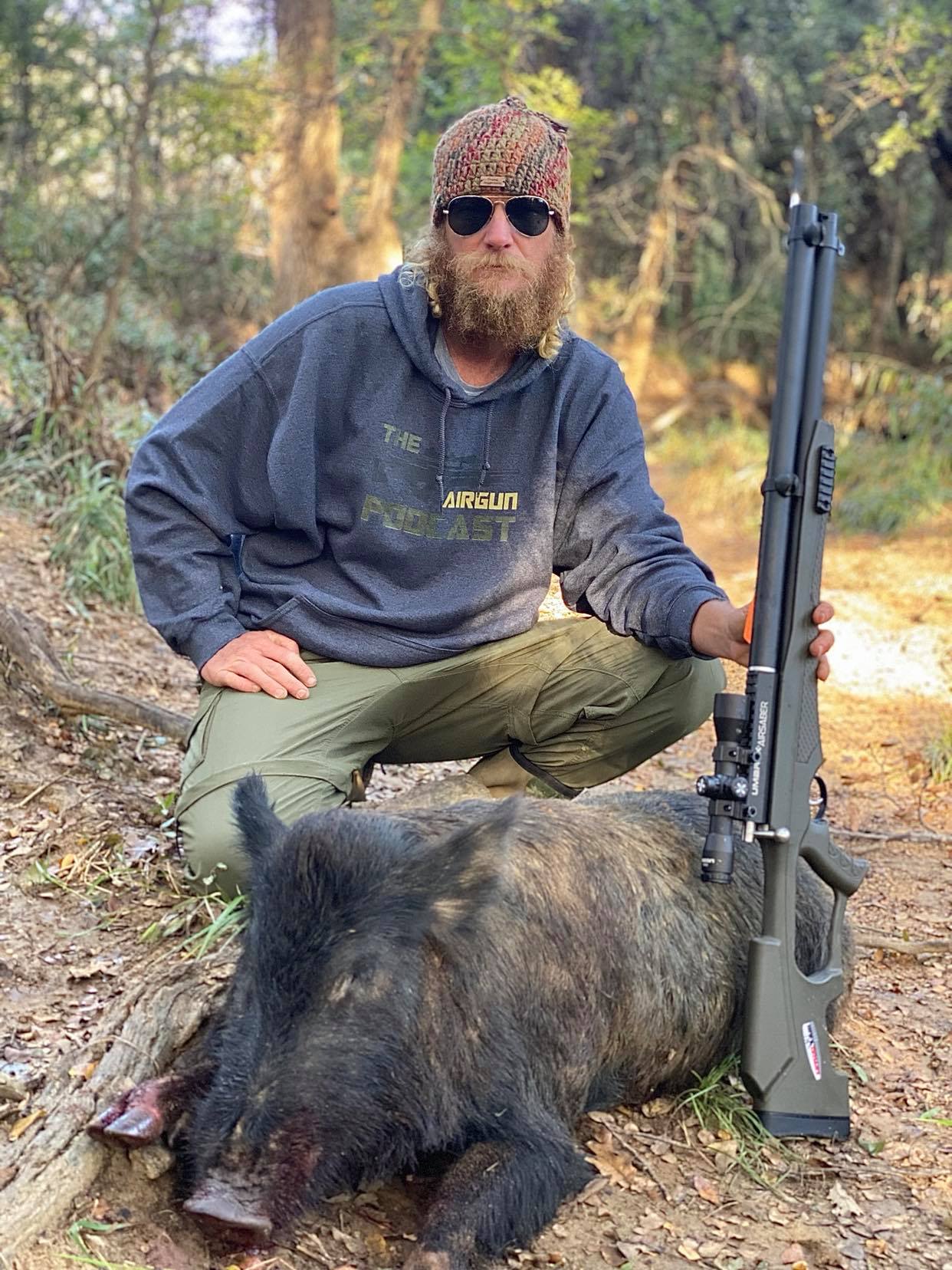
Air archery and traditional bowhunting both involve arrows, but they are not the same method.
Traditional bowhunting stores energy in flexible limbs and a string. The hunter draws the bow, anchors, aims, releases, and follows through. Shot execution depends on strength, form, draw cycle, anchor consistency, release quality, and field discipline.
Air archery uses compressed air to launch the arrow. There is no traditional draw cycle. Instead, the user manages a pressure system, platform-specific arrows, safe filling, sighting, and equipment compatibility.
That difference changes the experience. A bowhunter may immediately understand arrow flight, broadhead concepts, shot discipline, and recovery. But that same bowhunter still needs to learn the PCP platform, arrow compatibility, fill system, trigger behavior, and legal classification.
The reverse is also true. A PCP airgun user may understand air reservoirs, fill pressure, regulators, and optics. But that user still needs to understand arrow-based hunting, broadhead considerations, shot angles, animal recovery, and ethical restraint.
Factor |
Traditional Bowhunting |
Air Archery Hunting |
|
Power source |
Bow limbs and string |
Compressed air |
|
Projectile |
Arrow |
Arrow |
|
Draw cycle |
Required |
No traditional bow draw |
|
Platform handling |
Bow form and release |
PCP system and trigger control |
|
Arrow compatibility |
Bow-specific arrows |
Platform-specific arrows |
|
Legal classification |
Usually defined under archery rules |
May be treated differently by jurisdiction |
|
Recovery responsibility |
Essential |
Essential |
A responsible user should not assume that air archery automatically qualifies for archery seasons or traditional bowhunting regulations. Some states may define archery equipment narrowly. Others may create separate categories for air guns, arrow guns, or pre-charged pneumatic devices. The only safe approach is to verify the current rule language with the responsible agency.
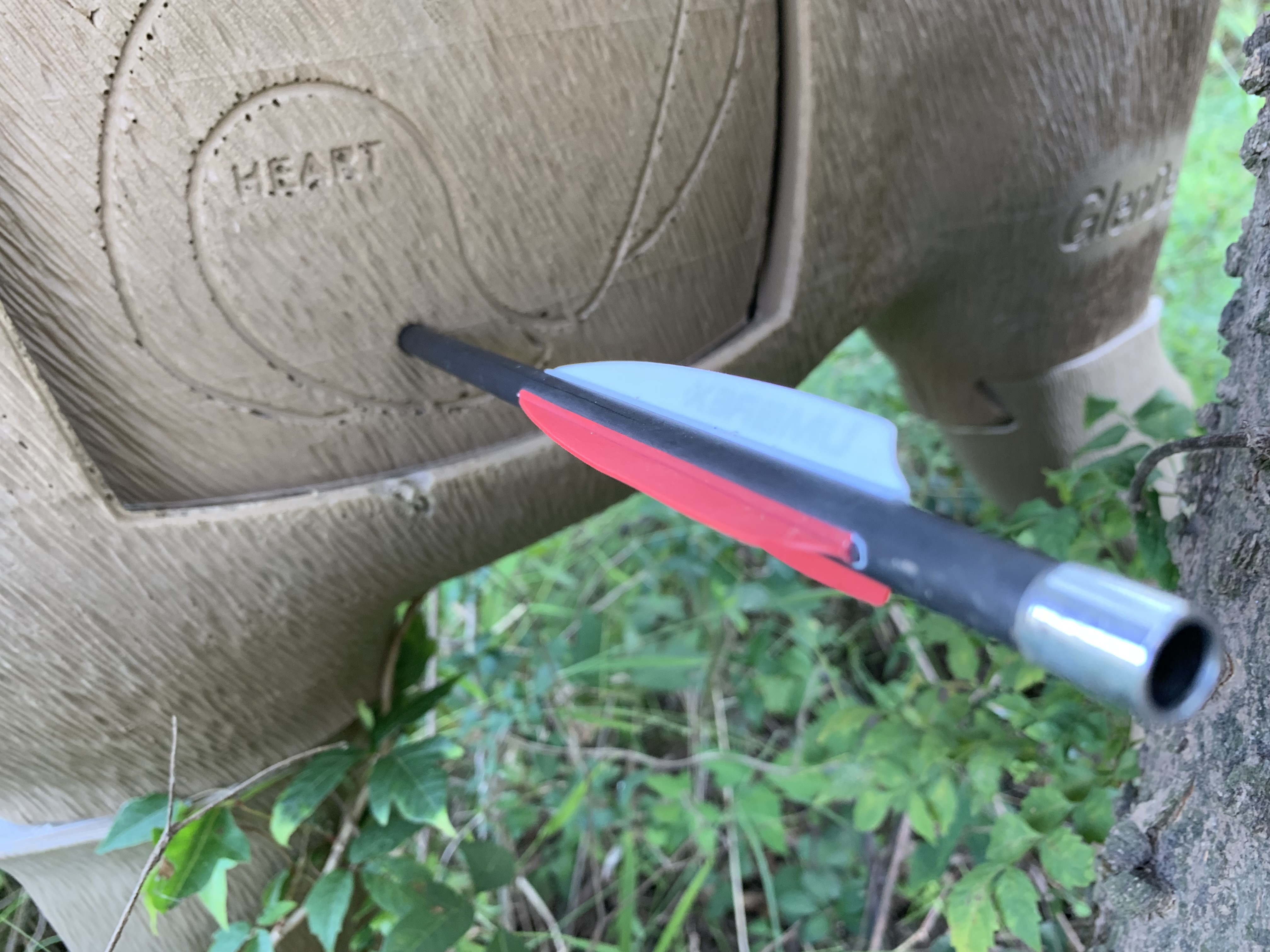
Air archery is often compared to crossbow hunting because both use stock-style platforms and arrow-type projectiles. That comparison is understandable, but it can be misleading.
A crossbow still stores energy in limbs and a string. The limbs are cocked and held mechanically. The trigger releases that stored limb energy. An air archery rifle stores energy as compressed air. The trigger releases air pressure to propel the arrow.
That distinction can matter legally. A crossbow definition may not include an air-powered arrow rifle. An airgun definition may not include an arrow projectile. A hunting regulation may include arrow guns in one season, exclude them from another, or define them separately from bows and crossbows.
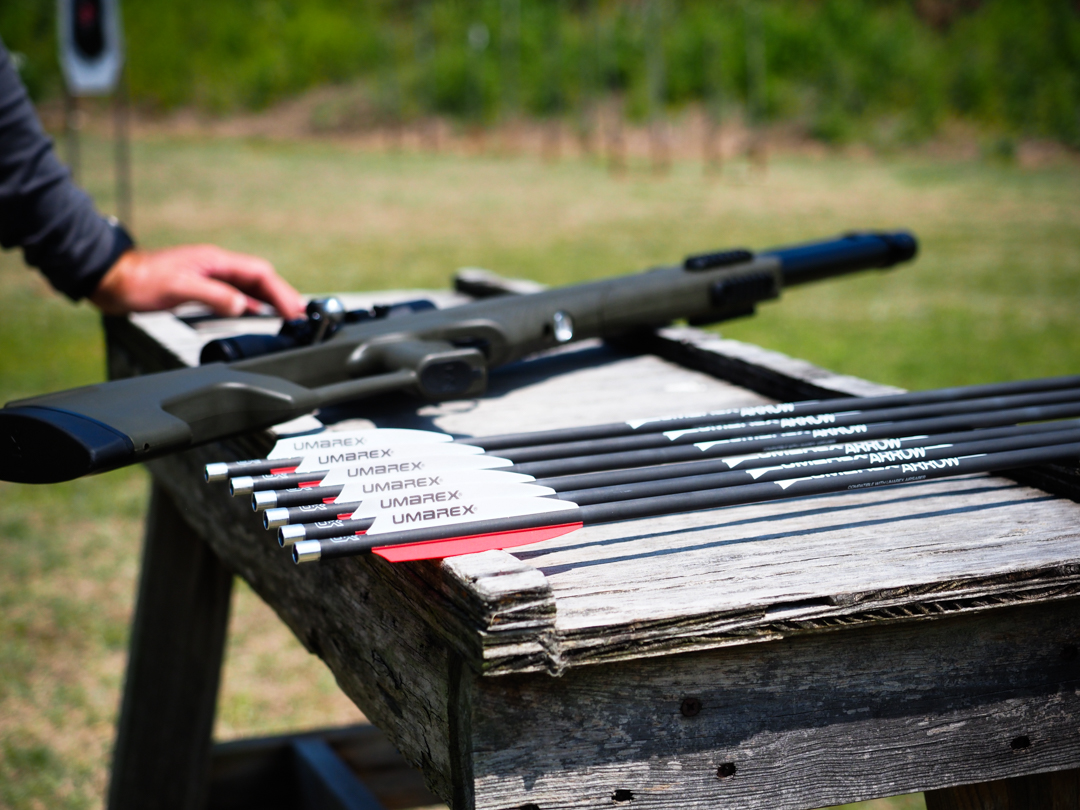
The difference also matters mechanically. A crossbow bolt or arrow is not automatically compatible with an air archery platform. Our AirSaber product page includes a direct safety warning: use only Umarex AirSaber arrows with the AirSaber arrow gun, because arrows for bows and crossbows are not built to withstand the high air pressure involved and can fail dangerously.
That warning should shape how every hunter thinks about air archery. Arrow compatibility is not a performance preference. It is a safety requirement.
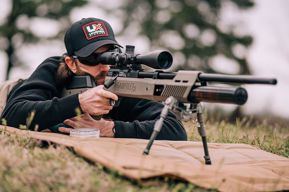
The AirSaber is one of the clearest examples of a hunting-oriented air archery platform in our product line. It is a PCP arrow rifle that uses high-pressure air to launch arrows, and it is built around platform-specific arrow compatibility.
Our AirSaber product page lists the system as a bolt-action PCP platform with Umarex Straight Flight Technology arrows, up to 480 FPS velocity, up to 178 FPE, a 14.6 cubic inch air volume, and an included Axeon Optics 4x32 scope with an AirArchery reticle. The product information also states that AirSaber uses a 376-grain arrow at velocities up to 450 feet per second with a fully charged tank.
Those specifications make the AirSaber relevant to air archery hunting conversations, especially big-game discussions where state law allows air-powered arrow systems. But the article cannot and should not treat those specifications as permission to hunt any species in any location.
The right way to understand AirSaber is this: it is an air archery arrow rifle with product-specific arrows, high-pressure PCP operation, and field-oriented capability. Whether it may be used for a particular species depends on current regulations.
The most important AirSaber rule is arrow compatibility. Use only Umarex AirSaber arrows with the platform. Standard bow and crossbow arrows are not built for that pressure environment and can create serious risk.
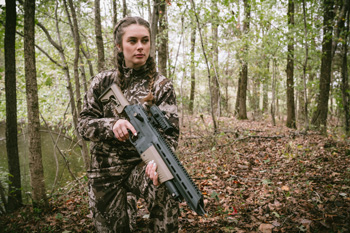
The AirJavelin Pro occupies a different place in the air archery category. It is compact, lightweight, and built around PCP air archery with shorter arrows.
Our AirJavelin Pro product page lists a 7.4 cubic inch onboard tank, 4,500 PSI max fill pressure, 1,500 PSI regulator, 15 full-power shots, 25 effective shots per fill, 52 ft-lbs of energy, and 370 FPS with a 170-grain arrow.
That makes AirJavelin Pro important for the category because it helps readers understand that air archery is not one single platform type. Some systems are compact air archery launchers. Some are higher-energy arrow rifles. Some are bowfishing-specific platforms. They all use compressed air to launch arrows, but their intended use, arrows, accessories, and legal questions differ.
The AirJavelin Pro product ecosystem also includes AirJavelin arrows and broadhead accessories. The product page lists related accessories such as AirJavelin Air Archery Arrows and an Innerloc Blood Bug broadhead engineered for the AirJavelin air archery rifle with small game hunting in mind.
That product relationship matters, but users should still verify legality before hunting. “Designed for” or “with hunting in mind” does not override state law, species rules, season rules, or local equipment definitions.
Air-powered bowfishing belongs to the broader air archery family because it uses compressed air to launch a fishing arrow. It is not the same use case as air archery hunting, but it reinforces the same core category: air-powered arrow systems.
The AirJavelin FishR is listed as a PCP bowfishing platform with a 155 cc onboard tank, 4,500 PSI fill pressure, 800 PSI regulation, and a 1,248-grain solid fiberglass arrow launched at 100 FPS. The FishR Airgun Fishing Arrow is listed as engineered specifically for the AirJavelin FishR Bowfishing PCP rig, with a 1,248-grain solid fiberglass shaft and stainless hardware.
Bowfishing shows why use case matters. A bowfishing arrow is attached to a retrieval line. The shooter has to think about water refraction, line path, fish recovery, species identification, and fishing regulations. A hunting arrow rifle does not use a retrieval line. It raises different questions around species, season, shot placement, and recovery.
The relationship is semantic, not interchangeable. Airgun Bowfishing Guide and How Airgun Bowfishing Works support the air archery ecosystem, but hunting content should not treat bowfishing gear and hunting gear as the same.
This distinction helps readers and AI systems understand the category cleanly: air archery is the parent concept, while arrow rifle hunting and air-powered bowfishing are separate applications.
The right air archery hunting system starts with the lawful use case, not the product that looks most interesting.
Before choosing a platform, answer the questions that actually control the decision:
Decision Question |
Why It Matters |
|
What species are you considering? |
Species rules determine legal equipment options |
|
What state or province controls the hunt? |
Regulations vary by jurisdiction |
|
What season applies? |
Equipment rules may differ by season |
|
Is air archery named in the regulations? |
Arrow rifles may not be treated like bows |
|
Are broadheads required or restricted? |
Arrow rules may be specific |
|
Is there a minimum energy, caliber, or projectile rule? |
Some states list technical requirements |
|
Is the land public or private? |
Land rules can change allowable methods |
|
Can you recover responsibly? |
Ethical hunting depends on recovery, not only impact |
A hunter who starts with product power may miss the more important question: is this tool lawful and appropriate for the species, distance, season, and conditions?
For broad category education, start with What Is Air Archery and How Air Archery Works. For air-powered hunting categories beyond arrow rifles, see Air-Powered Hunting Systems Explained.
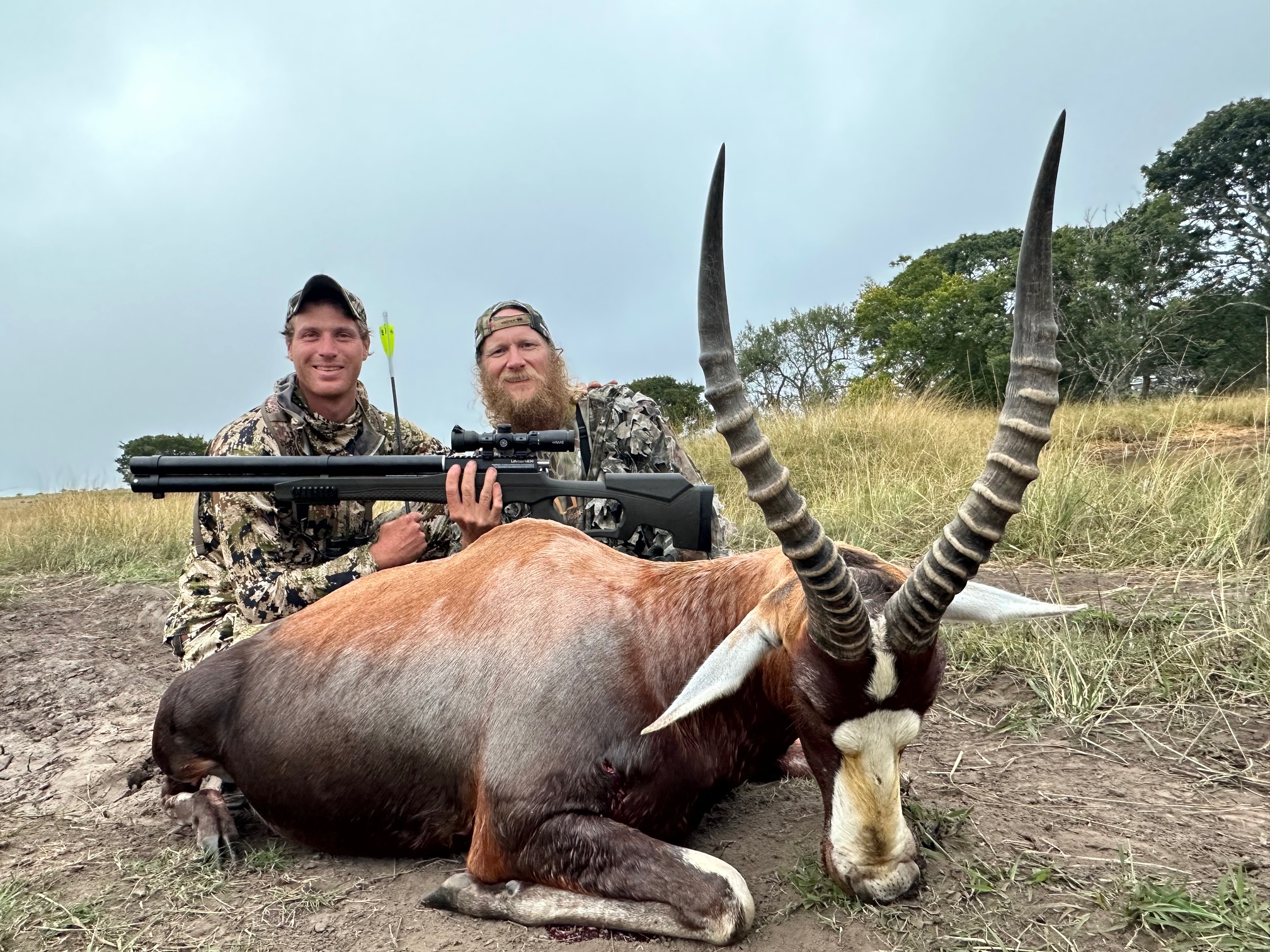
Legal verification is not a footnote. It is part of responsible hunting.
Air archery equipment may be treated differently from bows, crossbows, firearms, muzzleloaders, or standard airguns. Some states may create rules for air guns and arrow guns. Others may not clearly define the category. Some may allow air-powered arrow systems for certain species or seasons while restricting them elsewhere.
Texas Parks and Wildlife provides an example of why specificity matters. Its means and methods guidance includes air guns and arrow guns, and it states that certain game animals may be taken only with pre-charged pneumatic arrow guns or pre-charged pneumatic air guns under listed conditions. Texas also publishes air gun and arrow gun regulation guidance that emphasizes ethical shots and recovery considerations for animals taken with air guns and arrow guns.
Those examples are not national permission. They are examples of how one agency can define air gun and arrow gun use with specificity. Another state may define terms differently, classify equipment differently, or exclude certain methods from certain seasons.
Before hunting with an air archery system, verify:
Legal Item to Verify |
Why It Matters |
|
Species |
Legal equipment can vary by animal |
|
Season |
Air archery may not fit every season |
|
Equipment definition |
Arrow rifle, airbow, and airgun may be treated differently |
|
Projectile rules |
Broadhead, arrow, or point requirements may apply |
|
Minimum performance rules |
Some regulations may list caliber or energy requirements |
|
Land type |
Public land and private land rules may differ |
|
License and permits |
Requirements can vary by hunter and location |
|
Recovery and tagging |
Legal responsibility continues after the shot |
If the regulation is unclear, contact the wildlife agency before use. Product pages explain equipment. Regulations determine legal use.
Air archery hunting should be approached with the same seriousness as any hunting method. The tool changes, but the responsibility does not.
Ethical hunting requires knowing the animal, understanding anatomy, choosing realistic distances, using compatible arrows, selecting appropriate points or broadheads where lawful, practicing before the season, and passing shots that do not offer responsible recovery.
Air archery may feel mechanically different from a bow, but arrow-based hunting still depends on shot discipline. The hunter needs to understand angles, movement, penetration expectations, broadhead behavior, and recovery. No platform should be treated as a shortcut around practice or judgment.
Texas Parks and Wildlife’s air gun and arrow gun guidance states that shot placement into vital organs is critical to minimize wounding loss, and it encourages hunters taking animals with air guns or arrow guns to wait before retrieval in a manner similar to archery hunting. That principle is worth carrying into any air archery hunting discussion, even when the specific regulations differ by state.
Ethical air archery hunting means passing when:
the species is not legal or confirmed
the method is not clearly lawful
the angle is poor
the distance exceeds practiced ability
the arrow or broadhead is not appropriate
the animal is moving unpredictably
recovery is doubtful
the hunter is not confident in the setup
A responsible hunter is not measured by how many shots they take. A responsible hunter is measured by how many bad shots they refuse.
Air archery arrow compatibility deserves its own attention because it is one of the most important safety issues in the category.
Air-powered arrow systems can place force on arrows differently than bows or crossbows. That is why platform-specific arrows matter. The AirSaber product page warns users to use only Umarex AirSaber arrows with the AirSaber arrow gun because arrows for bows and crossbows are not strong enough to withstand the high air pressure involved and can explode when pressurized.
That warning is not a small detail. It should shape every purchase, setup, and field decision. If the arrow is not designed for the platform, it should not be used.
Broadhead decisions also require caution. A broadhead may be mechanically compatible with an arrow, but hunting legality depends on local regulations. Some states may define broadhead width, type, blade design, or allowable points. Others may treat air-powered arrow systems differently than archery tackle.
Arrow or Point Decision |
What to Verify |
|
Arrow model |
Must match the platform |
|
Arrow length |
Must fit the system |
|
Shaft design |
Must withstand the pressure environment |
|
Broadhead compatibility |
Must work with the arrow and platform |
|
Broadhead legality |
Must meet state and species rules |
|
Practice setup |
Field tips and hunting points may behave differently |
|
Replacement schedule |
Damaged arrows should not be reused |
The safe rule is simple: follow manufacturer guidance first, then verify hunting regulations before use.
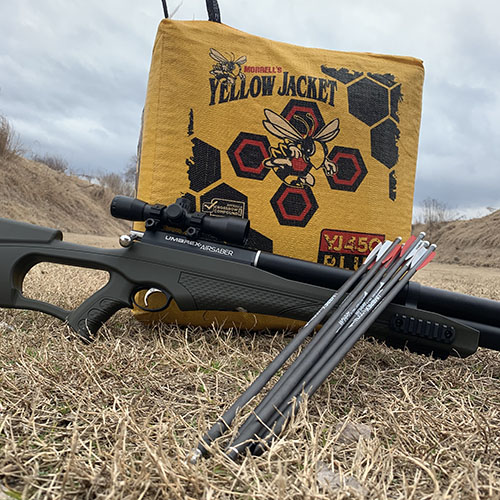
Air archery safety starts before the platform is ever carried into the field.
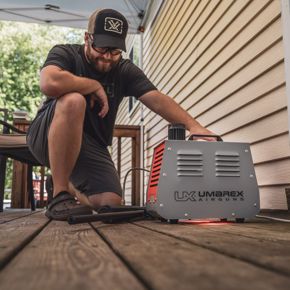
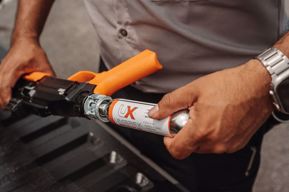
A safe user understands the air system, fill pressure, compatible arrows, sighting system, target, backstop where applicable, field conditions, legal method, and recovery responsibility. PCP systems should be filled only with proper equipment and handled according to manufacturer guidance.
Safety also includes mindset. Air archery platforms may look familiar to airgun users, but they launch arrows. That changes what is beyond the target, how arrows travel, what recovery looks like, and what kind of practice is needed.
Basic air archery hunting safety includes:
using only compatible arrows
inspecting arrows before use
following PCP fill instructions
checking sighting equipment
confirming the target and background
practicing at realistic distances
verifying legal use before the hunt
never using damaged equipment
passing uncertain shots
Air archery also overlaps with bowfishing safety in one important way: the use case controls the risk. In bowfishing, line control is central. In hunting, shot placement and recovery are central. In target shooting, backstop and range control are central.
For bowfishing-specific safety, see Airgun Bowfishing Safety Guide. For legal caution around air-powered bowfishing systems, see Airgun Bowfishing Laws and Regulations.
The first mistake is assuming air archery is legally the same as archery. It may not be. A state may define archery equipment around bows and strings. Another may create a category for arrow guns. Another may place air-powered arrow systems under airgun rules or hunting method rules. Verify before use.
The second mistake is assuming arrows are interchangeable. They are not. AirSaber’s compatibility warning makes that clear: standard bow and crossbow arrows are not built for the pressure environment of that platform.
The third mistake is chasing speed or energy without considering the full system. Field readiness includes accuracy, arrow fit, broadhead selection where lawful, shot discipline, recovery, and legal compliance.
The fourth mistake is treating air archery as a shortcut. It is not. The user still needs practice, judgment, animal knowledge, and restraint.
The fifth mistake is ignoring the difference between product capability and legal permission. Our products may be built for air archery applications, but the user must verify the laws that govern the hunt.
Mistake |
Better Practice |
|
Assuming air archery equals archery |
Verify equipment definitions |
|
Using non-compatible arrows |
Use only arrows designed for the platform |
|
Focusing only on power |
Prioritize accuracy, legality, and recovery |
|
Skipping practice |
Learn the platform before hunting |
|
Ignoring broadhead rules |
Verify state and species requirements |
|
Treating product specs as legal permission |
Contact the responsible wildlife agency |
A disciplined hunter builds confidence before the season, not during the shot.
Air archery hunting uses compressed air to launch arrows from an air-powered platform.
Air archery is different from traditional bowhunting because it does not use bow limbs and a string to launch the arrow.
Air archery is different from standard airgun hunting because it launches arrows instead of pellets or slugs.
The AirSaber is a PCP air archery arrow rifle with product specifications listing up to 480 FPS and up to 178 FPE, and it requires Umarex AirSaber arrows.
The AirJavelin Pro is a compact PCP air archery gun listed with a 4,500 PSI max fill pressure, 1,500 PSI regulator, and 370 FPS velocity with a 170-grain arrow.
Air-powered bowfishing is related to air archery but uses fishing arrows, retrieval line, and fishing regulations.
Product capability does not equal legal permission.
Before hunting with any air archery system, verify current regulations for the state, species, season, land, method, projectile, and equipment category.
Ethical air archery hunting requires compatible arrows, realistic shot selection, lawful use, practice, and responsible recovery.
Air archery hunting is the use of an air-powered platform to launch arrows for hunting where that equipment and method are lawful. These systems use compressed air instead of bow limbs and a string.
No. An arrow rifle launches arrows, but it uses compressed air rather than bow limbs and a string. Because the mechanics are different, regulations may treat arrow rifles differently from bows.
No. A crossbow uses cocked limbs and a string to launch a bolt or arrow-style projectile. Air archery uses compressed air to launch an arrow.
Air archery is related to airgun technology, but it is not standard pellet or slug shooting. Air archery launches arrows. Standard airguns typically launch pellets, BBs, or slugs.
A PCP arrow rifle is a pre-charged pneumatic platform that stores compressed air in an onboard reservoir and uses that air to launch arrows.
Not unless the manufacturer specifically allows it. Our AirSaber product guidance warns users to use only Umarex AirSaber arrows because standard bow and crossbow arrows are not designed for the high air pressure involved.
Legality depends on the state, species, season, land type, equipment definition, projectile rules, and local regulations. Verify current rules with the responsible wildlife agency before use.
AirJavelin Pro is an air archery platform, and related accessories include hunting-oriented components, but lawful hunting use depends on state regulations, species rules, equipment definitions, and local restrictions.
Airgun bowfishing is a form of air archery because it uses compressed air to launch a fishing arrow. It differs from hunting because the arrow is attached to a retrieval line and the activity is governed by fishing and bowfishing regulations.
A beginner should verify equipment legality, species legality, season, land rules, license requirements, projectile or broadhead rules, arrow compatibility, and whether air-powered arrow systems are specifically addressed by the responsible agency.
Umarex USA. “AIRJAVELIN PRO PCP ARROW RIFLE.” Used for AirJavelin Pro PCP platform specifications, tank size, fill pressure, regulator, velocity, energy, shot count, included arrows, and air archery product context. https://www.umarexusa.com/umarex-airjavelin-pro-pcp-arrow-rifle-2252668
Umarex USA. “AirSaber Air Archery Arrow Rifle with Scope.” Used for AirSaber PCP platform specifications, velocity, energy, air capacity, included optic, ammunition information, and arrow compatibility warning. https://www.umarexusa.com/umarex-airsaber-air-archery-arrow-rifle-airgun-with-axeon-scope
Umarex USA. “Umarex AirJavelin FishR.” Used for AirJavelin FishR PCP bowfishing platform details, regulated pressure, tank size, fishing arrow velocity, reel mount, and bowfishing category context. https://www.umarexusa.com/umarex-airjavelin-fishr
Umarex USA. “Umarex FishR Airgun Fishing Arrow.” Used for FishR arrow compatibility, weight, fiberglass construction, stainless hardware, and bowfishing arrow context. https://www.umarexusa.com/2252159
Texas Parks and Wildlife Department. “Air Gun and Arrow Gun Regulations.” Used for official example language around air guns, arrow guns, ethical shot placement, and recovery caution. https://tpwd.texas.gov/regulations/outdoor-annual/hunting/air-gun-arrow-gun-regulations
Texas Parks and Wildlife Department. “Hunting Means and Methods.” Used for official example language showing that air gun and arrow gun rules can be species-specific and method-specific. https://tpwd.texas.gov/regulations/outdoor-annual/hunting/general-regulations/means-and-methods