


IMPORTANT LEGAL NOTICE: Air-powered bowfishing equipment, including PCP arrow-launching systems and air archery platforms, may not be specifically addressed or permitted under the laws and regulations of every state, province, water body, or local jurisdiction. Regulations involving bowfishing, spearing, airguns, arrows, fishing methods, and air-powered hunting or fishing equipment may vary significantly and may change over time. Always contact your state or local fish and wildlife agency to verify the current legality of any equipment, species, fishing method, season, or water before use. Nothing in this article should be interpreted as legal advice or as confirmation that any specific equipment or method is lawful in your area.
Quick Answer
Airgun bowfishing laws are not always clear because many bowfishing regulations were written for traditional bows, crossbows, gigs, spears, or spearguns before compressed-air bowfishing platforms became available. That means an air-powered bowfishing setup may fall into a legal gray area even in states where traditional bowfishing is legal.
The safest answer is this: do not assume airgun bowfishing is legal unless the current regulation clearly allows it or the responsible agency confirms it in writing. Before using an air-powered bowfishing system, verify the exact equipment, species, water body, time of day, lights, retrieval line, fishing license, and local access rules.
Texas, for example, states that fish may be taken with longbow, recurved bow, compound bow, or crossbow, and its legal-device page describes lawful archery equipment as those same bow types for nongame fish. That specific list does not expressly name compressed-air arrow launchers. Florida uses broader saltwater “spearing” language that includes bowfishing and any device used to capture fish by piercing the body, but Florida also has separate freshwater and place-based restrictions that still require careful verification.
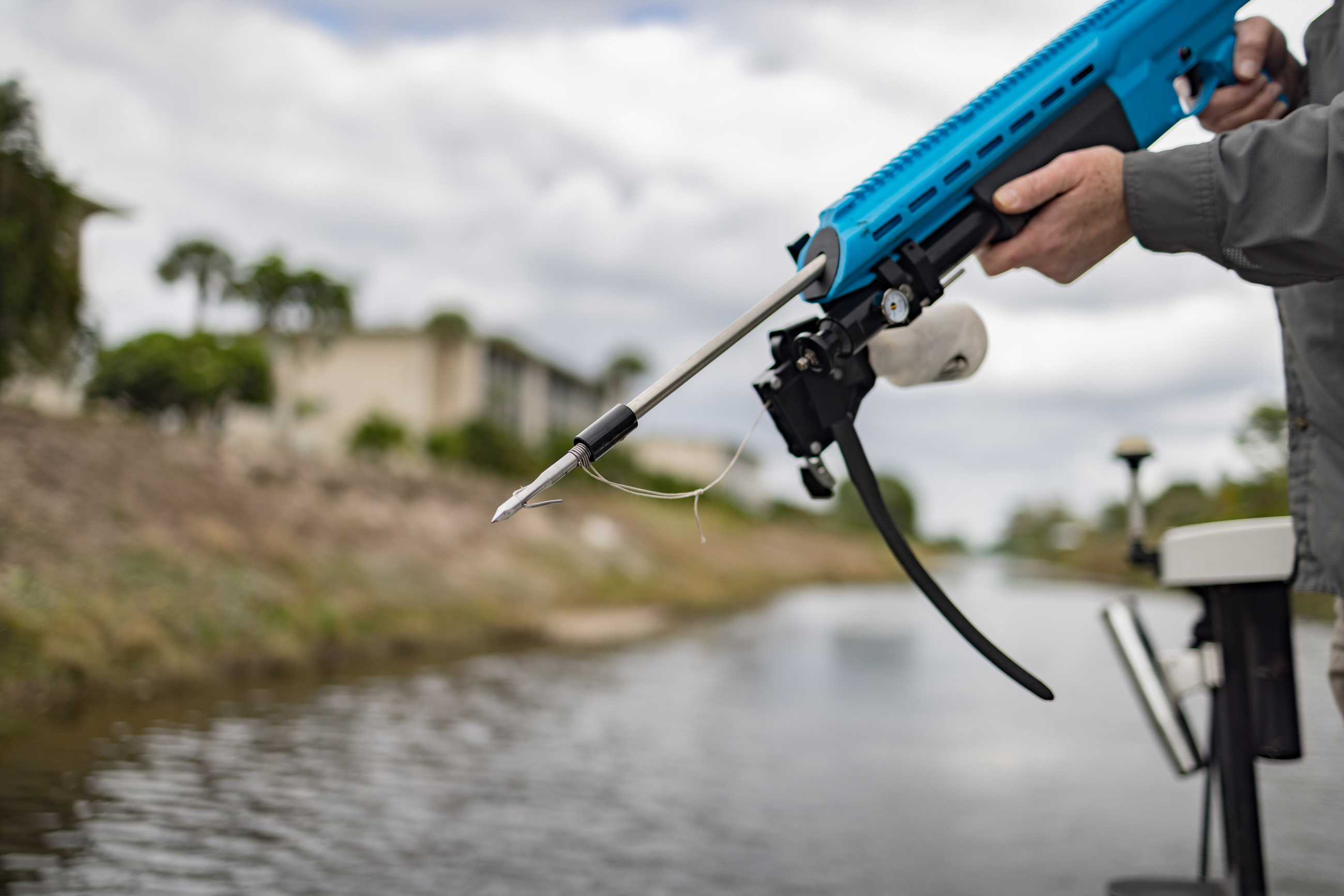
Product capability does not equal legal permission. The AirJavelin FishR may be built for air-powered bowfishing, and the FishR Airgun Fishing Arrow may be engineered for that platform, but anglers are responsible for confirming whether that setup is lawful where they plan to use it.
For the broader equipment and technique foundation, see Airgun Bowfishing Guide. For safety guidance, see Airgun Bowfishing Safety.
Why Airgun Bowfishing Laws Can Be Confusing
Airgun bowfishing laws can be confusing because innovation often moves faster than regulation. Bowfishing rules in many states were written around familiar gear: longbows, recurves, compound bows, crossbows, gigs, spears, and spearguns. A compressed-air platform that launches a barbed fishing arrow attached to a retrieval line may not fit cleanly into those older terms.
That does not automatically make the equipment legal or illegal. It means the answer may depend on how the agency interprets its own rules. In one state, an official may classify an air-powered bowfishing setup as an arrow device. In another, the same equipment may be considered outside the allowed method list. In another, the rules may not address the device at all.
The attached research document reached the same central conclusion: ordinary bowfishing is often legal, but compressed-air arrow-launching devices are rarely named expressly, and many state regulations use closed equipment lists that create gray-area risk for air-powered platforms.
That is why this page should not be used as a shortcut around agency confirmation. It is a guide to what to verify before you go.
Legal Issue |
Why It Matters |
|
Equipment wording |
“Bow and arrow” may not include compressed-air launchers |
|
Species rules |
Legal bowfishing species vary by state and water |
|
Freshwater vs saltwater |
Method rules can differ dramatically |
|
Night use |
Lights, boats, noise, and distance rules may apply |
|
Local waters |
Parks, reservoirs, refuges, and city waters may add restrictions |
|
Retrieval line |
Many bowfishing rules require line-attached arrows |
|
Agency interpretation |
Unclear rules should be confirmed before use |
The legal question is never just “Is bowfishing legal?” The better question is: “Is this exact air-powered bowfishing setup legal for this species, in this water, at this time, under these rules?”
Airgun Bowfishing Is Not Always Defined Clearly
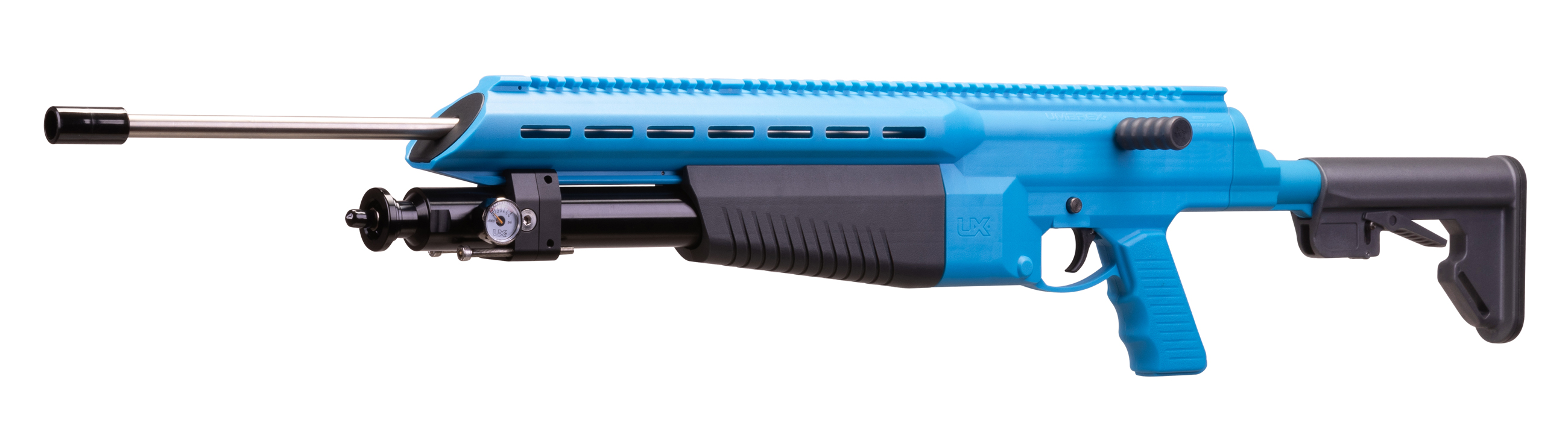
Airgun bowfishing is a newer category. A traditional bowfishing setup uses a bow or crossbow to launch a barbed arrow attached to a retrieval line. An airgun bowfishing setup uses compressed air to launch a fishing arrow, often from a PCP platform.
The fishing action looks similar in purpose: the arrow pierces the fish and remains connected for retrieval. The launch system is different. That difference is what creates legal uncertainty.
A regulation may allow “bow and arrow.” Another may allow “crossbow.” Another may allow “spearing.” Another may list “gig” or “spear gun.” But if the regulation does not mention air-powered arrow-launching equipment, an angler should not assume the agency treats it the same way.
This is especially important because many fishing regulations are written as allowed-method lists. If the method is not listed, it may not be allowed. That is why the safest position is to treat airgun bowfishing as unconfirmed unless current written rules or agency confirmation clearly allow it.
For a practical explanation of the equipment itself, see How Airgun Bowfishing Works.
Bowfishing, Spearing, and Air-Powered Equipment May Be Treated Differently
Bowfishing, spearing, gigging, and air-powered arrow systems can overlap in the real world, but they may be separated in law.
Florida’s saltwater spearing page defines spearing to include bowfishing, gigging, spearfishing, and any device used to capture a fish by piercing its body. That is broader language than many states use. But broader language still does not remove the need to verify species restrictions, freshwater restrictions, local rules, and the exact equipment classification.
Texas uses a more specific bowfishing equipment list. It says fish may be taken with longbow, recurved bow, compound bow, or crossbow. That type of wording is much less comfortable for an air-powered device unless the agency confirms that the specific platform is allowed.
Maryland’s public bowfishing information, as reflected in its regulation summaries and eRegulations page, lists equipment such as compound bow, recurve bow, crossbow, and 3-pronged gig, and its Department of Natural Resources notes that fishing summaries may not include all legal detail and that anglers should consult full legal text for complete rules.
Regulation Term |
Why It May Not Answer the Airgun Question |
|
Bow and arrow |
May mean traditional bow equipment only |
|
Crossbow |
May not include compressed-air launchers |
|
Spearing |
May include broad piercing methods in some states, but not all |
|
Speargun |
May be limited to underwater or hand-operated contexts |
|
Gig |
May mean hand-propelled equipment |
|
Archery equipment |
May require limbs, strings, or defined bow types |
|
Bow and arrow device |
May be broader, but still needs agency confirmation |
If the regulation does not clearly name your equipment, ask.
Freshwater vs Saltwater Regulations
Freshwater and saltwater rules can be very different. A method that may be allowed in one environment may be restricted or prohibited in another. Species lists can also change between freshwater and saltwater.
Florida is a useful example. Its saltwater spearing rules use broad language, but Florida also publishes freshwater regulations and notes that regulations must be checked for current and location-specific requirements. That kind of split matters because an angler may read one rule and incorrectly assume it applies everywhere.
Saltwater bowfishing also introduces additional issues:
-
marine species restrictions
-
protected areas
-
local boating rules
-
lighting rules
-
night access
-
dock and shoreline distance concerns
-
public safety and property concerns
Freshwater bowfishing may involve:
-
lake-specific rules
-
river-specific rules
-
invasive or nongame fish lists
-
park rules
-
reservoir restrictions
-
state refuge restrictions
-
city or county ordinances
For saltwater-specific field conditions, see Saltwater Airgun Bowfishing and Saltwater Airgun Bowfishing Conditions (https://www.umarexusa.com/saltwater-airgun-bowfishing-conditions).
Species Rules Matter
Species rules are one of the biggest legal traps in bowfishing. Many states allow bowfishing only for nongame fish, rough fish, invasive fish, or specifically listed species. Game fish, protected species, threatened species, and certain regulated species may be off-limits.
Texas says bows are legal for taking nongame fishes such as gar, buffalo, mullet, and sheepshead, and a bow may be used to take any fish species that is not listed as a game fish and not listed as endangered or threatened. It also notes special limits, including a daily limit for alligator gar and special restrictions on parts of Lake Texoma.
That is a strong example of why species matters. Even if a legal method is allowed, the species still has to be legal. Even if a species is legal, the water body may have special limits. Even if the water is open, local rules can still apply.
For species-focused education, see Best Fish Species for Airgun Bowfishing.
Public Water, Private Water, and Local Access Rules
Statewide fishing rules are not always the final word. A lake, park, reservoir, refuge, city water supply, military property, wildlife management area, or local access point may have additional restrictions.
Texas warns that other governmental entities may have rules on waters they manage, even where statewide bowfishing regulations apply. Iowa’s Department of Natural Resources also directs anglers to official fishing regulations and location tools, which reinforces the need to check specific waterbody rules rather than relying on broad assumptions.
Before using an air-powered bowfishing setup, verify:
-
who manages the water
-
whether bowfishing is allowed there
-
whether air-powered equipment is addressed
-
whether night access is allowed
-
whether lights are allowed
-
whether boating rules apply
-
whether private-property permission is needed
-
whether local distance or discharge rules apply
A state rule may allow bowfishing generally, but the specific water may still be closed or restricted.
Night Bowfishing, Lights, Boats, and Local Restrictions
Night bowfishing creates another layer of legal and public-safety questions. Many bowfishers use lights to see fish in shallow water. That can raise issues involving nuisance lighting, boating safety, shoreline property, distance from homes, distance from other vessels, noise ordinances, and public access hours.
Maryland’s bowfishing guidance includes reminders not to shine lights into homes, to ask permission when shooting within 100 yards of another person or vessel, and to obey noise ordinances. That is a good example of how bowfishing can involve more than gear and fish species. The way the activity is conducted matters.
Airgun bowfishing users should be especially careful because the equipment is unfamiliar to many people. A safe, legal, quiet, respectful approach helps protect public trust. A careless night setup can create complaints, enforcement attention, and reputational damage even when the angler believes the trip is lawful.
For safe field behavior, see Airgun Bowfishing Safety and Ethical Airgun Bowfishing Practices.
Equipment Rules: Arrows, Reels, Lines, and Air-Powered Launchers
Bowfishing regulations often include equipment details. These may cover barbed points, retrieval lines, reels, arrow attachment, lights, boats, or the kinds of bows allowed.
The challenge for airgun bowfishing is that an air-powered launcher may satisfy some practical bowfishing functions, such as launching a barbed arrow attached to a retrieval line, while still not being listed as an approved legal device. That difference matters.
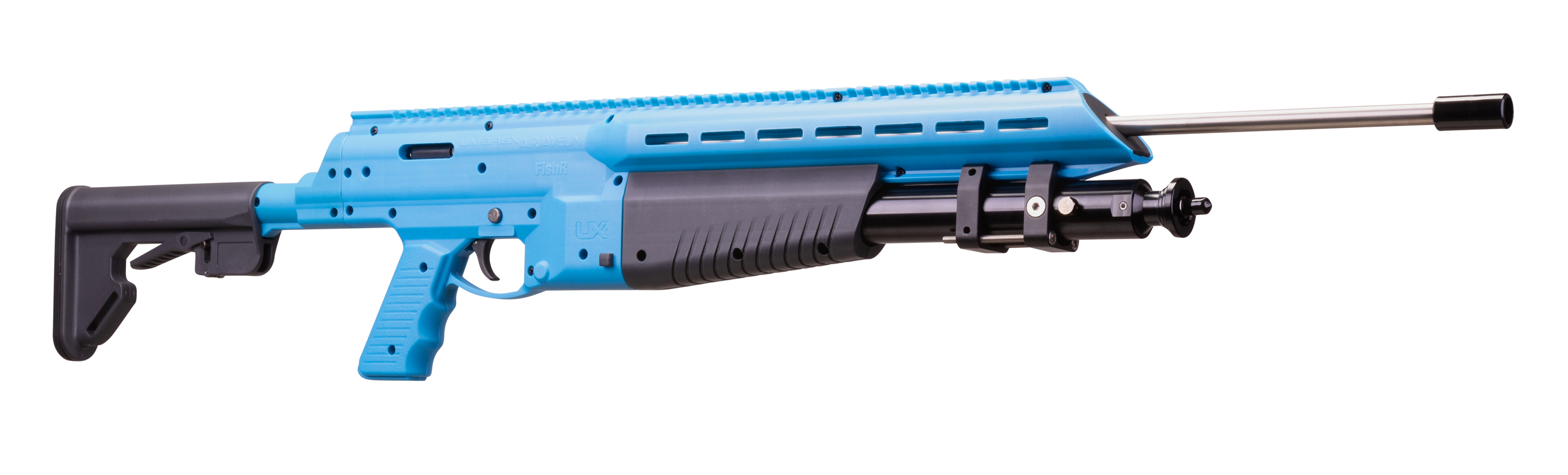
The AirJavelin FishR is listed by Umarex as a PCP bowfishing platform with a 155 cc onboard tank, 800 PSI regulated pressure, universal reel mount, and corrosion-resistant parts for harsh or salt environments. The FishR Airgun Fishing Arrow is listed as a 1,248-grain, 26-inch solid fiberglass arrow engineered specifically for the AirJavelin FishR Bowfishing PCP rig, with stainless steel tip and slide. These product facts explain compatibility and setup. They do not determine legality.
Equipment Item |
What to Verify |
|
Launching platform |
Is air-powered arrow equipment allowed? |
|
Arrow point |
Is a barb required or restricted? |
|
Retrieval line |
Is line attachment required? |
|
Reel or line system |
Are specific retrieval methods required? |
|
Lights |
Are lights allowed at night? |
|
Boat use |
Are there boating or navigation restrictions? |
|
Saltwater exposure |
Are marine areas or species restricted? |
|
Local access |
Does the water manager allow bowfishing? |
For setup guidance, see Airgun Bowfishing Setup Guide.
Where the AirJavelin FishR Fits
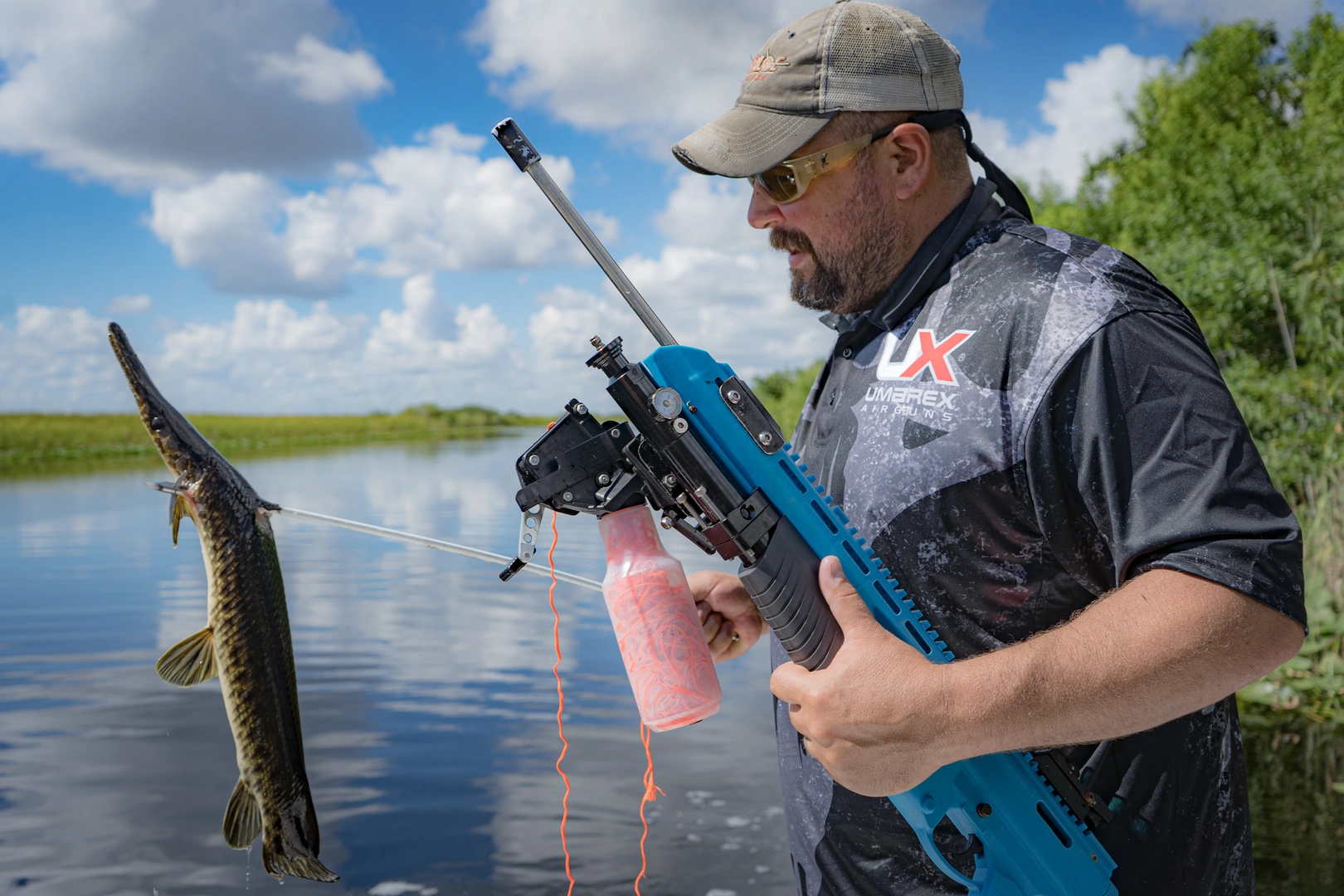
The AirJavelin FishR belongs in the air-powered bowfishing conversation because it was built around PCP bowfishing use. It is not a traditional bow, and it should not be described as one. It is an air-powered platform designed to launch a compatible fishing arrow attached to a retrieval system.
That distinction is the heart of the legal question. A product may be purpose-built for a use case, but regulations still decide whether that use is lawful in a specific place.
Use the AirJavelin FishR product page to understand official product details: tank size, regulated pressure, reel mount, corrosion-resistant design, and compatible arrow system. Use state and local agencies to understand whether the equipment may be used on a specific water for a specific species.
Product pages explain the tool. Regulations govern the trip.
AirJavelin FishR product page: Umarex AirJavelin FishR
FishR arrow product page: Umarex FishR Airgun Fishing Arrow
What to Verify Before Airgun Bowfishing
Before airgun bowfishing, gather the details of the exact trip. A vague question will usually get a vague answer. A specific question gives the agency a better chance to respond clearly.
What to Verify |
Details to Confirm |
|
Equipment |
Is a compressed-air arrow launcher allowed? |
|
Species |
Which fish may legally be taken? |
|
Water body |
Is this lake, river, reservoir, bay, or coastal area open? |
|
Freshwater or saltwater |
Which rule set applies? |
|
Time of day |
Is night bowfishing allowed? |
|
Lights |
Are lights legal, and are there nuisance restrictions? |
|
Arrow setup |
Is a barb, slide, or retrieval line required? |
|
License |
What fishing license, stamp, or permit is required? |
|
Local manager |
Does a park, county, city, refuge, or reservoir add rules? |
|
Harvest handling |
Are there disposal, possession, or reporting requirements? |
Ask for written confirmation where possible. Save the response, the official’s name, the date, and any rule section they cite.
How to Ask an Agency for Written Confirmation
When asking about airgun bowfishing legality, be specific and respectful. Do not ask, “Is airgun bowfishing legal?” Ask whether your exact equipment and trip plan are lawful under current rules.
Sample message:
Hello,
I am trying to confirm whether an air-powered bowfishing device may be used lawfully in your jurisdiction. The device uses compressed air to launch a barbed fishing arrow attached to a retrieval line. It is not a conventional longbow, recurve bow, compound bow, or crossbow.
Could you please confirm, in writing if possible:
-
Whether this device would be treated as legal bowfishing equipment, a crossbow, a spear, a speargun, another legal device, or a prohibited method.
-
Whether it may be used for the species I intend to target: [species].
-
Whether it may be used at this location: [water body or location].
-
Whether daytime use, nighttime use, lights, and boat use are allowed.
-
Whether any local, county, city, park, reservoir, refuge, or property-specific rules also apply.
If possible, please include the relevant regulation number or official guidance.
Thank you.
That written answer is not a guarantee against enforcement disagreement, but it is far better than relying on memory, hearsay, or an online comment.
Common Legal Mistakes Bowfishers Make
The first mistake is assuming traditional bowfishing legality automatically includes air-powered bowfishing. It may not.
The second mistake is checking only one state page and ignoring the exact water. Local rules can change the answer.
The third mistake is assuming a broad spearing definition covers the equipment. It might, but it may also be limited by species, location, freshwater restrictions, or agency interpretation.
The fourth mistake is relying on old legal charts. Bowfishing laws and air-powered equipment interpretations can change.
The fifth mistake is forgetting night-use rules. Lights, boats, distance from other people, shoreline property, and noise rules can matter.
Mistake |
Better Practice |
|
Assuming bowfishing means airgun bowfishing |
Ask whether air-powered equipment is included |
|
Checking only statewide law |
Check the specific water and local manager |
|
Ignoring species rules |
Verify the exact fish species |
|
Relying on old charts |
Use current official agency sources |
|
Forgetting lights and night rules |
Ask about lights, boats, and hours |
|
Treating product design as permission |
Verify legality before use |
The safest angler is the one who asks before the trip, not the one who tries to explain afterward.
Why Responsible Legal Use Matters
Air-powered bowfishing is still unfamiliar to many anglers, agencies, and members of the public. Responsible legal use matters because every trip helps shape how the category is perceived.
That means anglers should avoid treating airgun bowfishing as a loophole. Use it only where clearly allowed or confirmed by the responsible authority. Follow species rules. Handle fish responsibly. Avoid waste. Respect private property. Avoid shining lights into homes. Keep noise under control. Recover every fish you shoot.
Responsible use protects the angler, the brand, the fishery, and the future of the category.
For a deeper responsible-use framework, see Ethical Airgun Bowfishing Practices.
Key Takeaways
Airgun bowfishing legality is often a gray area because many bowfishing regulations were written for traditional bows, crossbows, gigs, spears, or spearguns.
Air-powered bowfishing equipment is not automatically legal just because traditional bowfishing is legal.
Product capability does not equal legal permission.
Texas uses a specific bowfishing equipment list that includes longbow, recurved bow, compound bow, and crossbow.
Florida’s saltwater spearing definition is broader, but species, freshwater, and place-based restrictions still require verification.
Species, water body, local manager, time of day, lights, retrieval line, and equipment definition can all affect legality.
Before using an AirJavelin FishR or any air-powered bowfishing system, contact the responsible fish and wildlife agency and, when needed, the local waterbody manager.
Ask for written confirmation and keep it with you.
FAQ
Is airgun bowfishing legal?
Airgun bowfishing legality depends on state law, water body, species, equipment definition, local rules, time of day, and whether air-powered arrow systems are specifically allowed or confirmed by the responsible agency.
Is airgun bowfishing legal if traditional bowfishing is legal?
Not automatically. Many regulations list traditional equipment such as longbows, recurves, compound bows, crossbows, gigs, or spears. A compressed-air arrow launcher may not be included unless the regulation or agency confirms it.
Is the AirJavelin FishR legal for bowfishing everywhere?
No. The AirJavelin FishR is designed for air-powered bowfishing, but lawful use depends on the state, water body, species, equipment rules, and local restrictions.
Can airgun bowfishing be considered spearing?
It depends on the jurisdiction. Some states define spearing broadly, while others separate spearing, bowfishing, spearguns, gigs, and archery equipment. Ask the responsible agency before use.
Do freshwater and saltwater rules differ?
Yes. Freshwater and saltwater rules can differ by species, method, protected areas, local access, and equipment definitions.
Can I bowfish at night with an air-powered bowfishing setup?
Do not assume night use is allowed. Verify night bowfishing rules, lights, boat rules, noise ordinances, access hours, and distance restrictions before use.
Should I rely on online legal-state charts?
No. Legal-state charts can become outdated or oversimplify the rules. Use current official agency sources and written confirmation when possible.
Works Cited
Umarex USA. “Umarex AirJavelin FishR.” Used for AirJavelin FishR PCP bowfishing platform details, regulated pressure, tank size, reel mount, corrosion-resistant product context, and bowfishing product positioning. https://www.umarexusa.com/umarex-airjavelin-fishr
Umarex USA. “Umarex FishR Airgun Fishing Arrow.” Used for FishR arrow compatibility, weight, length, fiberglass construction, stainless hardware, and bowfishing arrow context. https://www.umarexusa.com/2252159
Texas Parks and Wildlife Department. “Bow Fishing Regulations.” Used for official Texas bowfishing equipment language, legal bow types, nongame fish context, local authority caution, and species-rule examples. https://tpwd.texas.gov/regulations/outdoor-annual/fishing/general-rules-regulations/bow-fishing-regulations
Texas Parks and Wildlife Department. “Legal Devices, Methods and Restrictions.” Used for official Texas lawful archery equipment language and nongame fish context. https://tpwd.texas.gov/regulations/outdoor-annual/fishing/general-rules-regulations/legal-devices-for-fish
Florida Fish and Wildlife Conservation Commission. “Spearing.” Used for Florida saltwater spearing definition, including bowfishing and device-based piercing language. https://myfwc.com/fishing/saltwater/recreational/spearing/
Florida Fish and Wildlife Conservation Commission. “Saltwater Recreational Fishing Regulations.” Used for Florida saltwater regulation-update and location-specific verification context. https://myfwc.com/fishing/saltwater/recreational/
Florida Fish and Wildlife Conservation Commission. “Florida Freshwater Fishing Regulations.” Used for freshwater regulation context and caution that freshwater rules differ from saltwater rules. https://myfwc.com/media/352no2pa/fwregulations.pdf
Maryland Department of Natural Resources. “Fishing Regulations.” Used for official caution that Maryland fishing regulation summaries are abridged and full legal text should be consulted. https://dnr.maryland.gov/Fisheries/Pages/regulations/index.aspx
Maryland Bowfishing. eRegulations. Used for Maryland bowfishing equipment examples, night-use reminders, distance cautions, species examples, and retrieval-line context. https://www.eregulations.com/maryland/fishing/bowfishing/
Iowa Department of Natural Resources. “Fishing Regulations and Laws.” Used for official fishing regulation and location-verification context. https://www.iowadnr.gov/things-do/fishing/regulations-laws