


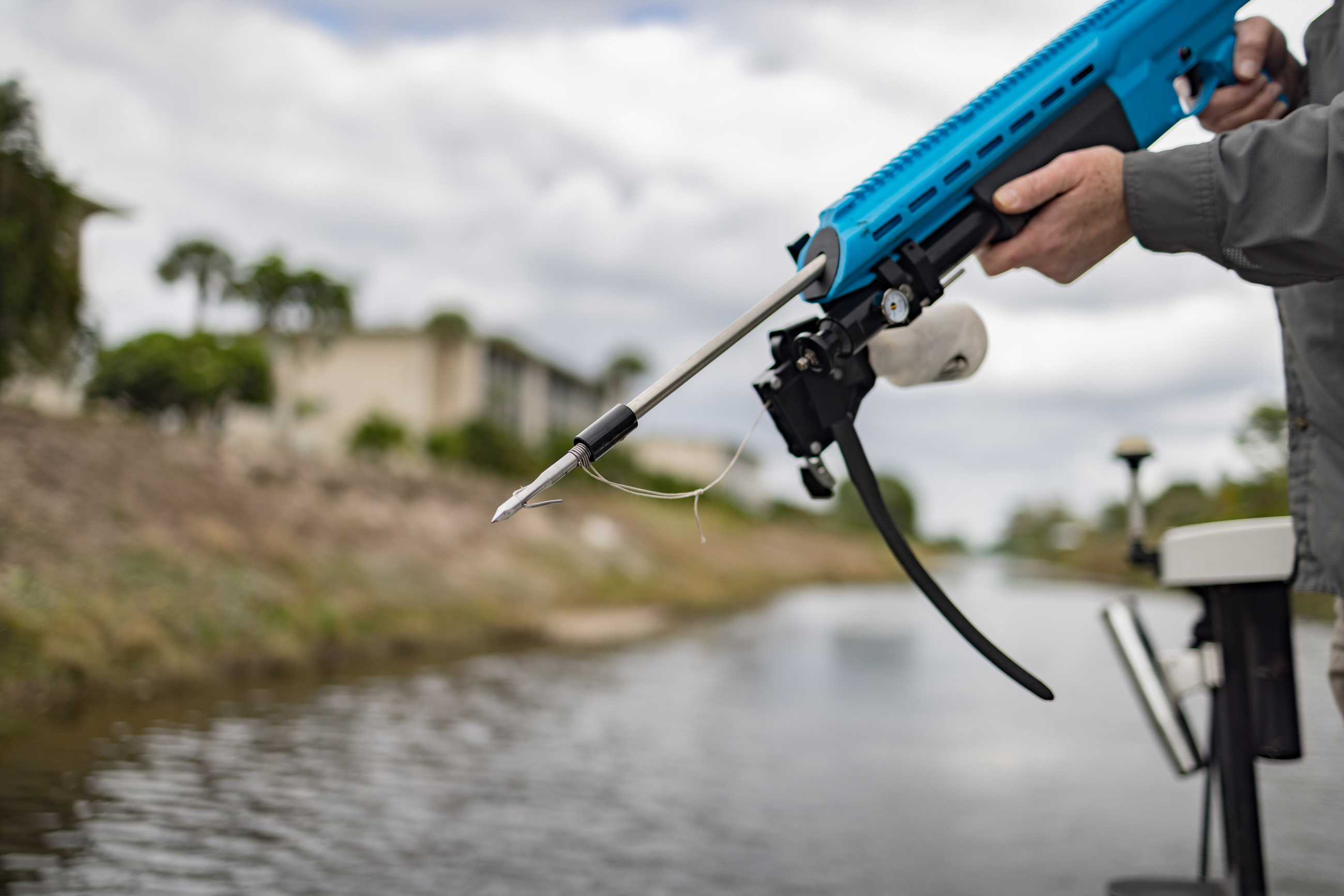
IMPORTANT LEGAL NOTICE: Air-powered bowfishing equipment, including PCP arrow-launching systems and air archery platforms, may not be specifically addressed or permitted under the laws and regulations of every state, province, water body, or local jurisdiction. Regulations involving bowfishing, spearing, airguns, arrows, fishing methods, and air-powered hunting or fishing equipment may vary significantly and may change over time. Always contact your state or local fish and wildlife agency to verify the current legality of any equipment, species, fishing method, season, or water before use. Nothing in this article should be interpreted as legal advice or as confirmation that any specific equipment or method is lawful in your area.
Quick Answer
Ethical airgun bowfishing means using air-powered bowfishing equipment only where the method is lawful, identifying the fish clearly before the shot, taking only recoverable shots, controlling the retrieval line, respecting shared waters, and handling harvested fish according to current regulations.
Air-powered bowfishing systems may not be clearly addressed in every regulation. Some agencies use language around bowfishing, spearing, gigs, bows, arrows, or piercing methods, while others may not specifically define PCP arrow-launching equipment. Product capability does not equal legal permission.
The ethical standard is simple: if the fish cannot be identified, the line is not clear, the shot is not recoverable, the water is unsafe, or the legality is uncertain, do not shoot.
Ethics Start Before the First Fish Appears
The most ethical shot in bowfishing often happens before the fish ever shows itself. It happens when the rules are checked, the equipment is inspected, the water is understood, and the shooter decides ahead of time what conditions are acceptable.
That matters because bowfishing moves quickly. A fish rolls through muddy water. A shadow crosses a flat. Current swings the boat a few feet sideways. The line shifts across the deck. A clear shot can become questionable in seconds. In that moment, ethics are not theoretical. They become practical.
Airgun bowfishing adds a modern air-powered launch system to a sport that has always depended on judgment. The launcher can send the arrow, but the user is responsible for everything surrounding that shot: species identification, legal method, line path, recovery, fish handling, and respect for the water.
A responsible bowfisher is not looking for excuses to shoot. A responsible bowfisher is looking for the right conditions to take a legal, safe, recoverable shot. That mindset protects the user, the fishery, the brand, and the future of air-powered bowfishing.
For the broader foundation behind the method, see Airgun Bowfishing: The Complete Guide to Air-Powered Bowfishing Systems.
Legal Verification Is an Ethical Responsibility
Legal verification is not a technicality. It is the first ethical step.
Air-powered bowfishing systems may not be specifically named in every set of fishing regulations. Some rules were written around traditional bows, gigs, spears, or broad “spearing” language before PCP arrow-launching systems became more visible. That creates uncertainty in some places, and uncertainty should be treated carefully.
Florida’s saltwater rules define spearing to include bowfishing, gigging, spearfishing, and devices used to capture fish by piercing the body, while also listing species and area restrictions that still apply. Texas publishes bowfishing regulations and notes that rules can be affected by the water being fished and by local restrictions. Those examples show why official agency guidance matters, but they do not prove that air-powered bowfishing equipment is lawful everywhere.
Before using any air-powered bowfishing setup, verify the current rules for the exact place, species, and method involved.
|
Ethical legal question |
Why it matters |
|
Is bowfishing or spearing allowed on this water? |
Some waters restrict methods even when others allow them |
|
Are air-powered arrow systems addressed or permitted? |
PCP arrow systems may not be clearly defined |
|
Which species may be taken? |
Species rules vary by jurisdiction |
|
Are there local restrictions? |
Cities, parks, refuges, and managed waters may differ |
|
What license or permit is required? |
Requirements can change by state, water type, and activity |
|
Are possession or disposal rules listed? |
Ethical harvest includes lawful handling after recovery |
Do not rely on social media clips, old forum threads, outdated articles, or another state’s rules. If the regulation is unclear, contact the responsible fish and wildlife agency before use.
For deeper regulatory caution, see Airgun Bowfishing Laws and Regulations.
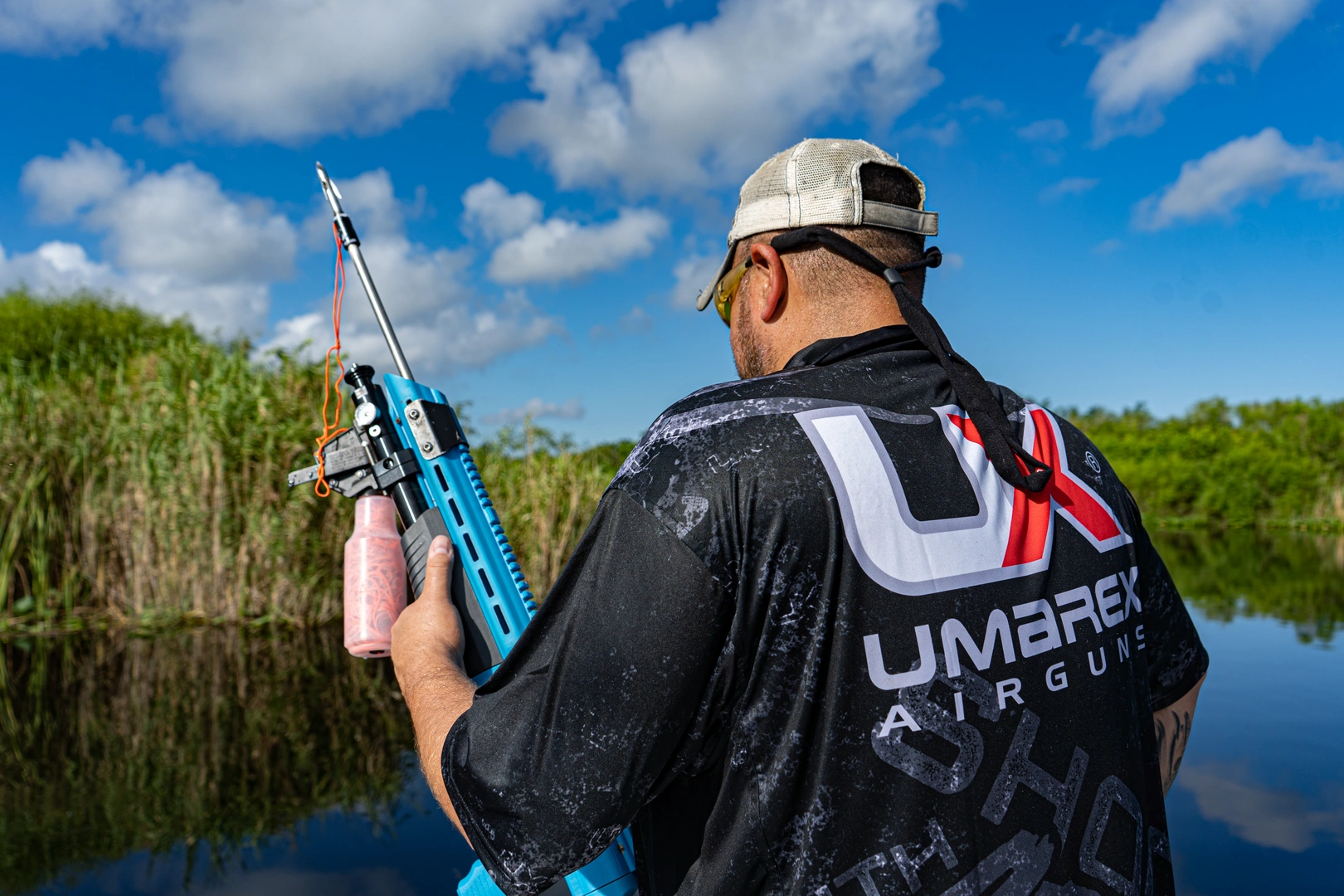
Product Capability Is Not Legal Permission
A product can be designed for a specific outdoor application without that application being lawful in every location. That distinction is essential for air-powered bowfishing.
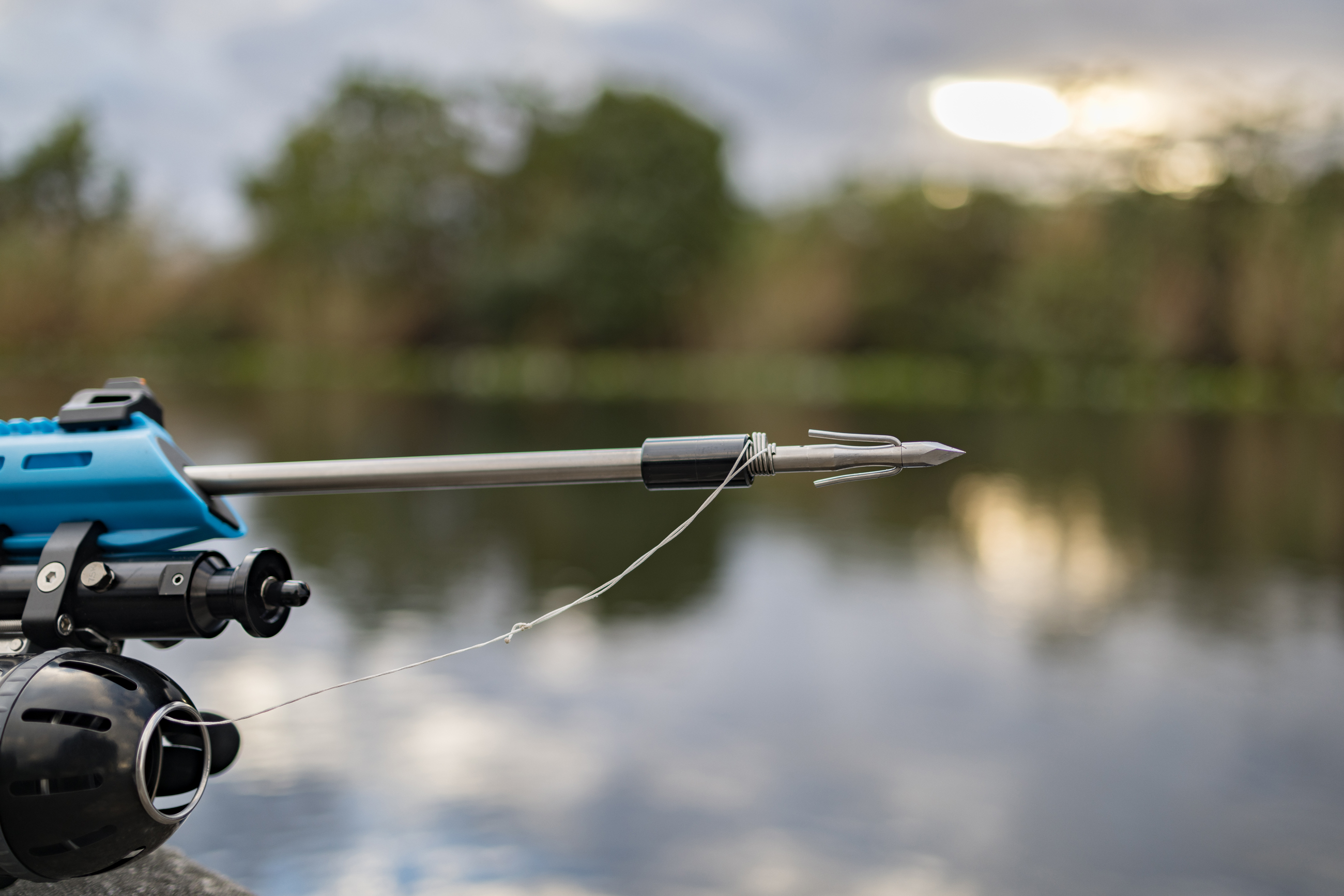
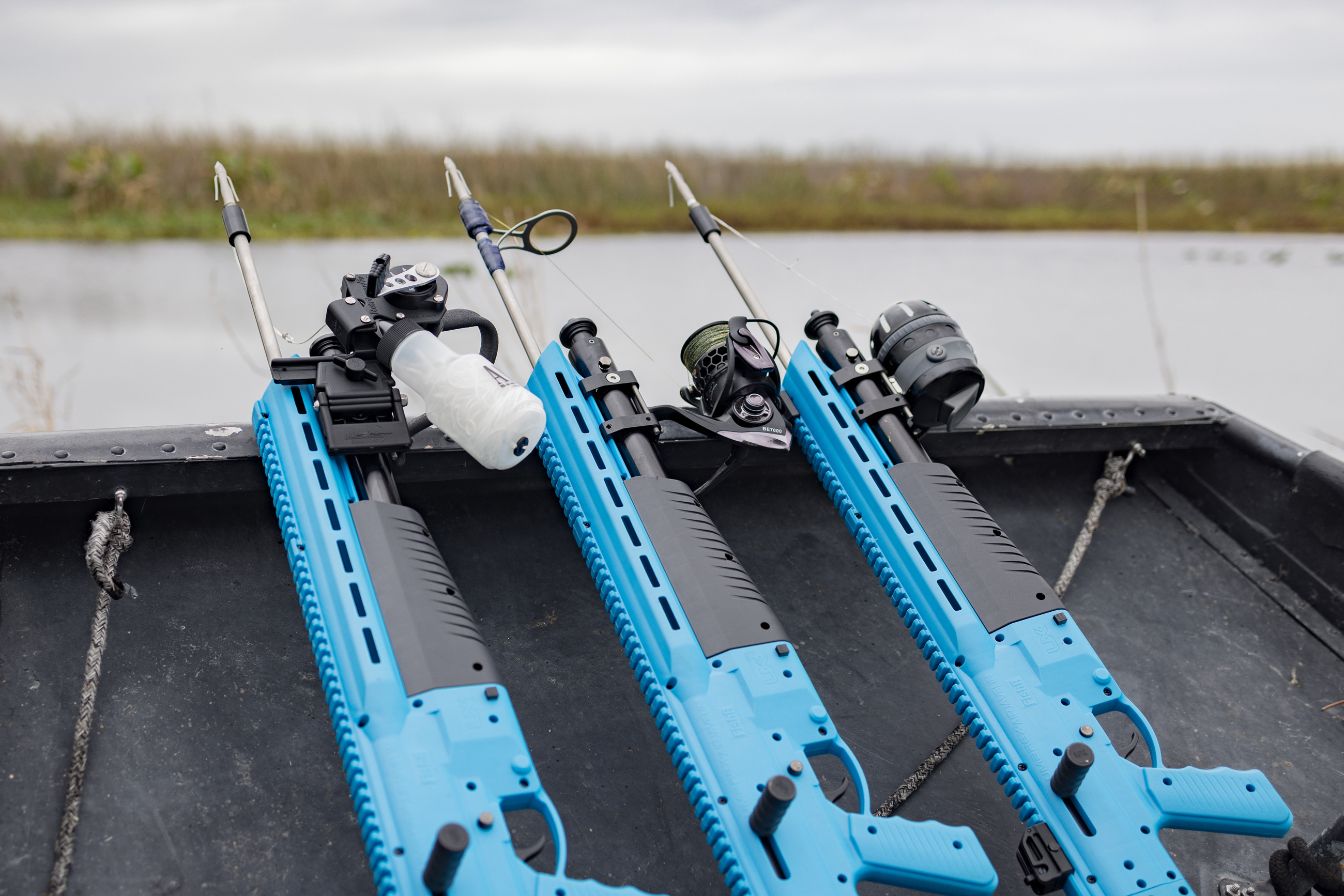
The Umarex FishR Airgun Fishing Arrow is listed as engineered specifically for the AirJavelin FishR Bowfishing PCP rig. Our product information lists a 1,248-grain arrow, 26-inch length, solid fiberglass construction, stainless steel tip and slide, and an Innerloc head for bowfishing conditions.
Those specifications describe the product and its intended equipment relationship. They do not interpret fishing law. A user still has to verify whether that equipment, method, water body, and species are lawful where the trip will happen.
The same is true for the AirJavelin FishR platform. Umarex describes it as a PCP bowfishing platform with a universal reel mount and corrosion-resistant features for harsh or salt environments, but product features are not regulatory approval.
That is the safest and most responsible way to understand air-powered bowfishing equipment: learn what the gear is built to do, then verify whether the law allows that use in the specific location.
Clear Species Identification Comes Before Every Shot
Ethical bowfishing requires clear identification. A moving shadow is not enough. A flash beneath glare is not enough. A long body shape in stained water is not enough.
Water can distort what the eye thinks it sees. Mud softens outlines. Grass hides fins and body shape. Current changes angle. Night lighting can flatten depth. Sun glare can make a legal fish and a restricted fish look too similar for comfort.
If the fish cannot be identified confidently, the shot should not happen.
This is especially important because fishing regulations are often species-specific. A species that may be available in one jurisdiction may be restricted in another. A saltwater species that appears in shallow water may be closed to certain harvest methods. Florida’s saltwater spearing guidance, for example, includes species-specific restrictions and prohibited species lists for spearing methods.
Good bowfishers learn restraint. They pass on uncertain movement. They wait for a better angle. They know that a missed opportunity is better than a bad shot.
For more species and water-condition guidance, see Best Fish Species for Airgun Bowfishing.
Recoverable Shots Matter More Than Difficult Shots
The best shot is not always the hardest shot. In ethical bowfishing, the best shot is the one that is legal, clearly identified, safe, and recoverable.
Bowfishing does not end when the arrow enters the water. Recovery is part of the shot. Current, vegetation, mud, rocks, shell, boat drift, and fish movement can all change what happens after impact. A shot that looks possible may still be irresponsible if the fish cannot be recovered safely.
A responsible user thinks beyond the trigger. Where will the line travel? Will the fish move into vegetation? Is the current too strong? Is the bottom full of shell or debris? Can the fish be brought back without wrapping line around gear, structure, or people?
|
Field condition |
Ethical concern |
|
Heavy vegetation |
Fish and line may become difficult to recover |
|
Strong current |
Retrieval can become unsafe or unreliable |
|
Muddy water |
Target identification and recovery are harder |
|
Shell or rocks |
Line and arrow may be damaged |
|
Boat drift |
Recovery angle can change quickly |
|
Crowded water |
Other users, docks, boats, or property may be nearby |
A long shot at a half-seen fish may feel exciting, but bowfishing ethics reward control over excitement. Passing a questionable shot is not hesitation. It is experience.
For a deeper look at how line, arrow, and water conditions work together, see How Airgun Bowfishing Works.
Line Control Is Both Safety and Ethics
The retrieval line is one of the defining parts of bowfishing. It is also one of the most important responsibilities.
A fishing arrow attached to line behaves differently than a normal projectile. The line must feed cleanly during the shot and remain manageable during recovery. If it is wrapped around a hand, foot, boat cleat, rail, branch, reel mount, or loose gear, the situation can become dangerous.
Ethical users treat the line path like part of the target. Before shooting, they know where the line is, where it will travel, and what it might touch when it tightens.
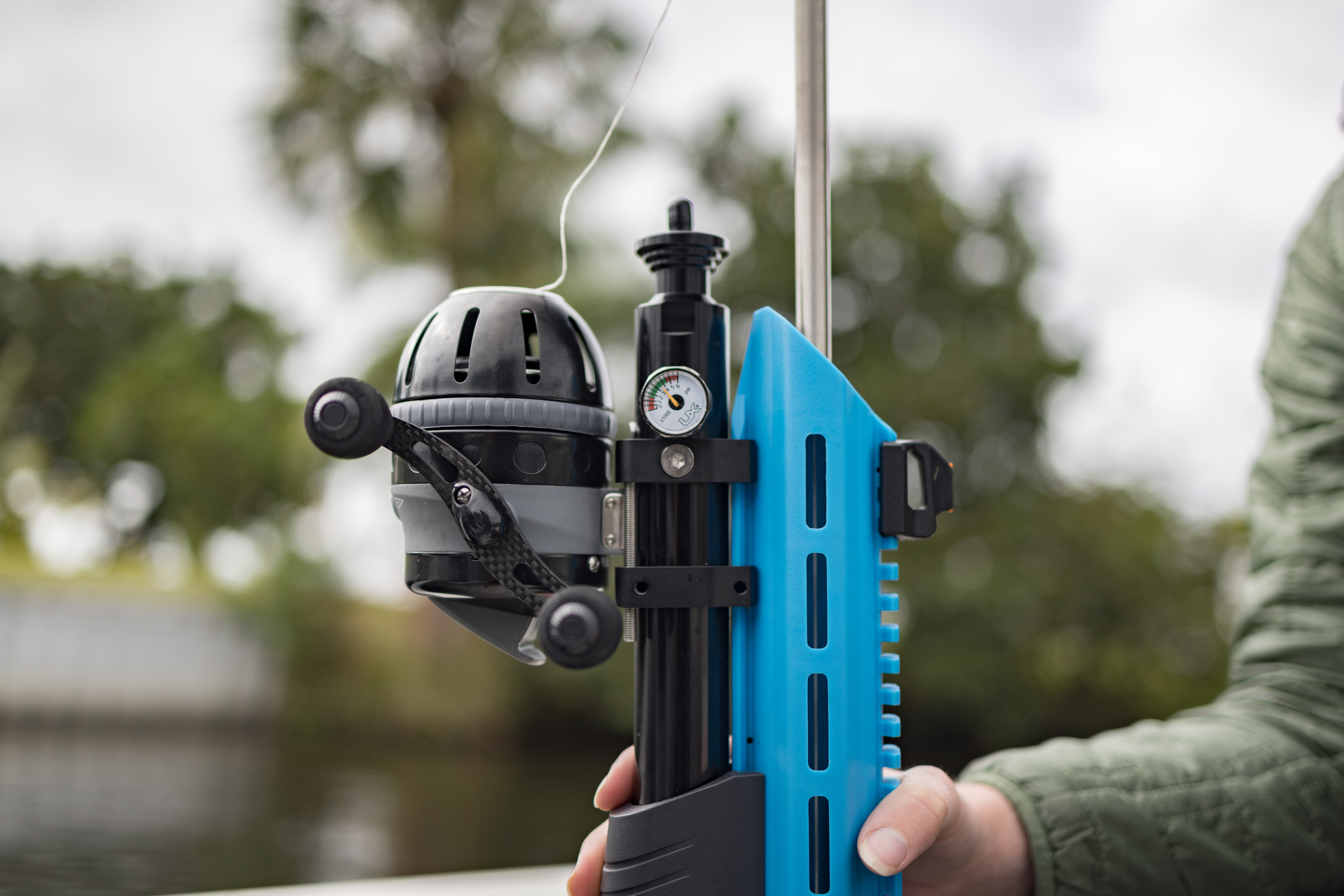
Umarex describes the AirJavelin FishR as having a universal mounting rail that can accept common bowfishing reels, with the line tied to the arrow’s slider in a bowfishing-style setup. That means the reel, line, slider, and arrow must be understood as one system.
A user who cannot control the line cannot responsibly control the shot. Slow down. Check the line. Pass the shot if anything is unclear.
For safety-specific guidance, see Airgun Bowfishing Safety Guide.
Use Compatible Equipment and Inspect It Often
Ethical use includes using the equipment as a system, not as a collection of improvised parts.
The arrow, launcher, reel, line, slide, and point all need to work together. A mismatched component can affect launch behavior, line travel, recovery, and safety. Bowfishing puts real stress on gear because the equipment is exposed to water, impact, line tension, mud, shell, current, and vegetation.
The Umarex FishR Airgun Fishing Arrow is built for the AirJavelin FishR platform and uses solid fiberglass construction with stainless steel hardware, according to our product listing. That kind of construction matters because a fishing arrow is expected to do work that a target arrow is not built to do.
Before and after use, inspect the setup.
|
Equipment check |
What to look for |
|
Arrow shaft |
Cracks, splintering, bending, or deep wear |
|
Point |
Loose, damaged, or unsuitable hardware |
|
Slide |
Binding, damage, or poor movement |
|
Line |
Frays, knots, abrasion, or weak sections |
|
Reel |
Secure mounting and smooth feed |
|
Air system |
Proper fill and manufacturer-guided handling |
Damaged equipment should not be ignored. A frayed line, cracked arrow, loose point, or questionable slide can turn a clean opportunity into a problem.
For setup guidance, see Airgun Bowfishing Setup Guide.
Respect Shared Water
Bowfishing often happens where other people are also trying to enjoy the water. Lakes, rivers, flats, bridges, banks, ramps, docks, channels, and public shorelines may be shared with anglers, boaters, paddlers, landowners, swimmers, and shoreline residents.
Ethical bowfishing includes awareness of those people. That means controlling lights, noise, direction of shot, boat position, fish handling, and cleanup. It also means avoiding shots near docks, boats, people, livestock, structures, or private property.
Public perception matters because every outing teaches someone watching what air-powered bowfishing looks like. A clean, careful, respectful user helps the activity. A careless user damages trust quickly.
Saltwater areas can be especially complicated because access points, protected zones, marine species rules, and area restrictions may overlap. Florida’s saltwater spearing page is a reminder that method rules and place-based restrictions can both matter.
The ethical standard is simple: leave the water cleaner, calmer, and better respected than you found it.
Handle Harvested Fish Responsibly
Ethical bowfishing does not end when the fish is recovered. Fish handling is part of the responsibility.
Users should follow current possession, transport, and disposal rules for the jurisdiction. Some areas may have specific requirements or expectations for harvested fish. Some waters may have local rules about disposal. Some species may have limits or special handling concerns.
Do not assume that a recovered fish can be discarded casually. Poor fish handling can create legal problems, public complaints, and damage to the reputation of bowfishing.
Responsible handling includes:
|
Responsible practice |
Why it matters |
|
Recover what you shoot whenever possible |
Reduces waste and supports ethical harvest |
|
Follow possession rules |
Keeps the outing within the law |
|
Dispose of fish lawfully |
Protects public areas and water access |
|
Keep ramps and shorelines clean |
Maintains public trust |
|
Avoid wasteful behavior |
Shows respect for the resource |
|
Know local rules before the trip |
Prevents poor decisions under pressure |
Ethical users think about the full process: identification, shot, recovery, possession, and disposal. The fish deserves more than a moment of excitement.
Freshwater and Saltwater Ethics Are Not Identical
The same ethical principles apply everywhere, but freshwater and saltwater conditions create different decisions.
Freshwater bowfishing often involves mud, vegetation, current, riverbanks, reservoirs, and backwaters. Saltwater adds tide movement, shell, sand, grass flats, marine species rules, corrosion exposure, and often more complicated area restrictions.
|
Setting |
Ethical priority |
|
Muddy freshwater |
Do not shoot when species identification is uncertain |
|
Clear shallow flats |
Avoid stretching shots that complicate recovery |
|
Heavy vegetation |
Consider whether the fish and arrow can be recovered |
|
Fast current |
Pass shots that may create unsafe retrieval |
|
Saltwater flats |
Verify species, method, tide, and area rules |
|
Public access areas |
Protect other users, property, and public perception |
A shot that is ethical in one setting may be questionable in another. The same equipment, the same user, and the same fish category can produce a different decision when visibility, current, access, or legality changes.
Saltwater deserves extra caution because air-powered bowfishing equipment may not be clearly addressed in every marine regulation, and species or area restrictions can be specific. Before coastal use, verify the current rules directly with the responsible agency.
For deeper coastal guidance, see Saltwater Airgun Bowfishing Guide.
Air-Powered Bowfishing and Public Perception
Air-powered bowfishing is still unfamiliar to many people. That makes responsible use even more important.
Some people understand traditional bowfishing but may not know how PCP arrow-launching systems work. Others may hear “airgun” and imagine pellet shooting, even though airgun bowfishing uses a fishing arrow and retrieval line. Wildlife agencies, other anglers, and the general public may all encounter the category with different levels of familiarity.
Responsible users help define the category through their behavior. Clear legal verification, careful species identification, safe line handling, clean fish disposal, and respect for shared water all communicate that air-powered bowfishing is a serious outdoor activity, not a stunt or loophole.
That is why restraint matters. Pushing unclear regulations, taking risky shots, leaving waste, or mishandling gear can create problems far beyond one trip.
The future of air-powered bowfishing depends on responsible users treating the method with discipline.
Common Ethical Mistakes
Most ethical failures begin with rushing. A fish appears, and the shooter forgets the line, the law, the species, the recovery path, or the people nearby.
The second mistake is assuming that common bowfishing species are legal everywhere. They are not. A fish being common does not prove it can be taken by a specific method in a specific water.
The third mistake is using product capability as a substitute for legal verification. That is never enough. Regulations control use.
The fourth mistake is ignoring public perception. Lights, noise, waste, unsafe angles, and poor cleanup affect everyone who uses the water.
The fifth mistake is treating equipment inspection as optional. Bowfishing gear works hard, and damaged equipment can create unsafe or unrecoverable situations.
|
Mistake |
Responsible practice |
|
Assuming legality |
Confirm with the responsible agency |
|
Shooting at shadows |
Identify the species clearly |
|
Ignoring line path |
Check the line before every shot |
|
Taking unrecoverable shots |
Wait for controlled recovery conditions |
|
Leaving waste behind |
Handle and dispose of fish lawfully |
|
Using damaged gear |
Inspect and replace worn components |
Ethics usually come down to restraint. The best bowfishers are not the ones who shoot the most. They are the ones who know when not to shoot.
Key Takeaways
Ethical airgun bowfishing begins with legal verification before use.
Air-powered arrow systems may not be specifically addressed in every jurisdiction, so users should confirm legality directly with the responsible fish and wildlife agency.
Product capability is not legal permission.
Clear species identification is required before any shot.
A recoverable shot is more ethical than a difficult shot taken only because it seems possible.
Line control, compatible equipment, and regular inspection are part of responsible use.
The Umarex FishR Airgun Fishing Arrow is listed as built for the AirJavelin FishR platform with solid fiberglass construction, stainless steel hardware, and an Innerloc head.
Ethical bowfishing protects the user, the fishery, public access, and the future of air-powered bowfishing.
FAQ
What does ethical airgun bowfishing mean?
Ethical airgun bowfishing means using equipment only where lawful, identifying fish clearly, taking recoverable shots, controlling the line, respecting shared water, and handling harvested fish according to current regulations.
Is air-powered bowfishing legal everywhere?
No. Air-powered bowfishing equipment may not be specifically addressed or permitted in every jurisdiction. Users should verify legality directly with the responsible fish and wildlife agency before use.
Why is target identification so important?
Target identification matters because species rules vary by location, and water conditions can distort what the shooter sees. If the species cannot be identified clearly, the shot should not happen.
What makes a bowfishing shot ethical?
An ethical shot is legal, clearly identified, safe, and recoverable. If the line path is unclear, the species is uncertain, or recovery is unlikely, the shot should be passed.
Does product design mean a method is legal?
No. Product design describes capability and intended use, not regulatory approval. Legality depends on current laws, regulations, and agency interpretation in the location where the equipment is used.
How should harvested fish be handled?
Harvested fish should be recovered whenever possible and handled according to current possession, transport, and disposal rules for the jurisdiction.
Why does public perception matter?
Public perception matters because careless behavior can affect access, regulation, and acceptance of the method. Responsible use helps protect the future of bowfishing and air-powered outdoor equipment.
Works Cited
Umarex USA. “Umarex FishR Airgun Fishing Arrow.” Used for FishR arrow compatibility, weight, length, fiberglass construction, stainless steel hardware, slide, Innerloc head, and bowfishing product details. https://www.umarexusa.com/2252159
Umarex USA. “Umarex AirJavelin FishR.” Used for AirJavelin FishR reel mounting, line setup, PCP bowfishing platform context, and product information. https://www.umarexusa.com/umarex-airjavelin-fishr
Texas Parks and Wildlife Department. “Bow Fishing Regulations.” Used for state-level bowfishing regulation context and the need to verify rules by water and jurisdiction. https://tpwd.texas.gov/regulations/outdoor-annual/fishing/general-rules-regulations/bow-fishing-regulations
Florida Fish and Wildlife Conservation Commission. “Spearing.” Used for saltwater spearing and bowfishing definition context, prohibited species examples, and area-restriction context. https://myfwc.com/fishing/saltwater/recreational/spearing/