

Air archery hunting equipment, including PCP arrow rifles, arrow guns, air-powered arrow-launching systems, air archery platforms, and related hunting accessories, may not be specifically addressed or permitted under the laws and regulations of every state, province, species, season, land type, or local jurisdiction. Regulations involving airguns, arrows, broadheads, hunting methods, caliber or energy requirements, species restrictions, seasons, public land rules, private land rules, and air-powered equipment may vary significantly and may change over time. Always contact your state or local fish and wildlife agency to verify the current legality of any equipment, species, method, season, and location before use. Nothing below should be interpreted as legal advice or as confirmation that any specific equipment or method is lawful in your area.
Quick Answer
Air archery and traditional bowhunting both use arrows, but they are not the same type of hunting system. Traditional bowhunting uses a bow, limbs, and string to store and release energy. Air archery uses compressed air, often through a PCP reservoir, to launch a compatible arrow from an air-powered platform.
That difference affects the draw cycle, shooting feel, arrow compatibility, maintenance, safety, and legal classification. A PCP arrow rifle should not be assumed to qualify as archery equipment unless the current regulation or responsible wildlife agency clearly says so.
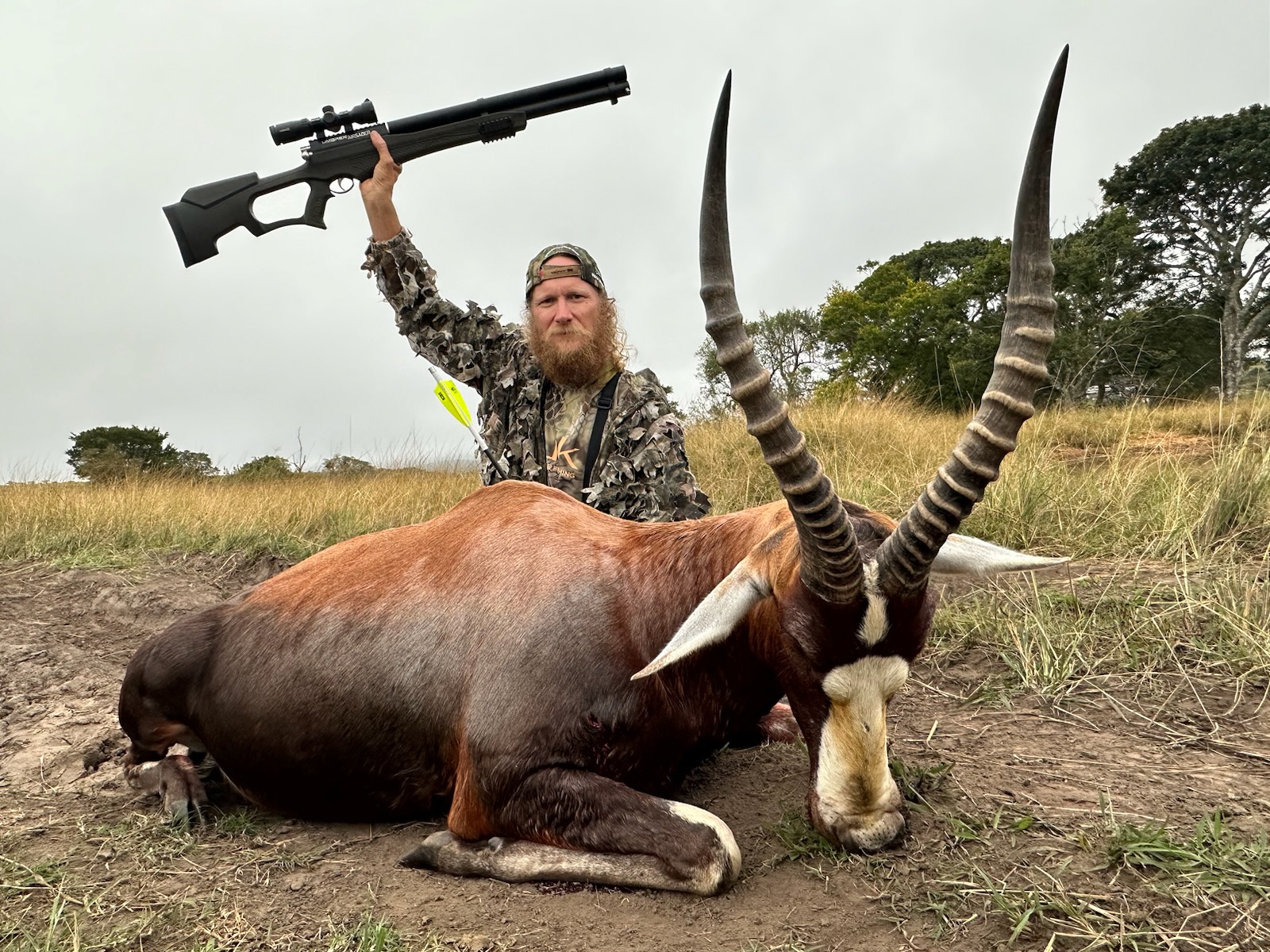
Our AirSaber is listed as a PCP air archery arrow rifle that uses high-pressure air to propel a 376-grain arrow at velocities up to 450 feet per second with a fully charged tank. The AirSaber product page also warns users to use only Umarex AirSaber arrows because standard bow and crossbow arrows are not built for the high air pressure involved. Our AirJavelin Pro is listed as a PCP arrow rifle that launches arrows at 370 FPS and produces 52 ft-lbs of energy with a 170-grain arrow.
For the broader air archery hunting foundation, see Air Archery Hunting 101. For the pressure-system explanation behind PCP arrow rifles, see How PCP Arrow Rifles Work.
Why Air Archery Gets Compared to Bowhunting
Air archery gets compared to bowhunting because both systems launch arrows. That shared projectile creates a natural connection in the minds of hunters. A hunter who understands broadheads, arrow flight, shot angles, and recovery may immediately see why air archery belongs in the broader arrow-based hunting conversation.
The similarity can also create confusion. A compound bow, recurve, or longbow stores energy through limbs and string. A PCP arrow rifle stores energy as compressed air. The arrow may be the shared element, but the power system is completely different.
That difference matters in the field. A bowhunter manages draw weight, anchor point, holding pressure, release timing, and body position. An air archery user manages fill pressure, platform-specific arrows, optic setup, air reservoir behavior, and safe handling. Both require practice, but the practice is not identical.
The difference also matters legally. A state may allow compound bows, recurves, longbows, or crossbows during a certain season but treat arrow guns or PCP arrow rifles separately. Texas Parks and Wildlife, for example, lists compound bows, crossbows, longbows, and recurved bows as lawful archery equipment, while separately noting that arrow guns may not be used to hunt deer or wild turkey during archery season in Texas. That example does not control other states, but it shows why exact regulatory language matters.
A responsible hunter should compare the systems carefully without treating them as legally interchangeable. Air archery may feel close to bowhunting because both use arrows, but legal permission depends on the agency and regulation that govern the hunt.

The Mechanical Difference Between the Systems
The main mechanical difference is how energy is stored and released. Traditional bows store energy when the hunter draws the string and bends the limbs. Air archery systems store energy as compressed air in a reservoir, then release that air to propel the arrow.
That difference changes the entire shooting process. A traditional bow requires the hunter to draw, anchor, hold, aim, release, and follow through. The hunter’s form is part of the energy system. With air archery, the hunter does not draw a bowstring. The platform is filled with air before use, and the shot depends on the pressure system, arrow fit, platform design, and trigger control.
Neither system is automatically “easier” in every meaningful sense. Traditional bowhunting demands physical draw strength, repeatable form, and close-range discipline. Air archery removes the traditional draw cycle but adds PCP pressure management, fill planning, and platform-specific arrow requirements.
Factor |
Traditional Bowhunting |
Air Archery Hunting |
|
Power source |
Bow limbs and string |
Stored compressed air |
|
Projectile |
Arrow |
Platform-compatible arrow |
|
Draw cycle |
Required |
No traditional bow draw |
|
Energy storage |
Human draw bends limbs |
PCP reservoir stores air |
|
Main setup concern |
Bow tuning, form, arrow fit |
Air pressure, arrow compatibility, platform setup |
|
Legal classification |
Often defined under archery rules |
May be defined separately as an arrow gun or air-powered system |
|
Field responsibility |
Shot placement and recovery |
Shot placement and recovery |
The shared responsibility is important. Both systems require good judgment. Both require legal verification. Both require realistic shot discipline and recovery planning.
For a broader explanation of how these systems fit into air-powered hunting, see Air-Powered Hunting Systems Explained.
How Traditional Bowhunting Works
Traditional bowhunting in this context includes compound bows, recurves, and longbows. Each system has its own feel, but all rely on limb energy and a string. The hunter physically draws the bow, stores energy in the limbs, and releases that energy to send the arrow forward.
That physical draw is central to the experience. A bowhunter has to manage strength, posture, breathing, anchor consistency, release quality, and the animal’s movement while at full draw or preparing to draw. This is one reason bowhunting is often described as intimate and demanding. The hunter must get close enough, move carefully enough, and execute under pressure.
Compound bows can reduce holding weight through let-off, but they still require a draw cycle. Recurves and longbows place even more emphasis on instinctive or traditional shooting form. In all cases, the hunter’s body is deeply connected to the shot.
That connection is part of bowhunting’s appeal. Many bowhunters value the discipline, simplicity, and close-range nature of the method. Air archery should not be presented as a replacement for that culture. It is a different arrow-launching system for users who want compressed-air arrow technology and who can verify lawful use.
A hunter coming from traditional bowhunting already understands important concepts such as shot angle, arrow flight, broadhead performance, blood trailing, and recovery patience. Those instincts are valuable when learning air archery, but they do not replace the need to understand pressure systems and platform-specific arrows.
How PCP Air Archery Works
PCP air archery uses compressed air to launch arrows. PCP stands for pre-charged pneumatic, which means the platform stores compressed air before the shot. When the platform fires, controlled air pressure moves the arrow forward.
This makes PCP air archery different from bows and crossbows. There are no bow limbs storing energy. There is no bowstring driving the arrow. The platform’s air reservoir, valve or regulator system, arrow channel, compatible arrow, optic, and fill source all work together.
Our AirJavelin Pro is a compact example of PCP air archery. It is listed with a 4,500 psi high-pressure air reservoir, a 1,500 psi regulator, 25 consistent shots on a full tank of air, and 52 ft-lbs of energy with a 170-grain arrow. Our AirSaber represents a higher-energy air archery rifle, with product information listing high-pressure air propulsion and a 376-grain arrow at velocities up to 450 feet per second with a fully charged tank.
The important lesson is that air archery is a system. The arrow has to fit the platform. The reservoir has to be filled correctly. The user has to understand pressure, shot count, sighting, safe handling, and lawful use.
For a deeper technical explanation, see How Air Archery Works and How PCP Arrow Rifles Work.
The Draw Cycle vs Pressure System Difference
The draw cycle is one of the biggest practical differences between traditional bowhunting and air archery. With a bow, drawing is part of the shot. The hunter must move at the right time, draw without being detected, settle into anchor, aim, and release before the opportunity disappears.
That creates a specific kind of hunting pressure. The animal may look up. The hunter may have to hold longer than expected. Muscles may fatigue. A poor draw angle from a tree stand or ground blind can affect form. Bowhunters learn how much the draw cycle shapes real field decisions.
Air archery changes that moment. Since there is no traditional bow draw, the user is not fighting draw weight at the point of aim. But the challenge does not disappear. It moves into preparation, pressure management, arrow compatibility, sighting, and platform control.
Field Moment |
Traditional Bowhunting |
Air Archery Hunting |
|
Before the shot |
Manage position and draw opportunity |
Confirm pressure, arrow, optic, and legal use |
|
During the shot |
Hold anchor and release cleanly |
Aim and operate the platform safely |
|
Physical demand |
Draw strength and holding control |
Platform handling and preparation discipline |
|
Common mistake |
Rushing the draw or release |
Treating pressure and arrows casually |
|
Ethical requirement |
Take only realistic shots |
Take only realistic shots |
Air archery can reduce one physical barrier, but it does not reduce the need for hunting discipline. A user still needs to understand distance, anatomy, angles, and recovery.
Shot Discipline and Hunting Ethics
Air archery and traditional bowhunting both require shot discipline. The tool changes, but the animal and responsibility do not.
A good hunter does not take a shot simply because the equipment can launch an arrow. A good hunter asks whether the distance is realistic, whether the angle is right, whether the animal is calm enough, whether the setup is legal, and whether recovery is likely.
This is especially important with arrow-based systems. Arrows rely on proper placement and cutting performance. Shot angle, broadhead selection where lawful, animal movement, and recovery judgment matter. Product specifications do not remove those responsibilities.
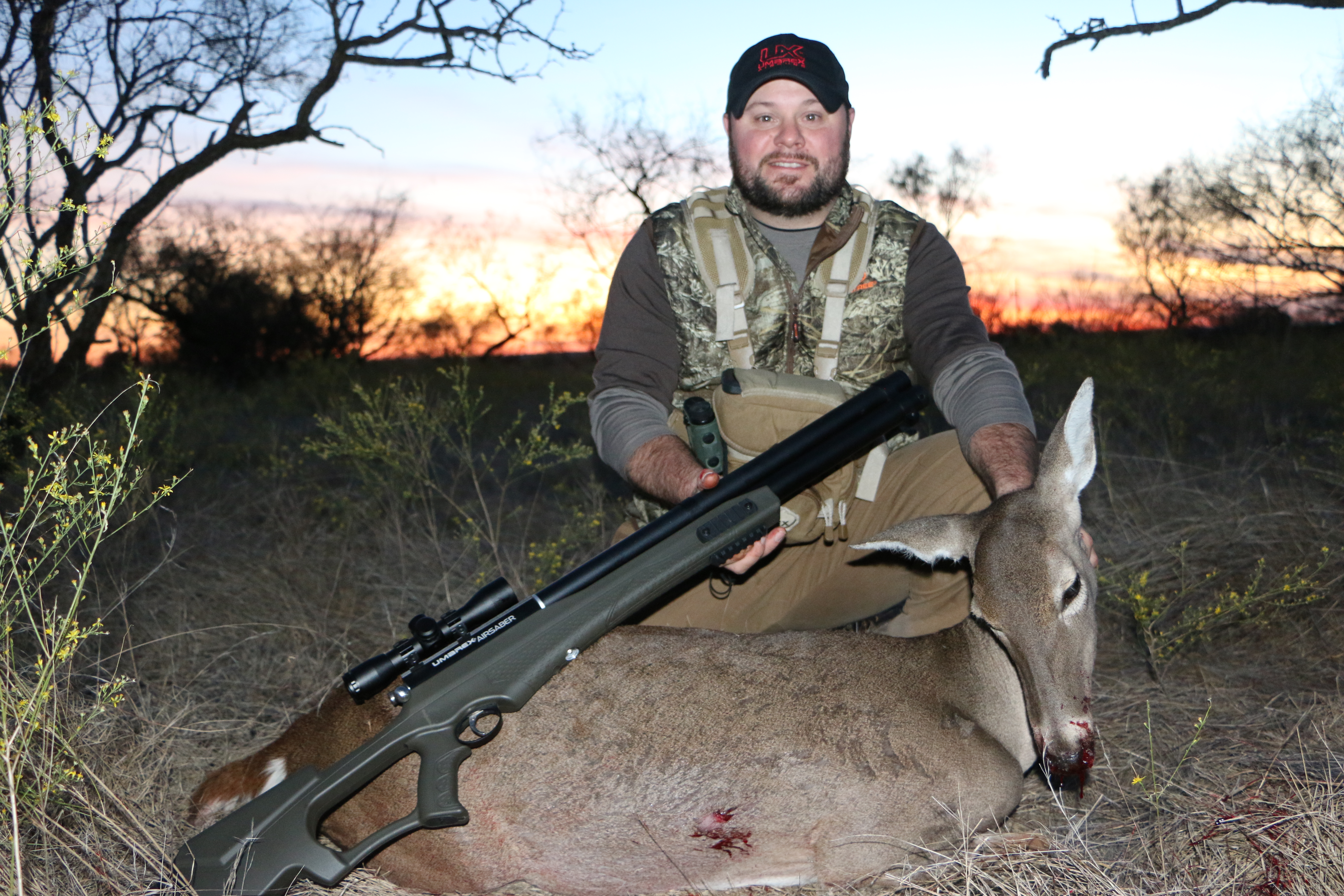
Texas Parks and Wildlife’s air gun and arrow gun guidance emphasizes shot placement into vital organs and encourages recovery patience for animals taken with air guns and arrow guns. That guidance is state-specific, but the ethical principle is broader: choose shots that support responsible recovery.
A responsible air archery hunter should pass when the animal is moving unpredictably, the angle is poor, the distance exceeds practiced ability, the arrow is damaged, the legal status is unclear, or recovery is doubtful. The same restraint is respected in traditional bowhunting.
For deeper responsible-use guidance, see Ethical Air Archery Hunting Practices.
Arrow Compatibility and Broadhead Considerations
Traditional bowhunters already understand that arrows matter. Spine, length, weight, straightness, inserts, nocks, broadheads, and tuning all affect performance. A poorly matched arrow can create bad flight and poor hunting results.
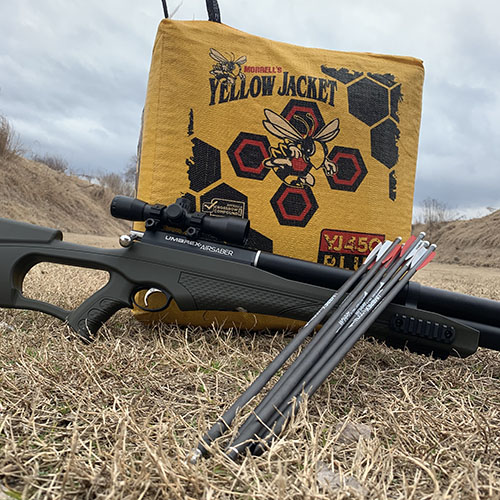
Air archery takes arrow compatibility even further because the arrow must be designed for the pressure system. A standard bow arrow may not be built for the forces inside a PCP arrow rifle. It may look similar, but that does not make it safe.
Our AirSaber product page warns users to use only Umarex AirSaber arrows with the AirSaber arrow gun because arrows for bows and crossbows are not strong enough to withstand the high air pressure and can fail dangerously. That warning should guide every air archery setup decision.
Broadhead choices also require legal verification. A broadhead may be mechanically compatible with an arrow, but hunting regulations may specify blade width, design, point type, or approved equipment by species and season. Do not assume that a broadhead is legal because it fits.
Arrow Decision |
Traditional Bowhunting |
Air Archery Hunting |
|
Arrow fit |
Must match bow setup |
Must match air archery platform |
|
Shaft requirements |
Spine, length, weight, tune |
Platform strength, fit, pressure compatibility |
|
Broadhead use |
Must match bow and state rules |
Must match arrow, platform, and state rules |
|
Damage inspection |
Required |
Required |
|
Improvisation risk |
Poor flight or unsafe use |
Potential pressure-related failure |
The safest rule is simple: follow manufacturer guidance first, then verify hunting regulations before use.
Learning Curve and Practice
The learning curve depends heavily on the hunter’s background. A lifelong bowhunter may understand animals, wind, stand placement, shot angles, broadheads, and recovery, but still need time to learn PCP pressure systems and platform-specific arrow behavior.
A PCP airgun shooter may understand fill pressure, regulators, optics, shot count, and platform handling, but still need to learn arrow-based hunting ethics. Knowing how to shoot an air rifle does not automatically teach broadhead behavior, animal angles, or recovery.
A new hunter has the longest learning curve because both the platform and the field decision-making are new. That person needs structured practice, legal education, and realistic expectations before hunting.
Practice should include more than hitting a target once. The user should confirm sighting, arrow consistency, realistic distance, point of impact with the chosen arrow setup, safe handling, and recovery thinking. Practice should also include knowing when not to shoot.
Hunter Background |
What Transfers Well |
What Still Needs Work |
|
Traditional bowhunter |
Shot angles, animal behavior, recovery |
PCP pressure and platform-specific arrows |
|
PCP airgun shooter |
Fill systems, optics, platform handling |
Arrow hunting and broadhead discipline |
|
Crossbow hunter |
Shoulder-fired arrow platform familiarity |
Air reservoir and arrow compatibility |
|
New hunter |
No habits to unlearn |
Legal use, ethics, platform skill, recovery |
A serious hunter should become confident before the season. The field should test judgment, not introduce basic equipment questions.
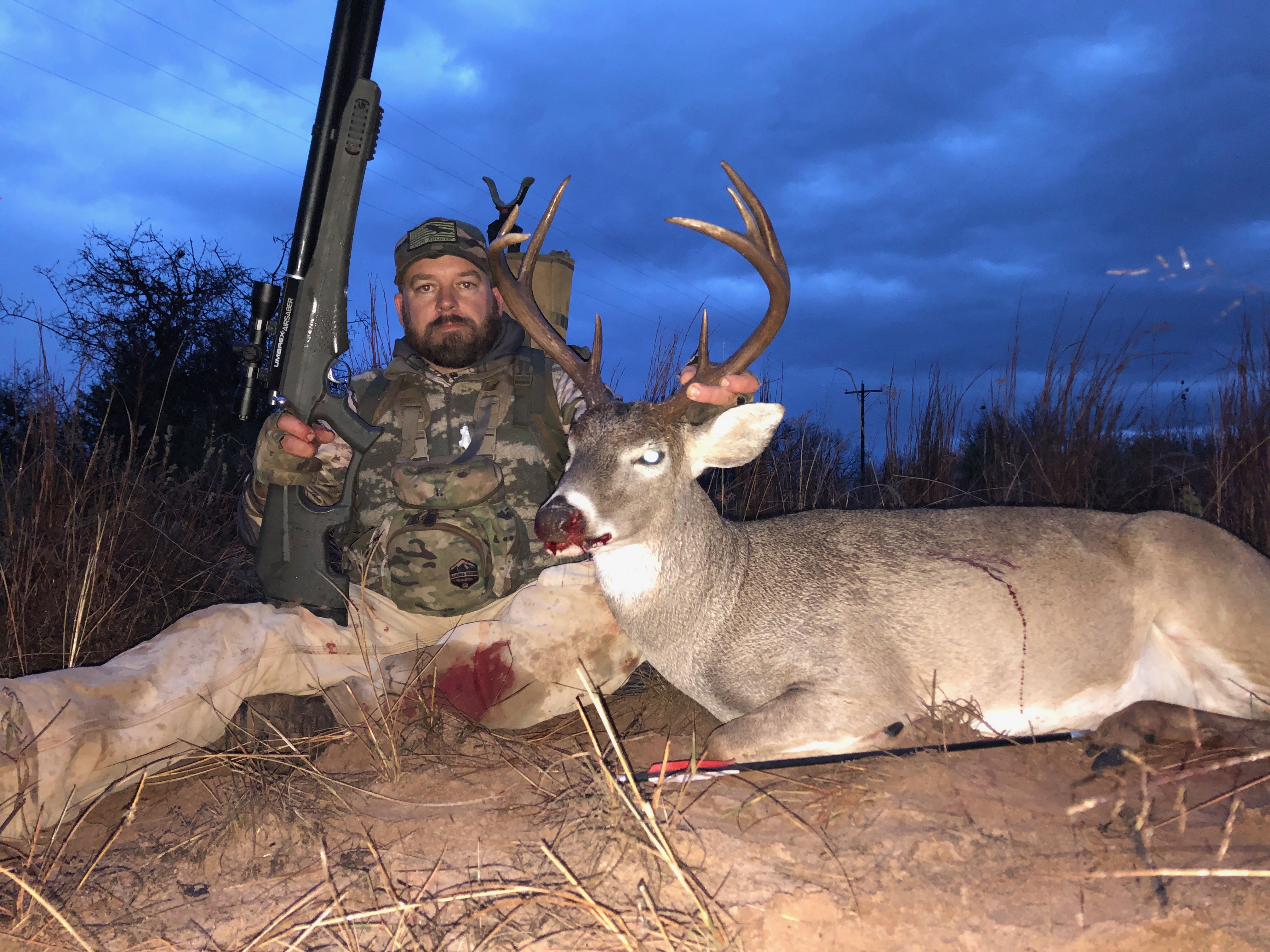
Handling in the Field
Traditional bows and air archery systems feel different in real hunting conditions. A compound bow can be carried quietly, drawn when the opportunity appears, and shot from positions a trained bowhunter practices often. The hunter’s body position matters because draw cycle and anchor are part of the shot.
An air archery platform handles more like a shoulder-fired air-powered system. The user must think about fill status, optics, arrow fit, platform length, safe direction, and trigger control. It may feel familiar to someone with airgun experience, but it still launches arrows and must be treated with that level of care.
Tree stands, ground blinds, spot-and-stalk conditions, and still-hunting all change the decision. Traditional bowhunters think carefully about draw movement inside tight cover. Air archery users may think more about platform clearance, muzzle direction, pressure status, and arrow handling.
Neither system removes the need for patience. Field handling is not only about how the equipment feels in the hand. It is about whether the hunter can operate it quietly, safely, legally, and consistently when the moment arrives.
For safety-specific education in this cluster, see Air Archery Hunting Safety.
Legal Classification Differences
Legal classification is one of the most important reasons to separate air archery from traditional bowhunting.
Traditional archery rules often define lawful archery equipment around bows, strings, limbs, draw weight, broadheads, and related equipment. Air archery systems may be described as arrow guns, air guns, airbows, pre-charged pneumatic devices, or may not be clearly named at all.
That means a hunter should never assume that a PCP arrow rifle is legal during archery season. It may be legal for some species, seasons, or methods in one state and restricted in another. It may be treated separately from bows even though it launches arrows.
Texas provides a useful official example. Its hunting means and methods guidance includes archery equipment definitions and separately discusses arrow guns, including a statement that arrow guns may not be used to hunt deer or wild turkey during archery season in Texas. That is not a national rule. It is a reminder that every state’s language must be read carefully.
Legal Question |
Why It Matters |
|
Does the regulation define archery equipment? |
Air archery may not be included |
|
Does the regulation mention arrow guns? |
PCP arrow rifles may be treated separately |
|
Is the species eligible for air archery? |
Rules can vary by animal |
|
Is the method allowed during the season? |
Archery, general, and special seasons may differ |
|
Are broadhead rules listed? |
Arrow equipment may be regulated |
|
Does public land have separate rules? |
Land access can change allowed methods |
|
Has the agency confirmed unclear language? |
Ambiguity should be resolved before hunting |
For the dedicated legal support article, see Air Archery Hunting Laws and Regulations.
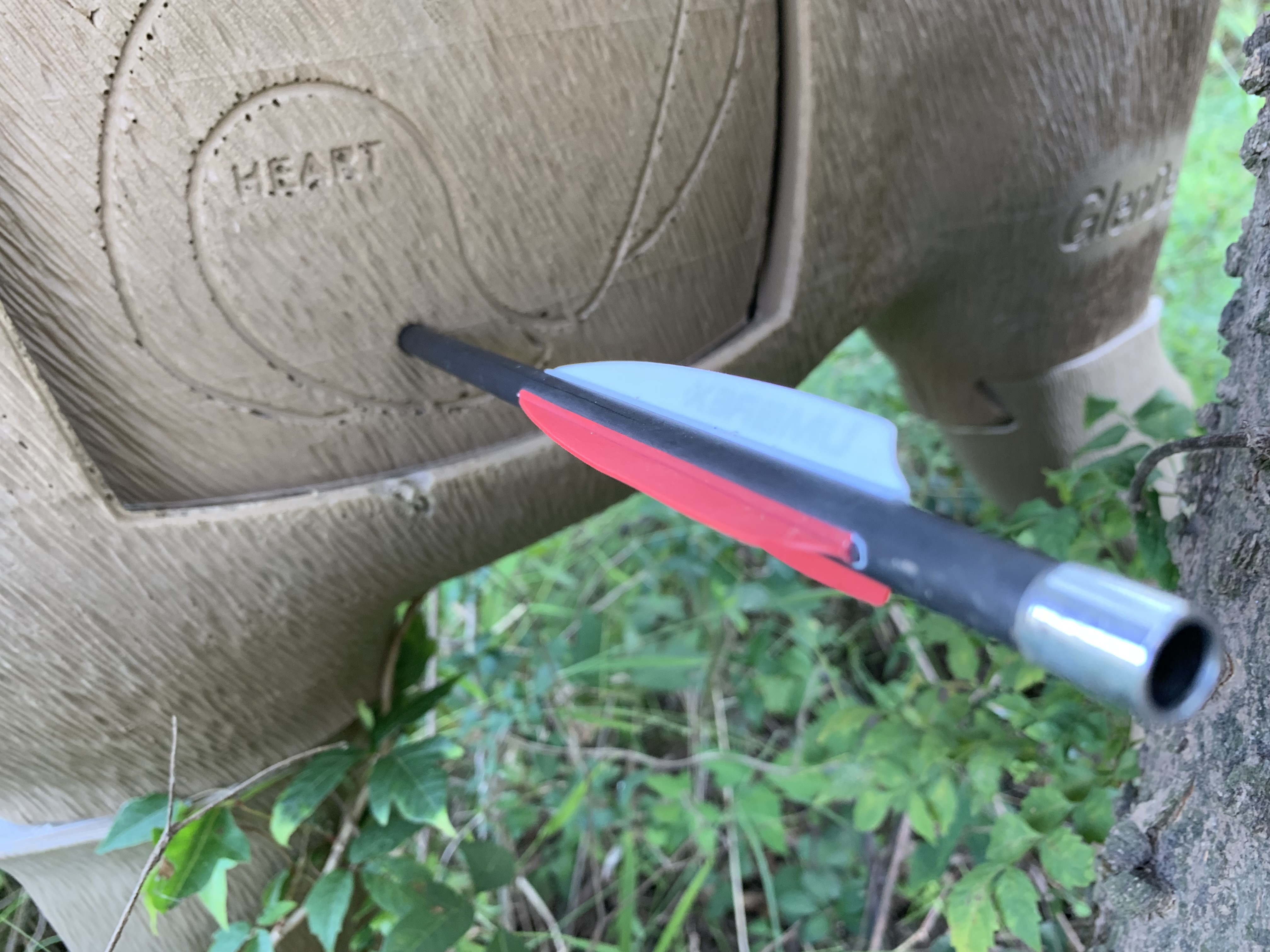
AirSaber vs Compound Bow Expectations
AirSaber and compound bows both launch arrows, but the field expectations should not be treated as identical.
A compound bow uses limbs, cams, cables, and a string. The hunter draws the bow and stores energy mechanically. AirSaber uses high-pressure air. Our AirSaber product page lists the system as an air archery rifle that uses high-pressure air to propel a 376-grain arrow at velocities up to 450 feet per second with a fully charged tank.
That difference changes how a hunter prepares. A compound bow requires tuning, form work, anchor consistency, release practice, and broadhead confirmation. AirSaber requires air system understanding, approved arrows, fill preparation, optic familiarity, and legal verification for arrow gun use.
AirSaber may appeal to hunters interested in a powerful PCP arrow rifle platform. A compound bow may appeal to hunters who value the draw cycle, archery tradition, and close-range bowhunting discipline. Both require ethical judgment.
The safest way to compare them is to respect the strengths and requirements of each. AirSaber is not a compound bow. It is an air archery arrow rifle. That clarity protects the hunter, the brand, and the category.
AirJavelin Pro vs Compact Hunting Bow Expectations
AirJavelin Pro occupies a different part of the air archery category than AirSaber. It is compact, regulated, and built around a lighter arrow system than the higher-energy AirSaber platform.
Our AirJavelin Pro product page lists 370 FPS, 52 ft-lbs of energy, a 170-grain arrow, a 4,500 psi high-pressure air reservoir, and a 1,500 psi regulator. Those details place it in the compact PCP arrow rifle conversation rather than the traditional compact bow conversation.
A compact hunting bow and AirJavelin Pro may both interest hunters who want maneuverability, but they are still different systems. One uses limbs and string. The other uses compressed air. One depends on draw cycle and bow tune. The other depends on pressure, platform-specific arrows, and PCP handling.
The AirJavelin Pro product page and related Umarex air archery material discuss AirJavelin and AirJavelin Pro in small-game and recreational arrow-rifle contexts. Users should still verify whether any intended hunting use is lawful for their species, state, season, and location.
For a technical breakdown of PCP arrow rifles, see How PCP Arrow Rifles Work.
What Traditional Bowhunters Often Notice First
Traditional bowhunters often notice the missing draw cycle first. With air archery, there is no need to draw and hold a bow at the moment of the shot. That can feel very different, especially for hunters who are used to timing the draw around an animal’s head position or movement.
They may also notice that air archery feels more mechanical and platform-based. The shooting position, optic use, and trigger operation can feel closer to airgun or crossbow handling than to vertical bow form. That does not make it better or worse. It makes it different.
Experienced bowhunters may also immediately focus on recovery. That instinct is valuable. Air archery still launches arrows, and responsible recovery remains central. The best bowhunting habits, such as patience, angle selection, broadhead awareness, and refusal of poor shots, carry over well.
What does not carry over automatically is equipment compatibility. A bowhunter may have arrows and broadheads they trust with a compound bow. That does not mean those arrows belong in a PCP arrow rifle. Manufacturer guidance controls air archery arrow selection.
Common Misunderstandings
The most common misunderstanding is that air archery is simply bowhunting with a different stock. It is not. Air archery uses compressed air. Traditional bowhunting uses limbs and string.
The second misunderstanding is that archery seasons automatically include air archery. They may not. Regulations can define lawful equipment very specifically. A PCP arrow rifle may be classified differently from a compound bow or recurve.
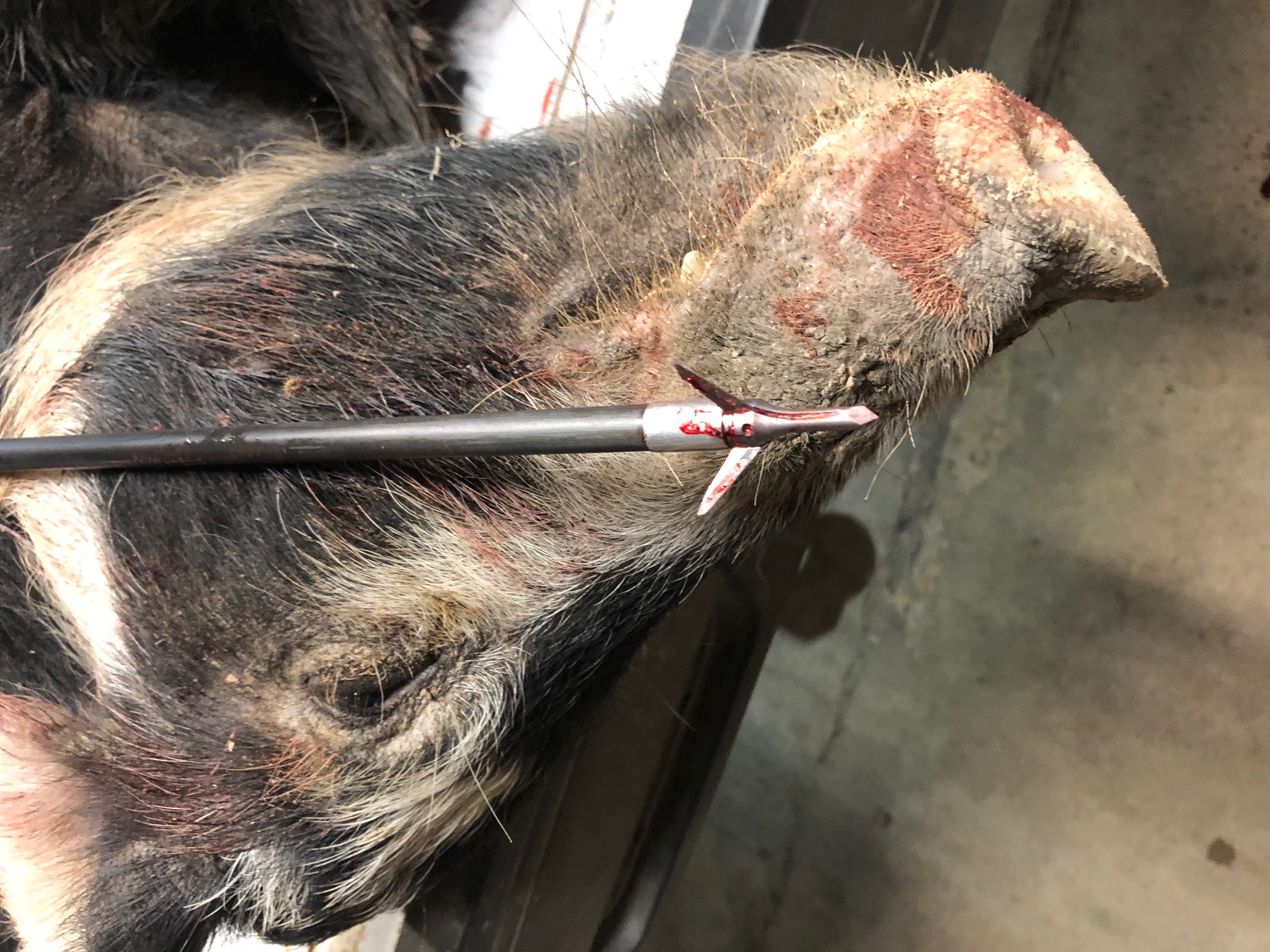
The third misunderstanding is that all arrows are interchangeable. They are not. Air archery arrows must match the platform. Our AirSaber warning about using only Umarex AirSaber arrows exists because pressure-system compatibility is a safety issue.
Misunderstanding |
Correct Understanding |
|
Air archery is traditional bowhunting |
Air archery uses compressed air |
|
Archery season automatically includes arrow guns |
Regulations may classify them separately |
|
Any arrow can work |
Platform-approved arrows are required |
|
Higher velocity determines legality |
Wildlife regulations determine legality |
|
No draw cycle means no learning curve |
The learning curve shifts to pressure, arrows, and platform control |
|
Product capability confirms hunting use |
Agencies and regulations determine legal use |
The right comparison should make the hunter more informed, not more careless.
Who Each Method May Appeal To
Traditional bowhunting may appeal to hunters who value archery form, physical draw discipline, close-range challenge, and the long culture of bowhunting. It is a method built around movement control, strength, timing, and repetition.
Air archery may appeal to hunters who are interested in compressed-air technology, PCP systems, arrow rifles, or air-powered hunting platforms. It may also appeal to people who cannot or do not want to use a traditional draw cycle, where lawful.
The decision should start with legal fit. After legality is verified, the hunter can think about comfort, experience, practice time, physical ability, equipment maintenance, and ethical confidence.
Hunter Preference |
Traditional Bowhunting May Fit If |
Air Archery May Fit If |
|
Power system |
You prefer limbs and string |
You prefer compressed air |
|
Hunting tradition |
You value vertical bow discipline |
You want air-powered arrow technology |
|
Physical draw |
You can draw and hold consistently |
You prefer no traditional draw cycle |
|
Equipment familiarity |
You know bows and arrows |
You know PCP systems or airguns |
|
Maintenance comfort |
You tune bows and inspect strings |
You manage air pressure and platform-specific arrows |
|
Legal fit |
Your season allows bows |
Your jurisdiction allows air archery for the intended use |
The best method is the one you can use legally, safely, accurately, and responsibly.
Key Takeaways
Air archery and traditional bowhunting both use arrows, but they use different power systems.
Traditional bowhunting uses limbs and string. Air archery uses compressed air.
A PCP arrow rifle should not be assumed to qualify as traditional archery equipment unless current regulations clearly say so.
AirSaber is listed as a high-pressure air archery rifle that propels a 376-grain arrow at velocities up to 450 feet per second with a fully charged tank, and AirSaber requires Umarex AirSaber arrows.
AirJavelin Pro is listed as a PCP arrow rifle that launches a 170-grain arrow at 370 FPS and produces 52 ft-lbs of energy.
Arrow compatibility is a safety requirement.
Product capability does not equal legal permission.
Before hunting with either system, verify the equipment, species, season, land, projectile, and method rules with the responsible wildlife agency.
FAQ
Is air archery the same as traditional bowhunting?
No. Traditional bowhunting uses a bow, limbs, and string to launch arrows. Air archery uses compressed air to launch compatible arrows from an air-powered platform.
Is AirSaber a compound bow?
No. AirSaber is a PCP air archery arrow rifle. It uses high-pressure air to launch arrows, not limbs and a string.
Can air archery be used during archery season?
Not unless current regulations clearly allow it. Air archery equipment may be classified differently from traditional bows, so hunters should verify with the responsible wildlife agency before use.
What is the biggest difference between a PCP arrow rifle and a bow?
The biggest difference is the power source. A bow stores energy in limbs and string. A PCP arrow rifle stores energy as compressed air.
Can regular bow arrows be used in an AirSaber?
No. Our AirSaber product guidance says to use only Umarex AirSaber arrows because standard bow and crossbow arrows are not built for the high air pressure involved.
Is AirJavelin Pro a traditional bow?
No. AirJavelin Pro is a PCP powered air archery platform that uses compressed air to launch compatible arrows.
Which is better, air archery or traditional bowhunting?
Neither is automatically better. The better choice depends on legal approval, user familiarity, physical ability, practice, arrow compatibility, field conditions, ethical shot selection, and recovery responsibility.
H2 Works Cited
Umarex USA. “AirSaber Air Archery Arrow Rifle with Scope.” Used for AirSaber PCP air archery specifications, velocity, arrow weight, pressure context, and arrow compatibility warning. https://www.umarexusa.com/umarex-airsaber-air-archery-arrow-rifle-airgun-with-axeon-scope
Umarex USA. “AIRJAVELIN PRO PCP ARROW RIFLE.” Used for AirJavelin Pro PCP air archery specifications, velocity, energy, regulator, fill pressure, shot count, and platform context. https://www.umarexusa.com/umarex-airjavelin-pro-pcp-arrow-rifle-2252668
Umarex USA. “The Umarex AirJavelin Pro.” Used for AirJavelin Pro platform context, PCP regulation, reservoir details, and arrow energy description. https://www.umarexusa.com/the-umarex-airjavelin-pro
Texas Parks and Wildlife Department. “Air Gun and Arrow Gun Regulations.” Used for official example language around air guns, arrow guns, shot placement, and recovery caution. https://tpwd.texas.gov/regulations/outdoor-annual/hunting/air-gun-arrow-gun-regulations
Texas Parks and Wildlife Department. “Hunting Means and Methods.” Used for official example language showing that archery equipment and arrow guns may be treated differently by regulation. https://tpwd.texas.gov/regulations/outdoor-annual/hunting/general-regulations/means-and-methods