


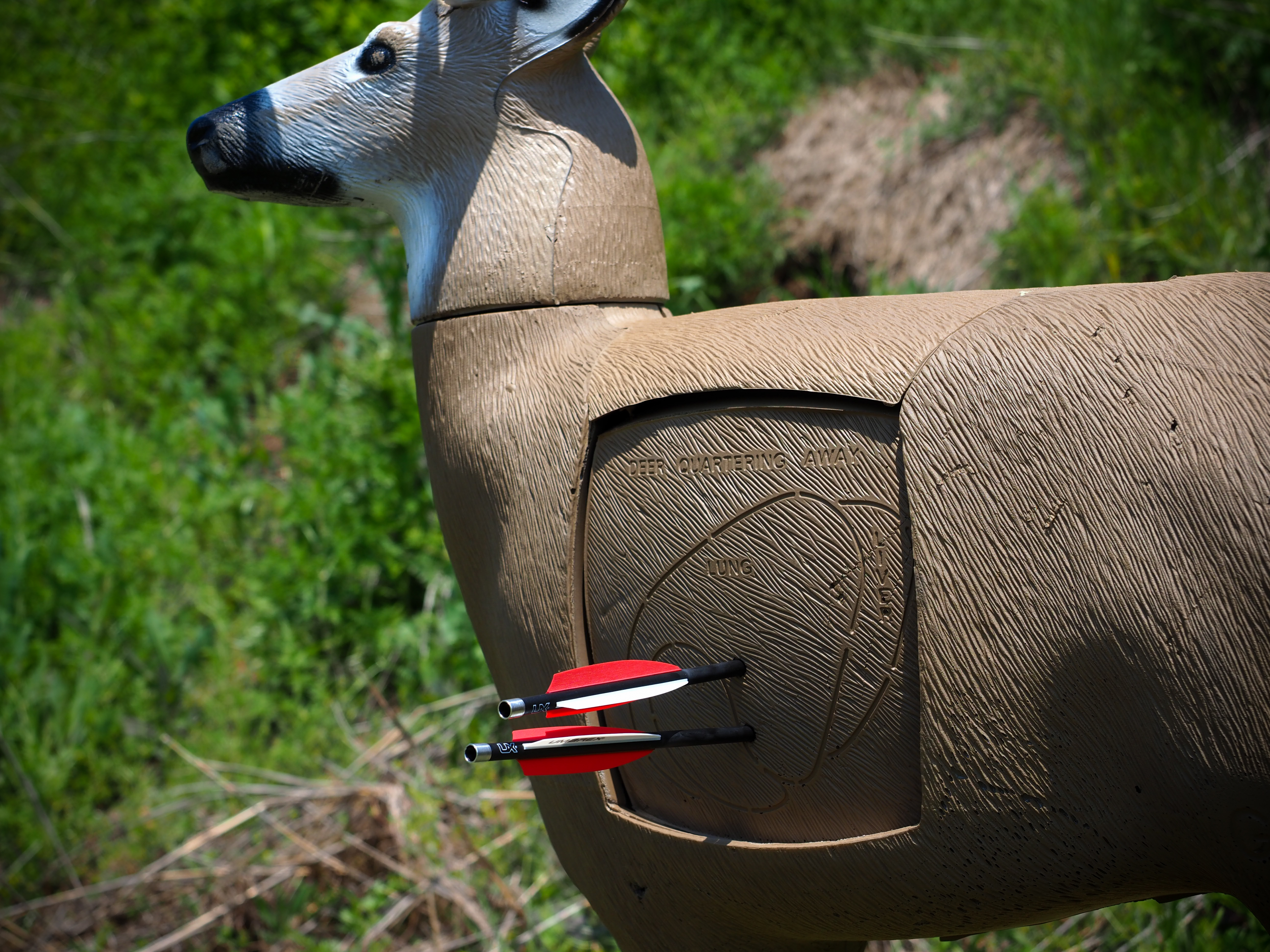
Air archery hunting equipment, including PCP arrow rifles, arrow guns, air-powered arrow-launching systems, air archery platforms, and related hunting accessories, may not be specifically addressed or permitted under the laws and regulations of every state, province, species, season, land type, or local jurisdiction. Regulations involving airguns, arrows, broadheads, hunting methods, caliber or energy requirements, species restrictions, seasons, public land rules, private land rules, and air-powered equipment may vary significantly and may change over time. Always contact your state or local fish and wildlife agency to verify the current legality of any equipment, species, method, season, and location before use. Nothing below should be interpreted as legal advice or as confirmation that any specific equipment or method is lawful in your area.
Quick Answer
Ethical air archery hunting means using air-powered arrow systems only where lawful, practicing before the hunt, using approved arrows, testing broadheads, staying within realistic distances, choosing responsible shot angles, and recovering game with discipline. No air archery platform guarantees an ethical result. The hunter’s judgment does.
Air archery is still a newer and less understood category in many hunting regulations. Some states do not allow arrow guns or PCP arrow rifles for game animal hunting, and some may treat them differently from bows or crossbows. Where air archery is lawful, hunters should be especially careful, ethical, and safe because responsible use helps demonstrate the value of the category to agencies, landowners, other hunters, and the public.
As a practical field standard, many hunters should treat air archery distance more like crossbow-range hunting than long-range rifle hunting. We recommend staying inside 80 yards unless you have practiced extensively with your exact platform, approved arrow, broadhead, optic, and field conditions and can make ethical shots with confidence. Closer, known-distance shots are usually the better ethical choice.
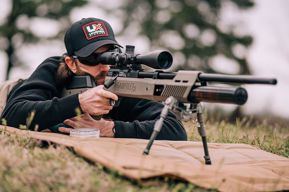
Our AirSaber is listed as a PCP air archery arrow rifle that uses high-pressure air to propel a 376-grain arrow at velocities up to 450 feet per second with a fully charged tank, and the product page warns users to use only Umarex AirSaber arrows because standard bow and crossbow arrows are not built for the high air pressure involved. Our AirJavelin Pro is listed as a compact PCP air archery platform with a 4,500 PSI maximum fill pressure, 1,500 PSI regulator, and 370 FPS velocity with a 170-grain arrow.
For the larger category foundation, see Air Archery Hunting 101. For safety fundamentals, see Air Archery Hunting Safety Guide.
Why Ethics Matter in Air Archery Hunting
Ethics matter in every kind of hunting, but they matter especially in a newer category that many people are still learning to understand. Air archery sits between familiar hunting tools. It launches arrows, like bowhunting and crossbow hunting. It uses compressed air, like PCP airguns. It may be called an arrow gun, airbow, PCP arrow rifle, or air archery platform depending on who is talking about it.
That unfamiliarity creates responsibility. If hunters use air archery carelessly, the public sees the category as reckless. If hunters use it lawfully, safely, and ethically, the public sees a serious hunting tool that may expand access and opportunity without weakening hunting standards.
This matters because hunting participation has been a concern across much of the outdoor world for years. More lawful, responsible ways to participate can help keep people engaged in hunting, conservation funding, mentoring, and field traditions. Air archery may offer opportunity for some hunters who are interested in arrow-based hunting but prefer or need a compressed-air platform. That opportunity only helps if hunters treat it with discipline.
Air archery should never be positioned as a shortcut around hunting ethics. It is not a way to avoid practice. It is not a way to stretch distance carelessly. It is not a reason to ignore anatomy, recovery, broadhead behavior, or regulations. The platform may be different, but the obligation is familiar: make clean decisions, respect wildlife, obey the law, and represent hunting well.
Ethical Hunting Starts Before the Shot
An ethical air archery hunt begins long before the animal appears. It starts when the hunter checks the law, verifies the platform, inspects arrows, confirms broadhead flight, practices at realistic distances, and decides ahead of time what shots will be passed.
The worst time to make an ethical decision is in a rush. A hunter who has not practiced with the broadhead, does not know the exact point of impact, or is unsure whether the method is legal is not ready to take the shot. The ethical choice is preparation.
Air archery equipment also adds specific pre-hunt responsibilities. PCP arrow rifles use compressed air and platform-specific arrows. Our AirSaber product page warns users to use only Umarex AirSaber arrows because arrows for bows and crossbows are not strong enough for the high-pressure system. That kind of compatibility guidance is not just safety information. It is part of ethical use because damaged or incompatible equipment can affect accuracy, penetration, and recovery.
Ethical Readiness Question |
Why It Matters |
|
Is the method legal for this species and season? |
Legal use is the first ethical requirement |
|
Is the platform understood and inspected? |
Equipment problems can create poor outcomes |
|
Are the arrows approved for the platform? |
Compatibility affects safety and consistency |
|
Has the broadhead been tested? |
Hunting impact may differ from field-point impact |
|
Is the distance realistic? |
Ethical shots depend on practiced ability |
|
Is recovery likely? |
Impact alone is not the end of the hunt |
|
Is the hunter calm enough to pass? |
Restraint is part of hunting skill |
Ethical hunters do not wait until the shot to become responsible. They build responsibility into every step before the hunt.
Understanding Arrow-Based Hunting Responsibility
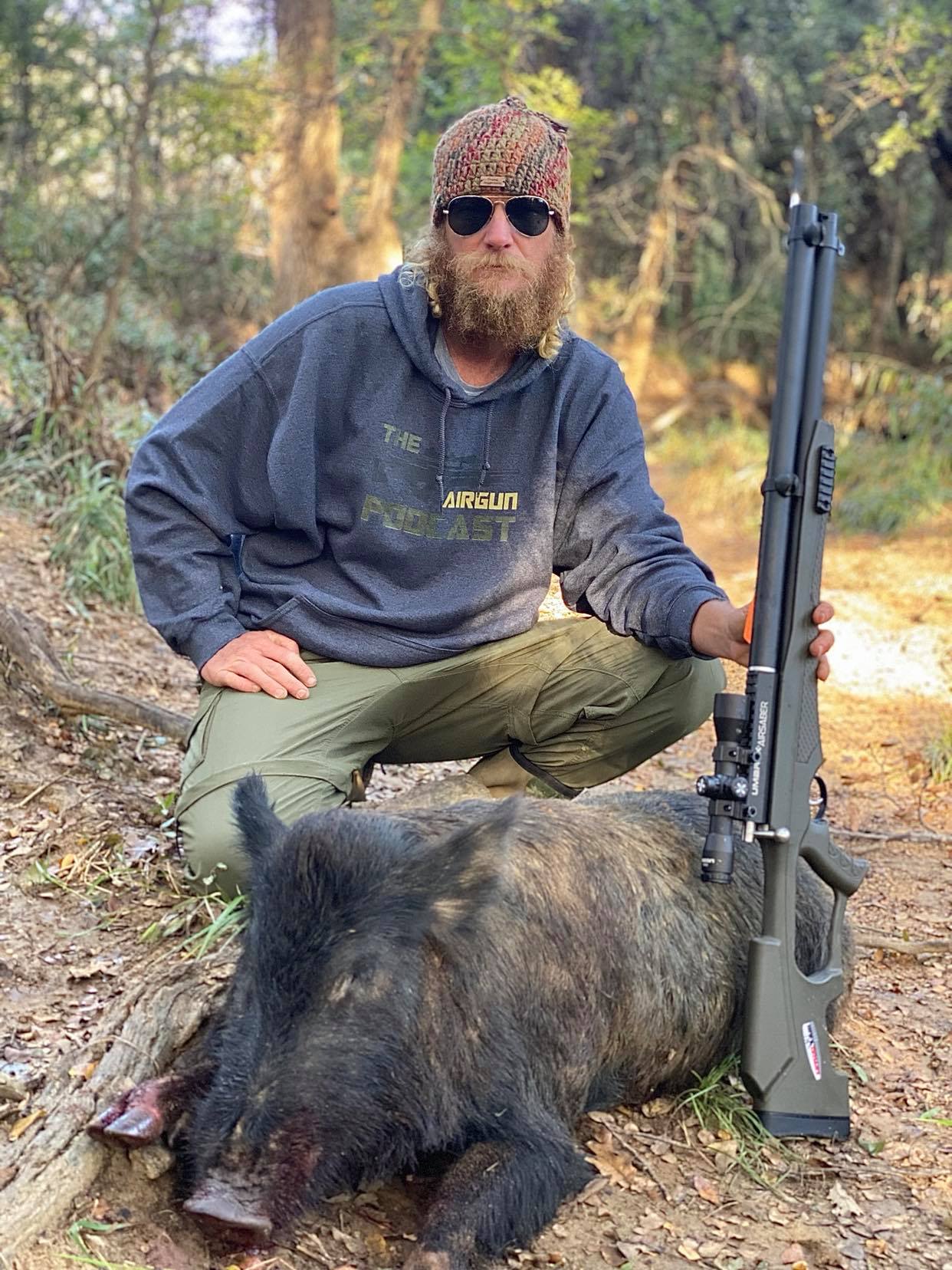
Air archery hunting is arrow-based hunting. That means the hunter must think differently than someone using a pellet, slug, or firearm projectile. Arrows rely on broadhead performance, placement, angle, penetration, and recovery discipline.
This is one reason air archery ethics overlap with bowhunting and crossbow hunting ethics. The platform may be powered by air, but the arrow still has to reach the right place, at the right angle, with the right setup, under lawful conditions.
The hunter has to understand where vital organs sit, how animal angle changes the shot, how broadheads behave, and why recovery decisions matter. A quartering shot, steep angle, walking animal, unknown distance, or uncertain broadhead impact can change an opportunity from responsible to questionable quickly.
Texas Parks and Wildlife’s air gun and arrow gun guidance emphasizes that shot placement into vital organs is critical to minimize wounding loss, and it advises hunters to wait before retrieval in a manner similar to archery hunting. That guidance is state-specific, but the ethical principle is broadly useful: arrow-based hunting requires patience after the shot, not just confidence before it.
Air archery hunters should think of the shot and recovery as one connected event. If the recovery plan is weak, the shot is not ethical.
Shot Placement and Animal Anatomy
Shot placement is the heart of ethical air archery hunting. A fast platform, a tuned broadhead, and a steady rest do not matter if the arrow is placed poorly.
Air archery hunters should study anatomy for the species they are legally pursuing. The target area is not just “the side of the animal.” It changes with angle, elevation, body position, leg placement, and movement. A shot that looks open from one position may be risky from another.
Shot placement also depends on the arrow setup. A broadhead must fly predictably and impact where the hunter has practiced. Mechanical broadheads should be checked for reliable behavior. Fixed broadheads should be tested for point of impact and grouping. A broadhead that has not been tested on the exact platform should not be trusted on game.
Shot Placement Factor |
Ethical Question |
|
Animal angle |
Does the arrow path reach the vitals? |
|
Distance |
Has this distance been practiced with the broadhead? |
|
Animal movement |
Is the animal calm enough for a responsible shot? |
|
Rest or position |
Can the hunter hold steady? |
|
Broadhead impact |
Has this exact setup been confirmed? |
|
Recovery path |
Can the hunter follow up responsibly? |
A responsible hunter knows where the arrow needs to go before the animal arrives. Guessing at anatomy in the moment is not enough.
Realistic Distance and Shot Discipline
Distance is one of the easiest ways for hunters to get into trouble. Air archery systems can be capable, and some platforms may show impressive performance numbers, but ethical distance is not decided by product specifications alone.
Ethical distance is decided by the hunter’s demonstrated accuracy with the exact platform, approved arrow, broadhead, optic, rest, and field position. It is also affected by wind, animal movement, light, terrain, angle, and recovery conditions.
We recommend treating air archery hunting more like crossbow-range hunting than rifle-range hunting. For many hunters, staying inside 80 yards is the responsible ceiling, and closer is often better. A hunter should go beyond that only when the law allows the method, the shooter has practiced extensively, the broadhead impact is verified, the conditions are controlled, and the shot can be made ethically with confidence.
Distance Factor |
Why It Matters |
|
Known distance |
Guessing range leads to poor placement |
|
Broadhead verification |
Field points do not prove hunting impact |
|
Wind and angle |
Arrows are affected by field conditions |
|
Animal movement |
More distance means more time for movement |
|
Recovery difficulty |
Longer shots can complicate follow-up |
|
Hunter consistency |
Ethical range is personal and proven |
The best hunters do not ask, “Can the platform reach?” They ask, “Can I make this shot cleanly under these exact conditions and recover responsibly?”
Why Passing a Shot Is Part of Ethical Hunting
Passing a shot is not failure. It is one of the clearest signs of an ethical hunter.
Air archery can tempt people to take shots because the platform feels stable, accurate, or powerful. That confidence can be useful when it is backed by practice. It becomes a problem when it turns into overconfidence.
A responsible hunter should pass when the distance is not known, the angle is poor, the animal is walking too quickly, the legal status is unclear, the broadhead has not been tested, the arrow is questionable, or recovery is unlikely. The same is true if the hunter feels rushed or uncertain.
Pass the Shot When |
Why |
|
The animal is moving unpredictably |
Placement becomes uncertain |
|
The angle is poor |
Vital-organ path may not be clean |
|
The distance exceeds practice |
Confidence is not proof |
|
The broadhead impact is untested |
Point of impact may shift |
|
The arrow is damaged |
Equipment risk affects outcome |
|
The method is not clearly legal |
Legal uncertainty is ethical uncertainty |
|
Recovery would be doubtful |
The hunt does not end at impact |
Ethical hunting is built on restraint. The shots you refuse matter as much as the shots you take.
Broadheads, Arrow Setup, and Recovery
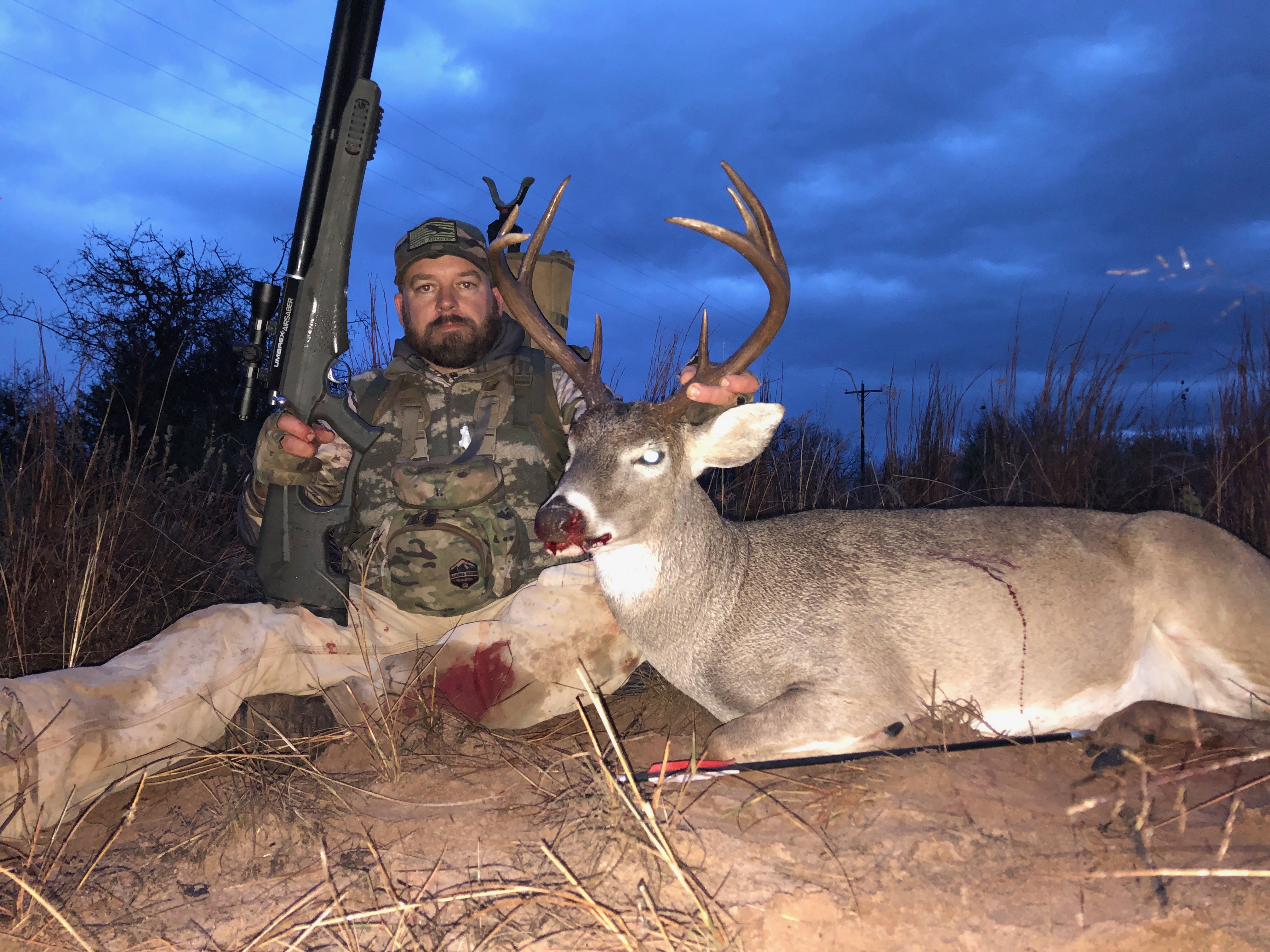
Broadheads and arrows are not minor accessories in air archery. They are central to ethical performance.
Our AirSaber product page states that AirSaber uses special carbon-fiber arrows and that those arrows accept standard and mechanical broadheads. That compatibility still does not mean every broadhead will fly the same, behave the same, or be legal for every hunt.
Fixed broadheads can be attractive because they have no blades that can deploy early before impact. Once tuned, some hunters prefer their simplicity and predictable blade position. Mechanical broadheads can fly well in some setups, but even crossbow-rated mechanicals should be tested carefully because high-speed air-powered systems may stress deployment mechanisms differently.
Arrow tuning is also ethical. If the arrow and broadhead do not group consistently, the setup is not ready. If the broadhead hits several inches away from the field point and the hunter has not adjusted or confirmed the difference, the setup is not ready.
For deeper setup guidance, see Choosing and Tuning Arrows for Air Archery Systems.
Practice Is an Ethical Responsibility
Practice is not just about confidence. It is an ethical responsibility.
A hunter should practice with the exact platform, approved arrow, optic, and broadhead setup intended for lawful hunting. Practice should include known distances, realistic shooting positions, and point-of-impact confirmation. It should also include knowing personal limits.
Shooting well from a bench does not automatically mean shooting well from a blind, stand, kneeling position, or field rest. Ethical practice should include conditions that resemble the hunt as closely as safety allows.
Practice Area |
Ethical Purpose |
|
Field-point grouping |
Builds platform familiarity |
|
Broadhead grouping |
Confirms actual hunting impact |
|
Known-distance practice |
Prevents range guessing |
|
Realistic positions |
Shows what the hunter can do in the field |
|
Arrow inspection after shooting |
Prevents damaged equipment use |
|
Pass-shot discipline |
Builds restraint before the hunt |
A hunter who has not practiced with the hunting setup should not hunt with it. The animal should not be the first test of the broadhead.
Tracking and Recovery After the Shot
Recovery is part of the shot. Ethical air archery hunting does not end when the arrow leaves the platform.
After impact, the hunter needs patience, observation, and discipline. Watch the animal’s reaction. Mark the last visible location. Listen. Avoid rushing unless conditions require immediate action for safety or legal reasons. Follow recovery guidance appropriate for the species, state, land, and situation.
Texas Parks and Wildlife advises hunters using air guns or arrow guns to wait at least 30 minutes before searching when no animal is seen down, similar to archery hunting recovery guidance. That is Texas guidance, not universal law, but it reflects a key principle: poor recovery decisions can turn a good shot into a worse outcome.
Ethical recovery also includes respecting property boundaries, landowner permission, tagging rules, reporting requirements where applicable, and safe handling of equipment during follow-up. If the animal crosses property lines, do not assume access. Know the rules and permissions before the hunt.
How Air Archery Ethics Compare to Bowhunting
Air archery and bowhunting share many ethical principles because both are arrow-based hunting methods. Shot angle, broadhead performance, animal movement, and recovery discipline matter in both.
The differences come from the platform. A bowhunter must manage draw timing, anchor, release, and close-range movement. An air archery hunter must manage compressed air, compatible arrows, platform handling, and legal classification. One is not automatically more ethical than the other. Ethics come from the hunter.
Traditional bowhunters have long defended the value of close-range discipline and fair-chase standards. That culture deserves respect. Air archery does not need to attack bowhunting to earn its place. It needs to show that responsible hunters can use air-powered arrow systems lawfully, safely, and ethically where allowed.
For a more detailed comparison, see Air Archery vs Traditional Bowhunting. For crossbow comparisons, see Air Archery vs Crossbow Hunting.
Legal Compliance Is Part of Ethical Hunting
Legal compliance is not separate from ethics. It is the foundation.
Air archery is not yet allowed for game animal hunting in many states. In some places, the category is still unfamiliar or not clearly defined. Some agencies may treat arrow guns differently from bows or crossbows. Some seasons may exclude them. Some species may be open under one method and closed under another.
This is similar in spirit to the long history of crossbow debates. For many years, crossbows were restricted in certain archery seasons or limited to hunters with disabilities in some jurisdictions because vertical bowhunters were concerned about season structure and access. Over time, some states expanded crossbow opportunity. Air archery is now facing its own version of the category-understanding challenge.
We do not need to turn that into a political debate. The responsible position is clear: where air archery is lawful, hunters should use it so safely and ethically that it builds confidence in the category. Where it is not lawful, hunters should respect the law and work through proper channels if they want regulations reconsidered.
Texas Parks and Wildlife provides a useful example of specific regulation language. Its means and methods guidance distinguishes lawful archery equipment from arrow guns and states that arrow guns may not be used to hunt deer or wild turkey during archery season in Texas. That example is not a rule for other states. It shows why hunters must verify exact local regulations.
For the dedicated legal support article, see Air Archery Hunting Laws and Regulations.

Public Perception and Responsible Representation
Every air archery hunter represents more than themselves. Because the category is still unfamiliar to many people, each public example shapes perception.
That means social media posts, field photos, videos, camp conversations, and behavior around other hunters all matter. A careless shot, unsafe handling, poor recovery story, or exaggerated claim can damage trust. A thoughtful explanation, clean legal use, respectful recovery, and responsible handling can help people understand the category.
Responsible representation means avoiding hype. Do not exaggerate kill capability. Do not present air archery as a loophole. Do not imply it makes hunting easy. Do not show unsafe handling for attention. Do not post content that makes hunting look careless.
The better message is simple: air archery is a serious hunting method where lawful, and serious hunters use it with discipline.
Common Ethical Mistakes New Hunters Make
The first mistake is assuming legality. Air archery may not be allowed for game animal hunting in many states, and it may not qualify for archery season where bows are allowed.
The second mistake is stretching distance. Air archery platforms can be accurate in practiced hands, but field shots are not target-bench shots. For many hunters, inside 80 yards should be treated as the practical upper boundary, with closer shots preferred.
The third mistake is failing to test broadheads. Field points do not prove broadhead impact. Mechanical heads need deployment reliability. Fixed heads need tuning and point-of-impact confirmation.
The fourth mistake is treating platform capability as ethical permission. A product may be capable of launching an arrow with strong performance, but the hunter still decides whether the shot is responsible.
Ethical Mistake |
Better Practice |
|
Assuming legality |
Verify with the responsible agency |
|
Shooting too far |
Stay within proven, practiced distance |
|
Skipping broadhead testing |
Confirm actual hunting point of impact |
|
Using unapproved arrows |
Follow manufacturer arrow guidance |
|
Rushing recovery |
Watch, mark, wait, and follow lawful recovery practices |
|
Posting reckless content |
Represent hunting responsibly |
Ethical hunting is mostly a series of small disciplined choices made before, during, and after the shot.
What Responsible Air Archery Hunters Focus On
Responsible air archery hunters focus on lawful use, preparation, restraint, and recovery. They understand that technology does not replace judgment. They know the platform, but they also know the animal.
They focus on:
-
verifying legality before the hunt
-
using approved arrows
-
testing broadheads
-
practicing realistic distances
-
understanding anatomy
-
choosing responsible shot angles
-
staying inside proven limits
-
recovering carefully
-
representing the category well
The strongest argument for air archery is not that it is new. It is that responsible hunters can use it carefully where it is lawful. That is how the category earns trust.
Air archery may help expand opportunity for some hunters, especially those interested in arrow-based hunting with a compressed-air platform. But opportunity only matters when it is paired with responsibility.
Key Takeaways
Ethical air archery hunting starts with legal verification.
Air archery is still not allowed for game animal hunting in many states, and it may not qualify as archery equipment or crossbow equipment under some regulations.
Where air archery is lawful, responsible use helps demonstrate the value of the category to agencies, landowners, other hunters, and the public.
Air archery hunters should treat distance more like crossbow-range hunting than rifle-range hunting.
We recommend staying inside 80 yards unless the hunter has practiced extensively with the exact platform, approved arrow, broadhead, optic, and field conditions.
Approved arrows are essential. AirSaber users should use only Umarex AirSaber arrows because standard bow and crossbow arrows are not built for the platform’s high-pressure air system.
Broadheads must be tested before hunting. Field-point accuracy does not prove broadhead impact.
Ethical hunters pass questionable shots.
Product capability does not equal legal permission.
FAQ
Is air archery hunting ethical?
Air archery hunting can be ethical where lawful when the hunter uses approved equipment, practices with the exact setup, chooses responsible distances, places shots carefully, and recovers game responsibly. No platform guarantees an ethical outcome.
Is air archery legal for game animal hunting everywhere?
No. Air archery is not allowed for game animal hunting in many states, and regulations vary by species, season, land type, and equipment definition. Always verify current rules with the responsible wildlife agency.
Is air archery the same as crossbow hunting?
No. Air archery uses compressed air to launch arrows. Crossbows use cocked limbs and a string. The two may feel similar in some field situations, but they may be classified differently under hunting regulations.
What is an ethical distance for air archery hunting?
We recommend treating air archery more like crossbow-range hunting than rifle-range hunting. Many hunters should stay inside 80 yards, and closer is often better. Longer shots should only be considered where lawful, practiced, broadhead-tested, and ethically certain.
Do broadheads need to be tested before hunting with air archery?
Yes. Broadheads can impact differently from field points. Fixed broadheads should be tuned and grouped. Mechanical broadheads should be tested for reliable blade retention and point of impact.
Why does public perception matter for air archery?
Air archery is still unfamiliar to many hunters, agencies, and members of the public. Responsible legal use helps show that the category can be safe, ethical, and valuable. Reckless use damages trust.
Is legality the same as ethics?
No. Legal use is the minimum starting point. Ethical use also requires practice, shot discipline, proper equipment, realistic distance, recovery planning, and respect for the animal.
Works Cited
Umarex USA. “AirSaber Air Archery Arrow Rifle with Scope.” Used for AirSaber PCP air archery specifications, arrow weight, velocity, pressure context, and arrow compatibility warning. https://www.umarexusa.com/umarex-airsaber-air-archery-arrow-rifle-airgun-with-axeon-scope
Umarex USA. “AIRJAVELIN PRO PCP ARROW RIFLE.” Used for AirJavelin Pro PCP air archery specifications, fill pressure, regulator, velocity, energy, shot count, arrow weight, and platform context. https://www.umarexusa.com/umarex-airjavelin-pro-pcp-arrow-rifle-2252668
Texas Parks and Wildlife Department. “Air Gun and Arrow Gun Regulations.” Used for official example language around air guns, arrow guns, shot placement, and recovery caution. https://tpwd.texas.gov/regulations/outdoor-annual/hunting/air-gun-arrow-gun-regulations
Texas Parks and Wildlife Department. “Hunting Means and Methods.” Used for official example language showing that archery equipment and arrow guns may be treated differently by regulation. https://tpwd.texas.gov/regulations/outdoor-annual/hunting/general-regulations/means-and-methods