


Quick Answer
A PCP air rifle is filled by charging its air reservoir from a high-pressure source before you shoot. In traditional PCP ownership, that source is usually a hand pump, an electric compressor, or an external tank such as a scuba or carbon-fiber tank. In Umarex’s NitroAir branch of the category, rifles like the Komplete NCR .177 and Komplete NCR .22 use removable pre-filled nitrogen cartridges instead of a conventional pump, compressor, or tank workflow.
The best fill method depends less on theory and more on ownership reality. A hand pump is usually the lowest-cost way to start and can make a lot of sense for occasional shooting or for entry-level rifles designed to reduce pumping effort, such as the Umarex Origin .22 cal PCP Air Rifle Kit with Pump. An electric compressor is usually the easiest conventional answer for regular PCP shooters because it takes most of the manual effort out of the process. External tanks are often the fastest way to refill in day-to-day use, but they still need to be refilled from a larger air source somewhere. NitroAir is different because it changes the ownership model rather than just the filling tool.
The mistake many buyers make is choosing the rifle before they choose the fill strategy. That is backwards. In PCP, the fill method is part of the category itself. It affects convenience, long-term cost, portability, how often you actually shoot, and whether the rifle still feels enjoyable after the first few sessions. If you want the broader category overview first, see Small-Bore PCP Air Rifles 101: How Pre-Charged Pneumatic Rifles Work and How to Choose the Right One. If you want the mechanics page first, see What Is a PCP Air Rifle? How Pre-Charged Pneumatic Airguns Work.
Why Fill Method Matters So Much in PCP Ownership
With a spring piston or gas ram rifle, the shooter recreates the power cycle before every shot. With PCP, the power is stored in advance. That shifts the whole ownership question. Instead of asking only what the rifle shoots like, you also have to ask how the rifle gets charged and whether that process fits the way you actually plan to use it. That is why PCP ownership questions often begin with air source, not with caliber or stock style.
This matters more than many first-time buyers expect. A rifle can look perfect on paper and still become frustrating if its fill method feels like a chore. The reverse is also true. A rifle that is only “good” on paper can become a favorite if the air-management side of ownership fits easily into the shooter’s routine. That is why Umarex has built PCP options that lower different kinds of friction: the Origin lowers pumping friction, the Iconix lowers access friction, the ReadyAir compressor lowers labor friction, and Komplete lowers conventional fill-equipment friction.
Another reason fill method matters is that not all PCP rifles ask the same thing from the air source. Tank size, fill pressure, and regulator setup all affect what the rifle needs and how often you have to interact with that system. Umarex’s own filling guidance notes that PCP rifles differ in onboard tank size and recommended filling methods, and that larger-caliber or larger-reservoir rifles usually consume more air per shot than smaller rifles. Even inside the small-bore lane, the ownership feel of an Origin, Iconix, Notos, Zelos, Gauntlet, and Komplete is not identical.
So the right question is not just “How do I fill a PCP?” The better question is “Which fill path matches the kind of PCP owner I actually am?” That is the question that usually leads to better rifle choices and fewer abandoned PCP purchases.
The Four Main Ways to Fill a PCP Air Rifle
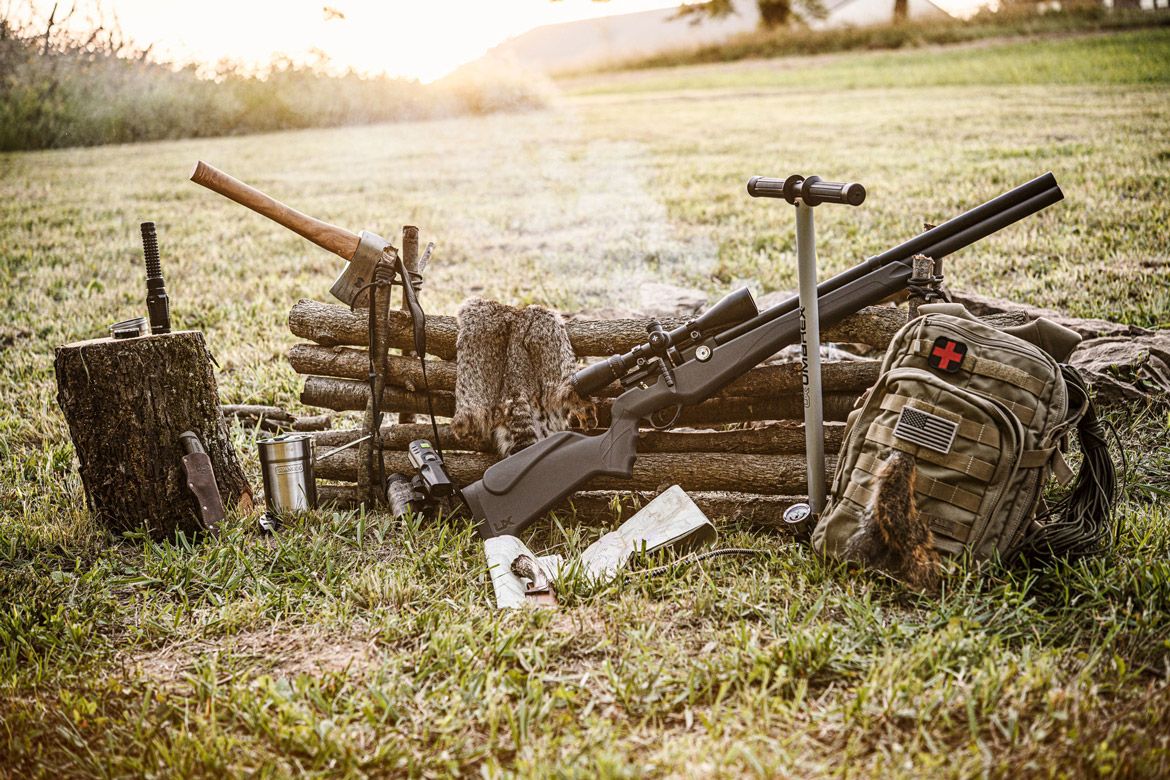
For most small-bore PCP buyers, there are four real fill paths: hand pump, electric compressor, external tank, and NitroAir cartridge system. Each one solves the stored-pressure problem differently, and each one makes more sense for a different kind of shooter. Umarex’s hand-pump guidance explicitly frames the decision around scuba or carbon-fiber tanks, hand pumps, and specialized electric compressors, while Komplete adds NitroAir as a distinct PCP ownership branch.
A hand pump is the classic low-entry-cost solution. It is portable, power-independent, and practical for shooters who do not mind manual effort. An electric compressor is the convenient answer inside traditional PCP ownership. It turns the process into a more repeatable home or field routine and is especially attractive once a shooter moves beyond occasional fills. An external tank is the fast refill option, but it assumes you also have a way to get that tank refilled. NitroAir removes the usual pump-or-compressor decision entirely for compatible rifles by making the pre-charged source disposable and removable.
|
Fill method |
Best for |
Main strength |
Main tradeoff |
|
Hand pump |
Occasional shooters, first PCP buyers, field backup |
Lowest-cost entry, portable, no electricity required |
Physical effort, slower fills |
|
Electric compressor |
Frequent PCP shooters, home filling, convenience-oriented owners |
Fast, repeatable, low-effort filling |
Higher upfront cost |
|
External tank |
Fast refills, range use, owners who already have access to refill sources |
Quick day-to-day refills |
Tank itself must still be refilled elsewhere |
|
NitroAir |
Buyers who want PCP-style shooting without conventional fill gear |
Simplified ownership model |
Works only with designated NitroAir platforms |
The table above is the cleanest way to frame the decision. None of these fill methods is automatically best in every case. The right one is the one whose tradeoffs feel easiest to live with.
Hand Pumps: The Lowest-Cost Way to Start
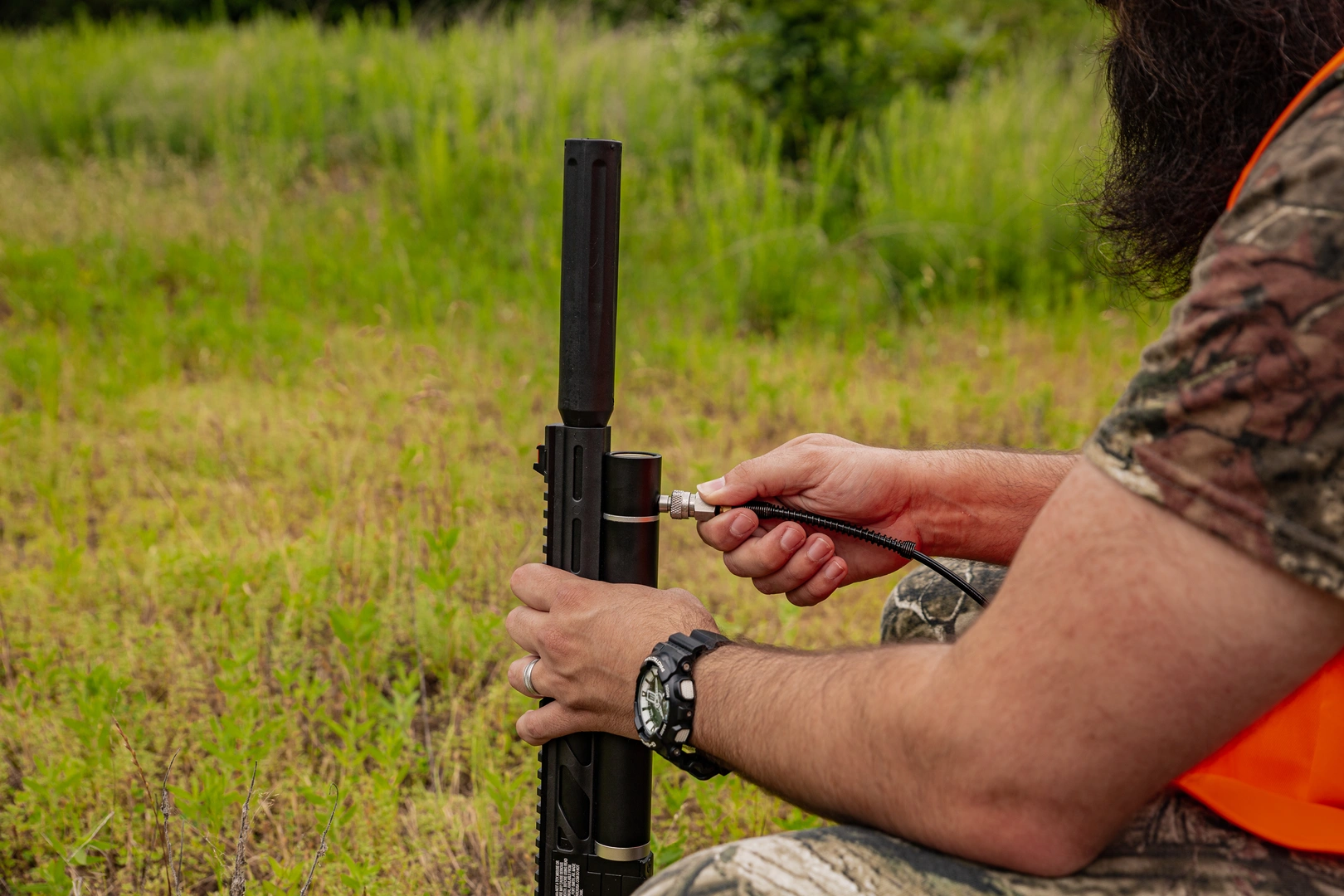
A hand pump is usually the easiest way to enter traditional PCP ownership because it avoids the need to buy a compressor or tank right away. It is portable, it does not need electrical power, and it can be used at home or in the field. That is why hand pumps remain one of the most practical first steps for new PCP buyers, especially those who want to start small and learn the category before building out more gear. Umarex’s hand-pump guidance explicitly frames hand pumps as one of the core PCP air-source options, and its PCP hand pump product page positions the pump as a way to fill high-pressure air tanks both on the range and in the field.
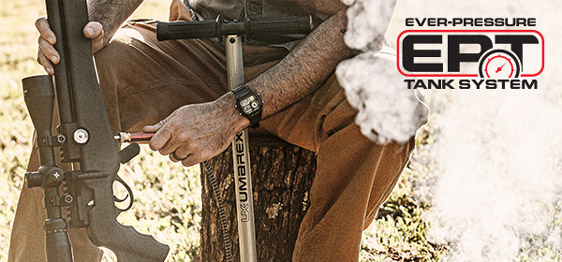
The Umarex Origin .22 cal PCP Air Rifle Kit with Pump is the best example of a rifle designed to make the hand-pump route more approachable. Umarex says the Origin uses an Ever Pressure Tank System, comes with a 3-stage 4,500 PSI hand pump, takes about 120 pumps per fill, and can produce a full-power shot with only 13 pumps. That is important because it means the Origin is not just a PCP that happens to be sold with a pump. It is a PCP platform deliberately structured to reduce the normal pumping burden.
Hand pumps also make sense as backup equipment even for shooters who later move to other fill methods. Umarex’s hand-pump blog makes that point clearly: tanks and compressors are useful, but there are situations where your big compressor is unavailable or the dive shop is closed. A hand pump preserves independence in a way that some other fill methods do not. That matters for range use, field use, and simply not wanting your rifle to sit idle because one piece of support gear is unavailable.
The downside is obvious and should not be hidden. Hand pumping requires physical effort and time. Umarex’s own general PCP guide says hand pumps are best for occasional use, notes that they can require 200-plus pumps per fill in some contexts, and advises using short sessions to avoid overheating. That does not make hand pumps a poor option. It means they are a better fit for some rifles and some users than for others.
Electric Compressors: The Easy Conventional Answer
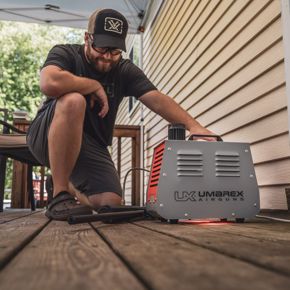
An electric compressor is usually the best conventional PCP answer for shooters who know they will fill often and do not want to turn every refill into a workout. Compressors are attractive because they move the effort from your body to the machine. That sounds obvious, but it meaningfully changes how often many people want to shoot their PCP rifles.
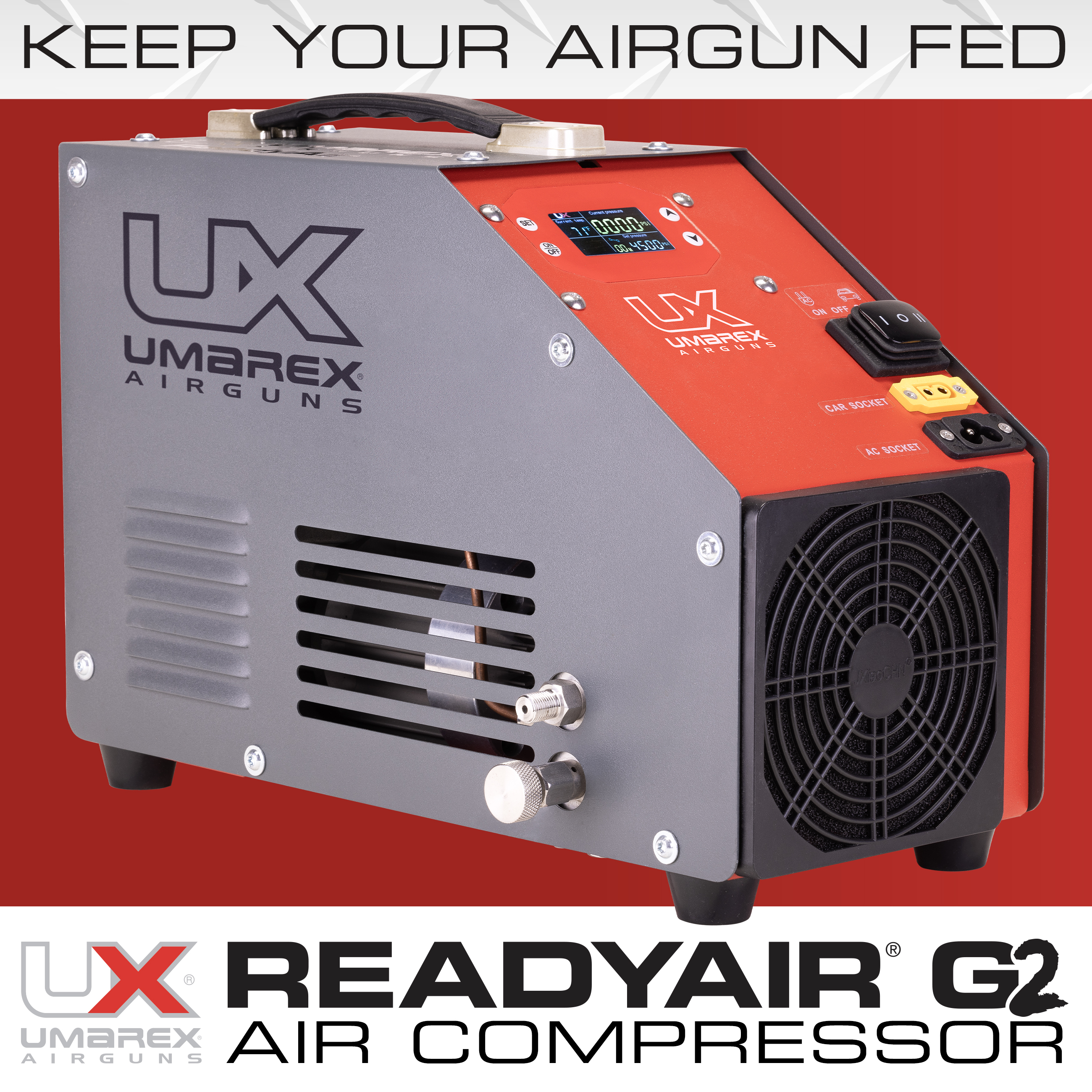
The Umarex ReadyAir G2 High-Pressure Airgun Compressor is a strong example of how Umarex positions this solution. The product page says it delivers up to 4,500 PSI and is suited for filling PCP rifles and pistols at home or in the field. The page also highlights portability, a smaller footprint, and a programmable digital display with adjustable cut-off pressure. That combination matters because it shows the real compressor value proposition: less labor, more repeatability, and more control over the fill process.
Compressors tend to make the most sense once the buyer has moved past the “I just want to try PCP” phase. If you know you are going to shoot regularly, especially with rifles that live at higher pressures or larger tank sizes, a compressor can feel like the point where PCP ownership becomes easy instead of tolerable. That is part of why Umarex’s older ReadyAir material describes the compressor as the point where a PCP rifle stops sitting so long in the cabinet between uses.
The tradeoff is cost. A compressor is usually a bigger upfront step than a hand pump, which means it makes less sense for a buyer who is still testing whether PCP is the right lane at all. But once a shooter is committed to traditional PCP ownership, the compressor often becomes the cleanest quality-of-life upgrade in the whole ecosystem.
External Tanks: Fast Refills, Different Dependence
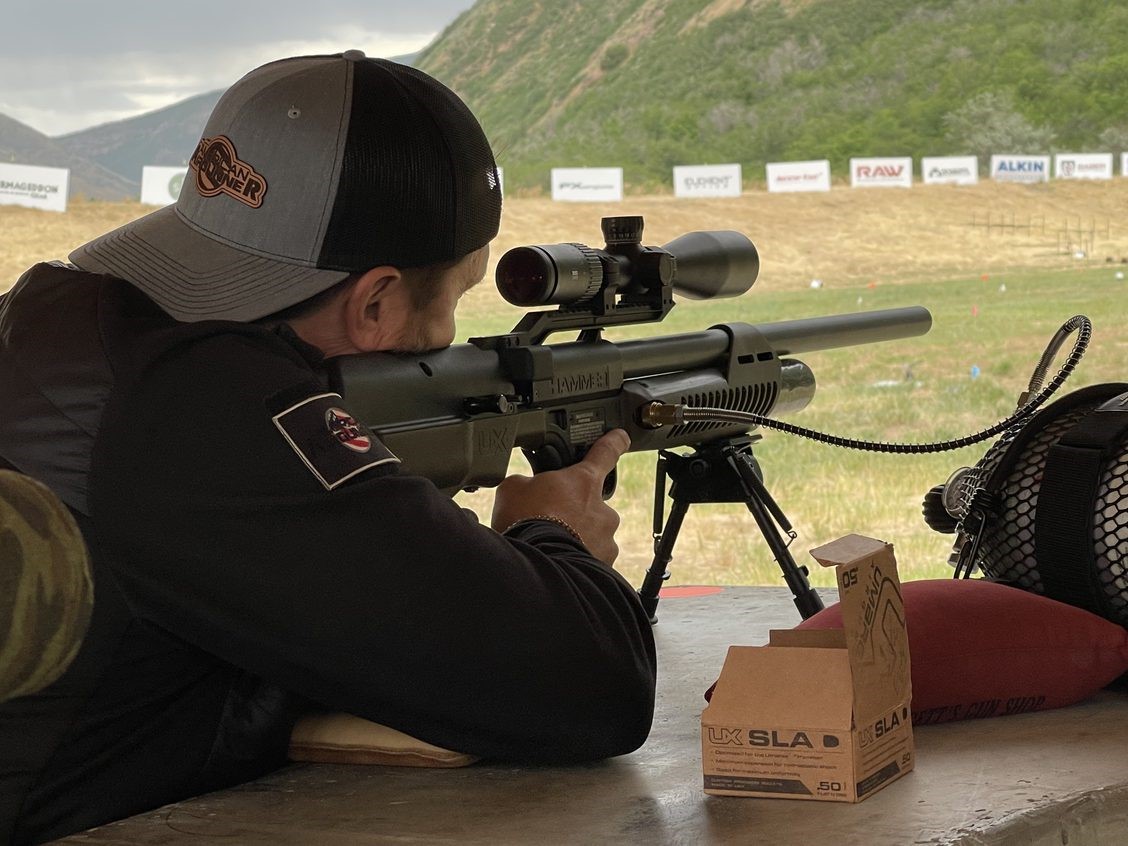
External tanks, including scuba and carbon-fiber tanks, are often the fastest and most convenient way to refill a PCP rifle in normal use. Once the tank itself is filled, refilling the rifle can be quick and easy. That is why tanks are attractive for frequent shooters, range sessions, and anyone who values speed and minimal day-to-day effort. Umarex’s general PCP guide explicitly lists scuba and carbon-fiber tanks as one of the key PCP air-source options and describes them as best for frequent shooters because they provide quick refills.
The problem is that tanks do not eliminate the fill question. They move it. Instead of filling the rifle directly with a hand pump or compressor, you are filling the rifle from a tank that still has to be filled somewhere else. Umarex’s scuba-shop etiquette article makes this very clear. If your rifle can hold 4,500 PSI, you need to confirm that the shop you use can actually fill to that pressure. The same article also notes that filling costs vary and that not all air is created equal, so the source of compressed air still matters.
That is why tanks make the most sense for a certain type of owner. They are great for people who already understand the PCP ecosystem, shoot frequently enough to value rapid refills, and either have reliable refill access or already own a compressor setup that supports them. For a buyer who is brand new to PCP and wants maximum simplicity, a tank can sometimes add another layer rather than remove one.
In other words, tanks are often the quickest solution in actual shooting sessions, but they are not always the simplest solution in overall ownership.

NitroAir: A Different PCP Filling Model
NitroAir belongs in this article because it is one of the few things in the Umarex lineup that changes the fill conversation instead of merely offering another tool for the same conversation. A Komplete rifle is still a PCP. Umarex markets it that way. But the way it is charged is fundamentally different from conventional hand-pump, compressor, or tank ownership.
The Umarex Komplete NCR .22 Caliber NitroAir PCP Pellet Rifle is the clearest example. Umarex says it uses a patent-pending cartridge piercing mechanism and an internal regulator that releases nitrogen at 1,800 PSI for 45 or more steady shots per cartridge, all without the need for an air compressor, big air tank, or strenuous hand pump. That is still PCP because the rifle is still pre-charged and pneumatic. But it is a different ownership branch inside the category.
This matters because NitroAir is not just a convenience perk. It solves the exact problem that keeps some people from buying a PCP in the first place. Those buyers like the idea of PCP shooting but do not want to deal with pumps, compressors, or refill logistics. Komplete gives them a way into the category without asking them to solve those problems the traditional way.
The tradeoff is not hidden, though. NitroAir is not a universal replacement for the entire traditional PCP ecosystem. It works only with designated platforms, and its value depends on whether the buyer wants that ownership model more than they want the flexibility of conventional PCP fill methods. For the dedicated comparison, see NitroAir vs Traditional PCP: Which Ownership Model Makes More Sense?
Matching the Fill Method to the Rifle
One of the most practical ways to choose a fill method is to match it to the kind of PCP rifle you are actually buying.
If the rifle is an entry-level traditional PCP such as the Origin, a hand pump can make perfect sense because the rifle was intentionally designed to reduce the usual pumping burden. That makes the hand-pump route much more realistic than it would be with some other PCPs.
If the rifle is an accessible but more conventional PCP such as the Iconix, the decision often comes down to how often you expect to shoot. Umarex explicitly says the Iconix can be filled from a trusted airgun-rated hand pump or electric compressor. That makes it a flexible platform, but it also means the owner still has to decide whether they want affordability and portability or convenience and speed.
If the rifle is a higher-demand traditional PCP, such as a Gauntlet 2 .22, many owners will eventually lean toward compressor or tank-supported ownership because that tends to fit the rifle’s performance orientation and air-management expectations better. And if the rifle is Komplete, the fill question is already answered by the NitroAir system itself.
This is one reason the best fill advice is never fully generic. It has to be matched to the platform.
Which Fill Method Is Best for Which Shooter?
For an occasional shooter or a first PCP buyer, the hand pump is usually the best low-cost entry point, especially if the rifle is something like the Origin that actively lowers the pumping burden. For a regular shooter who wants conventional PCP ownership without the physical labor, a compressor is usually the most practical upgrade. For a frequent range shooter or someone who already has refill access, an external tank can be a very efficient solution. And for the shooter who wants PCP-style performance without traditional fill equipment, NitroAir is the cleanest alternative.
The key is not to ask which fill method is “best” in the abstract. The better question is which method removes the most friction from your kind of shooting. That is the version of “best” that actually holds up after the purchase.
Common PCP Filling Mistakes
The first common mistake is assuming every PCP should be filled the same way. Tank size, pressure requirement, and rifle design all matter. Umarex’s own filling guidance is clear that different PCP rifles have different onboard tank sizes and recommended filling methods.
The second mistake is underestimating how much the physical side of hand pumping matters over time. A hand pump can be a great choice, but it should be chosen honestly. Buyers who know they will shoot often or who dislike repetitive effort may be better served by a compressor earlier than they think. Umarex’s own general PCP guide notes that hand pumps can require 200-plus pumps per fill in some contexts and are best for occasional use.
The third mistake is assuming tanks are the easiest answer without thinking through where the tank itself will be refilled. Umarex’s scuba-shop guidance shows why this matters: you need to confirm pressure capability, pricing, and reliable access before a tank becomes a convenient solution.
The fourth mistake is misunderstanding Komplete as “not really PCP” because it uses cartridges. Umarex explicitly markets it as a PCP rifle. It simply changes the fill side of ownership. That makes it different, not outside the category.
Key Takeaways
-
A PCP rifle can be filled by hand pump, electric compressor, external tank, or NitroAir, depending on the platform.
-
Fill method is one of the most important buying decisions in the whole PCP category.
-
Hand pumps are the lowest-cost and most portable option, but they ask more from the shooter physically.
-
Electric compressors are usually the easiest conventional fill path for regular PCP shooters.
-
External tanks offer fast refills, but they still depend on access to a larger air source.
-
NitroAir changes the ownership model by replacing conventional fill gear with removable high-pressure nitrogen cartridges.
-
For the next step in the cluster, go to Best Entry-Level PCP Air Rifles: How to Choose Your First PCP and NitroAir vs Traditional PCP: Which Ownership Model Makes More Sense?
FAQ
What is the cheapest way to fill a PCP air rifle?
Usually a hand pump is the lowest-cost way to start because it does not require a compressor or tank. It is especially practical for shooters who fill occasionally or who buy a PCP designed to reduce pumping effort, such as the Origin.
Is a compressor better than a hand pump for PCP rifles?
For many regular PCP shooters, yes. A compressor usually makes filling faster and easier, especially if you shoot often. A hand pump still makes sense for lower-cost entry, portability, and backup use.
Can I fill a PCP rifle from a scuba or carbon-fiber tank?
Yes. Umarex specifically identifies scuba and carbon-fiber tanks as PCP fill options. The important part is making sure the tank and the refill source can meet the pressure needs of your rifle.
Do all PCP rifles need the same fill method?
No. Different PCP rifles have different tank sizes, pressure requirements, and ownership expectations. That is why the best fill method depends on the specific rifle and how often you shoot it.
Does Komplete need a hand pump or compressor?
No. Umarex says the Komplete NitroAir system avoids the need for an air compressor, big tank, or strenuous hand pump by using removable pre-filled nitrogen cartridges.
What is the easiest PCP filling method overall?
For conventional PCP ownership, an electric compressor is usually the easiest overall. For the least conventional setup burden, NitroAir is the simplest PCP-style ownership model because it avoids pumps and compressors entirely on compatible rifles.
Works Cited
-
Umarex USA. “Umarex PCP Tank Size and Filling Recommendations.” Umarex USA. https://www.umarexusa.com/umarex-pcp-tank-size-and-filling-recommendations
-
Umarex USA. “Airgun Hand Pump Tactics and Tips.” Umarex USA. https://www.umarexusa.com/airgun-hand-pump-tactics-and-tips
-
Umarex USA. “Etiquette of Filling Airguns and Tanks at a Scuba Diving Shop.” Umarex USA. https://www.umarexusa.com/etiquette-of-filling-airguns-and-tanks-at-a-scuba-diving-shop-blog
-
Umarex USA. “Umarex ReadyAir G2 High-Pressure Airgun Compressor.” Umarex USA. https://www.umarexusa.com/2211385
-
Umarex USA. “4500 psi PCP Hill Hand Pump High Pressure Air Rifles.” Umarex USA. https://www.umarexusa.com/ux-pcp-handpump
-
Umarex USA. “Umarex Origin .22 cal PCP Air Rifle Kit with Pump.” Umarex USA. https://www.umarexusa.com/umarex-origin-22-cal-pcp-air-rifle-with-high-pressure-air-hand-pump
-
Umarex USA. “Umarex Iconix .22 PCP Air Rifle.” Umarex USA. https://www.umarexusa.com/umarex-iconix-22-pcp-air-rifle-2252135
-
Umarex USA. “Umarex Komplete NCR .22 Caliber NitroAir PCP Pellet Rifle.” Umarex USA. https://www.umarexusa.com/umarex-komplete-ncr-22-pcp-air-rifle-2251558
-
Umarex USA. “A Complete Guide to PCP Airguns: Everything You Need to Know.” Umarex USA. https://www.umarexusa.com/a-complete-guide-to-pcp-airguns-everything-you-need-to-know
National Shooting Sports Foundation. “Safety.” NSSF. https://www.nssf.org/safety/